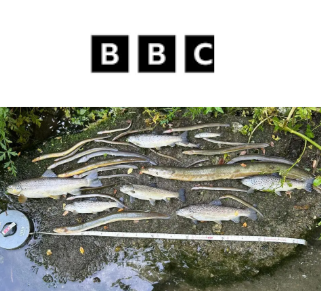
A water company has confirmed one of its treatment works was the source of pollution that killed thousands of fish in a Cornish river.
Pennon Group, which owns South West Water, said the pollution in St Austell River "occurred as a result of a delivery by a third party to our treatment works" in the Pentewan Valley.
The Environment Agency said potentially thousands of fish including trout, eels and lamprey were killed by liquid lime in the river, which is also known as the White River
The agency said on Tuesday its officers had taken samples of dead fish from the scene.
Author: Lisa Young / BBC l Read the full article here
ETF welcomes European Ocean Pact, calls for stronger social justice and worker representation in ocean governance. The European Transport Workers’ Federation (ETF) welcomes the European Commission’s launch of the European Ocean Pact, recognising the initiative as an important step toward a sustainable, inclusive, and fair blue economy. Representing over five million transport workers across Europe, including in fisheries, maritime transport, and ports, the ETF strongly supports the Pact’s environmental ambitions, but insists that the people who work on the ocean must be at the heart of the transition.
New resource delivers research about the crustaceans used in fish feed 'in an accessible way'
Norwegian krill harvester Aker QRILL Company today announced the launch of Krill Science Hub, which it says is the world's first comprehensive digital platform dedicated to Antarctic krill and ecosystem research. Krill is used in some salmon feed formulations and is high in omega-3.
The initiative makes 20 years of peer-reviewed scientific literature accessible to researchers, policymakers, and the public through a single, curated source.
Source: fishfarmingexpert l Read the full article here
The Rule Aims to Foster Entrepreneurship, Innovation, and Unique Quality in Galicia's Seafood Canning Sector
VIGO – The Regional Ministry of Sea (Consellería do Mar) of the Xunta de Galicia, during a meeting with ANFACO-CECOPESCA, has introduced a new regulation for artisanal fish and seafood preserves from Galicia. This initiative's main goal is to foster entrepreneurship and innovation within the sector, encouraging the creation of unique products with their own distinct identity.
Regional Minister Marta Villaverde and representatives from ANFACO-CECOPESCA, including its managing director, Francisco Iglesias, discussed the details of the regulation. It prioritizes the use of high-quality, locally sourced raw materials, as well as personal intervention in the manufacturing process to ensure the singularity of each preserve.
ANFACO-CECOPESCA has committed to supporting new entrepreneurs, offering advice on food safety, quality, and traceability. This backing aligns with Galicia's Blue Economy Strategy 2024-2027, aiming to diversify the economic opportunities the sector offers.
The visit concluded with a tour of ANFACO's CYTMA, showcasing the technological capabilities available to the sea-industry sector. This new regulation represents a key step to revalue and differentiate Galicia's artisanal canning production.
The vessel was operating in the Northwest Pacific and used dolphin remains to catch sharks and tuna. The Pingtung Prosecutor's Office has filed charges of illegal fishing and animal abuse.
The captain of a Taiwanese-flagged long-distance fishing vessel has been formally charged with ordering his crew to capture and kill dolphins to use as bait to catch sharks and tuna. The case, which has sparked widespread outrage among both the fishing industry and conservation organizations, occurred in June 2024, while the vessel was operating in the Northwest Pacific Ocean.
Twelve countries urge the Commission to ban misleading labels
Current Salmon, Tofu-Thuna, Tuna, Salmon Bio, Kraken, Toonish... These are some of the names of products "that show misleading similarities" with seafood, although they are actually processed from soy, wheat gluten, mushrooms, rice, or legumes, with additives such as salt, fats, flavorings, and colorings "that, in general, do not match the characteristics of authentic" fish and shellfish, according to a report commissioned by the European Parliament. The seafood industry chain has long been calling for measures against these imitations, masked by "misleading names and images that can confuse" consumers, recalls the fishing industry association Europêche.
Source: La Voz de Galicia l Read the full article here
Cargill’s EWOS feed plant at Westfield, near Bathgate, Scotland, has been certified under the Aquaculture Stewardship Council (ASC) Feed Standard, the company announced this week.
The ASC certification ensures that the site meets environmental, social, and supply chain requirements for producing feed suitable for ASC-certified aquaculture operations.
Source: SalmonBusiness l Read the full article here
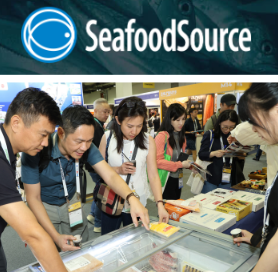
The 2025 iteration of Seafood Expo Asia will take place 10 to 12 September as the show returns for its fourth consecutive year in Singapore.
The three-day event will be held at the Sands Expo and Convention Centre, where seafood professionals from around the world can gather to explore new business opportunities, conduct face-to-face meetings, and learn about trends in the Asian market. According to event organizer Diversified, the expo will gather seafood professionals and purchasing decision-makers from the catering, hotel, import, restaurant, supermarket, wholesale, and more sectors.
Source: SeafoodSource l Read the full article here
The Japanese aquaculture company Okamura Foods has moved into northern Europe with a key acquisition.
It has bought a 51% stake in the Latvian trout farming company Riga Bay Aquaculture which has been granted the right to farm up to 10,000 tons of fish.
Okamura said the acquisition is part of its strategy to expand its aquaculture business into the region, using Riga Bay as a third base after Denmark and Japan.
Riga Bay has been granted permission to farm trout in two designated sea areas after the place which it is named. Aquaculture license is expected after an environmental impact assessment.
Author: Vince McDonagh / Fish Farmer l Read the full article here
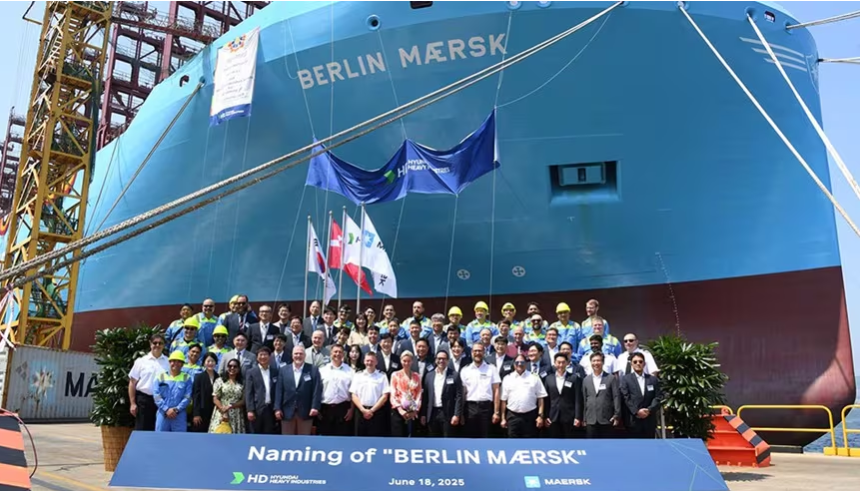
Copenhagen – A.P. Moller - Maersk (Maersk) has named the first vessel in a series of 17,480 TEU vessels equipped with dual-fuel methanol propulsion. The naming event took place on 18 June at Hyundai Heavy Industries’ (HHI) yard in Ulsan, South Korea.
The vessel, Berlin Mærsk, is the 14th dual-fuel newbuild entering the Maersk fleet, and it will be followed by additional five sister vessels in this new class of container ships.
With the launch of the Berlin Mærsk class, we continue to build an ocean toolkit adaptable to multiple fuel pathways. Fleet renewal is essential for maintaining our competitive edge in ocean shipping, and it serves as a cornerstone of our commitment to decarbonisation.
On 7 July, Berlin Mærsk will make its first port call in Shanghai, where it will enter service on Maersk’s AE3 service connecting Eastern Asia with Northern Europe.
The vessel's design closely resembles that of the previous Ane Mærsk class, from which Maersk has received a total of 12 dual-fuel vessels, all built by HHI. The only significant difference is the wider beam, which allows Berlin Mærsk to carry more containers. The increased capacity also makes it the largest dual-fuel ship to date to join the Maersk fleet
Fisherman's Day: Beyond the Ritual Peru
Every June 29th, as tomorrow, Peru fervently celebrates Saint Peter's Day and —in honor of his profession— Fisherman's Day. This deeply symbolic date combines religious devotion to the apo...
Vietnam's Tuna Exports Rebound in May 2025 Amid Global Trade Shifts Viet Nam
Producers Navigate US Tax Concerns and Middle East Instability by Diversifying Markets.
HANOI – After facing headwinds in early 2025, Vietnam's tuna exports saw a significant recovery in May, r...




 UNITED KINGDOM
 A water company has confirmed one of its treatment works was the source of pollution that killed thousands of fish in a Cornish river.
 EUROPEAN UNION
 ETF
ETF  NORWAY
.png) New resource delivers research about the crustaceans used in fish feed 'in an accessible way'
New resource delivers research about the crustaceans used in fish feed 'in an accessible way' SPAIN
SPAIN.png)
 TAIWAN
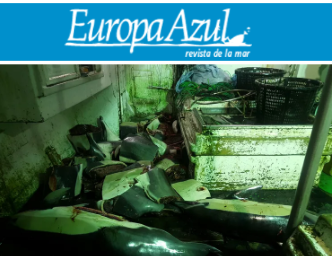 The vessel was operating in the Northwest Pacific and used dolphin remains to catch sharks and tuna. The Pingtung Prosecutor's Office has filed charges of illegal fishing and animal abuse.
.png) Current Salmon, Tofu-Thuna, Tuna, Salmon Bio, Kraken, Toonish... These are some of the names of products "that show misleading similarities" with seafood, although they are actually processed from soy, wheat gluten, mushrooms, rice, or legumes, with additives such as salt, fats, flavorings, and colorings "that, in general, do not match the characteristics of authentic" fish and shellfish, according to a report commissioned by the European Parliament. The seafood industry chain has long been calling for measures against these imitations, masked by "misleading names and images that can confuse" consumers, recalls the fishing industry association Europêche.
Current Salmon, Tofu-Thuna, Tuna, Salmon Bio, Kraken, Toonish... These are some of the names of products "that show misleading similarities" with seafood, although they are actually processed from soy, wheat gluten, mushrooms, rice, or legumes, with additives such as salt, fats, flavorings, and colorings "that, in general, do not match the characteristics of authentic" fish and shellfish, according to a report commissioned by the European Parliament. The seafood industry chain has long been calling for measures against these imitations, masked by "misleading names and images that can confuse" consumers, recalls the fishing industry association Europêche. 
 SINGAPORE
 The 2025 iteration of
  LATVIA
 The Japanese aquaculture company
  DENMARK