|
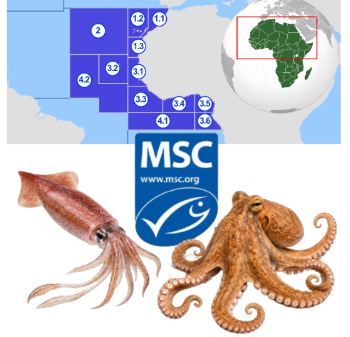
The global certifier's announcement immediately mobilized the purchasing departments of major retail and distribution corporations across the EU
MSC Opens Public Consultation for Seafood Sustainability Eco-Label Renewal on Cephalopod Fishery
 (UNITED KINGDOM, 6/18/2026)
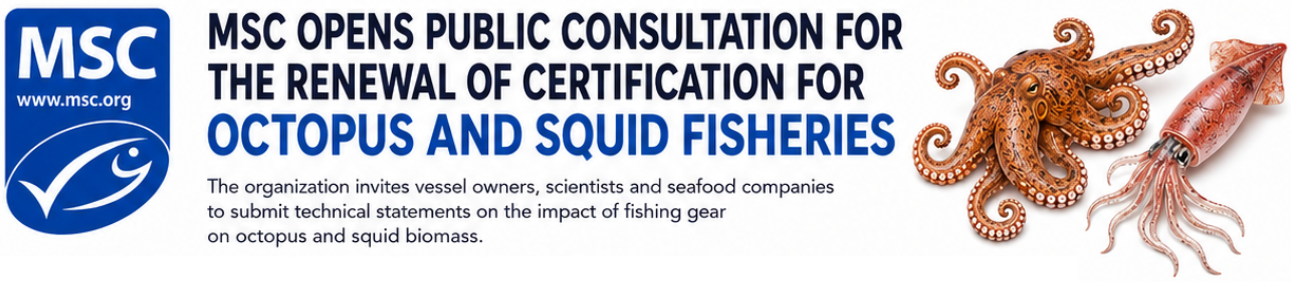
The international organization invites vessel owners, scientists, and seafood marketers to submit technical arguments concerning the impact of harvesting gear on octopus and squid biomass.
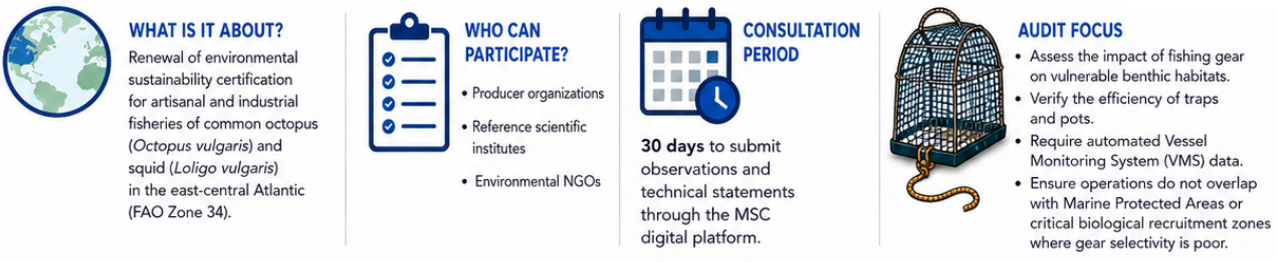
LONDON – The Marine Stewardship Council (MSC) has officially announced the opening of the public consultation window and technical review for the sustainability certification renewal of the artisanal and industrial cephalopod fishery—focusing on the common octopus (Octopus vulgaris) and squid (Loligo vulgaris)—operating in the regulated waters of the Eastern Central Atlantic (FAO Area 34). This extraordinary audit process, structured under the newly revisable criteria of its Fisheries Standard, seeks to collect scientific evidence and field data provided by value chain stakeholders to assess whether authorized fleets maintain incidental bycatch rates below allowable biological limits.
.png)
Área 34 – Atlántico, Centro Oriental
The international body's call introduces a rigorous level of requirement regarding the assessment of fishing gear impacts on vulnerable benthic habitats. Over the next 30 days, producer organizations, reference scientific institutes, and environmental NGOs can submit formalized observations through the MSC digital platform. The audit's focus will center on empirically verifying the selectivity and efficiency of traps and jigs used by community and international fleets, requiring the submission of automated blue box (VMS) records to certify that harvesting operations do not overlap with marine protected areas or critical biological recruitment zones where gear selectivity is deficient.
Click on the image to enlarge
The announcement from the global certifier triggers immediate mobilization within the procurement departments of major distribution corporations and retail chains across the European Union. The MSC blue eco-label constitutes an indispensable strategic commercial asset for accessing high-end mass consumption shelves in mature markets such as Germany, France, and Northern Europe, where chains penalize seafood resources lacking a third-party verified sustainability seal. A potential temporary suspension of the seal due to a lack of technical consensus during the consultation would raise market risks for cephalopod imports from this region, pushing spot prices for frozen and IQF blocks upward due to the need to redirect sourcing toward alternative certified fishing grounds.
Click on the image to enlarge
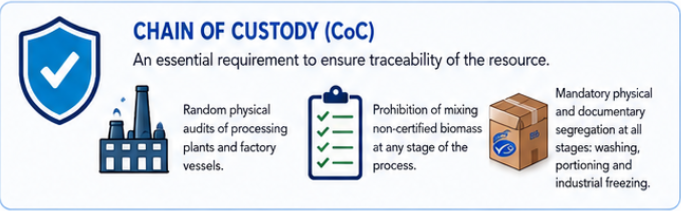
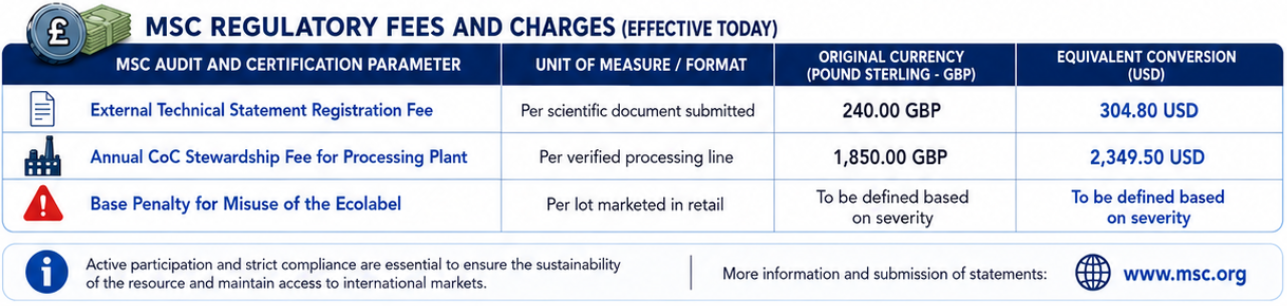
Meanwhile, MSC technical committees reminded that the robustness of the Chain of Custody (CoC) remains an inescapable requirement to maintain resource traceability. Processing plants and freezer vessels wishing to retain their blue label packaging authorization must undergo random physical audits throughout the consultation period, ensuring that no mixing of uncertified biomass occurs within industrial washing, portioning, and freezing lines. Penalties for documentary alteration of origin records or omission of physical segregation guidelines will trigger the automatic suspension of the brand's commercial license.
Click on the image to enlarge
The breakdown of regulatory technical argument registration fees and chain of custody maintenance fees applied by the organization as of today's fiscal day is presented below:
Click on the image to enlarge
The consultation process inaugurated by the Marine Stewardship Council ratifies that sustainable access to international marine resource markets no longer depends solely on harvest volumes, but on absolute transparency in the governance of shared stocks. Organization authorities concluded by noting that the economic resilience of artisanal fishing communities in the Atlantic depends on their capacity to prove they operate under a strict biological respect framework. Consolidating monitoring systems and aligning extraction practices with scientific standards constitutes the only viable path to secure the homogeneous supply of high-quality marine protein required by global distribution networks over the long term.
🇯🇵 Japanese Version (日本語)
東中大西洋における漁業ガバナンス:MSC、頭足類漁業を対象にエコラベル更新のパブリックコンサルテーションを開始
国際認証機関、マダコやヤリイカのバイオマスに対する漁具の影響について、漁船主、科学者、水産物マーケターへ技術的見解の提出を要請。
ロンドン – 沿岸および沖合の頭足類漁業(主にマダコ(Octopus vulgaris)およびヤリイカ(Loligo vulgaris))の持続可能性認証の更新に向け、海洋管理協議会(MSC)はパブリックコンサルテーション(公聴期間)および技術審査の窓口を正式に開設した。対象海域は東中大西洋の規制海域(FAO 34海区)。同機関の漁業認証基準の新たな改定クライテリアに基づいて構築されたこの異例の監査プロセスは、バリューチェーンの利害関係者が提供する科学的根拠や現場データを収集し、認可された船団が混獲(特定外の漁獲)率を生物学的許容限界以下に維持しているかを評価することを目的としている。
同国際機関の呼びかけは、脆弱な海底(ベントス)生息地に対する漁具の影響評価に関して、厳格な要求水準を導入している。今後 30日間、生産者団体、基準科学研究所、および環境NGOは、MSCのデジタルプラットフォームを通じて正式な意見書を提出できる。監査の焦点は、欧州および国際船団が使用するトラップ(籠)やジグ(疑似餌・イカ釣り漁具)の選択性と効率性を実証的に検証することに置かれ、漁具の選択性が不十分な海洋保護区や重要な生物補充(繁殖)ゾーンと操業エリアが重複していないことを証明するため、VMS(漁船モニタリングシステム)の自動記録の提出が義務付けられる。
グローバル認証機関からのこの発表は、欧州連合(EU)全域の大手流通企業や小売チェーンの調達部門に即座の動きを引き起こした。MSCの「青いエコラベル」は、ドイツ、フランス、北欧などの成熟した市場における高級大量消費の棚にアクセスするための不可欠な戦略的商業資産であり、これらの市場のチェーンは、第三者によって検証された持続可能性のシールを欠く魚介類・水産資源に対してペナルティを科している。コンサルテーション中に技術的な合意が得られず、シールが一時的に停止された場合、当該地域からの頭足類の輸入に関する市場リスクが高まり、代替の認証漁場へ調達を再構築せねばならないため、冷凍およびIQFブロックのスポット価格が押し上げられることになる。
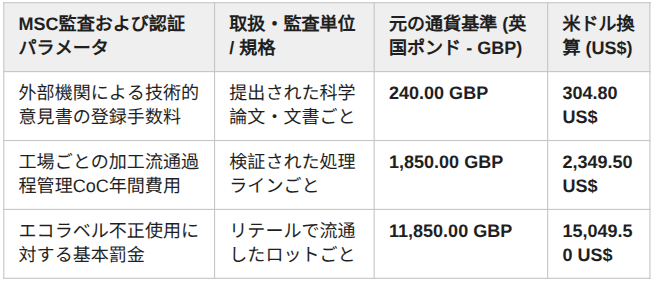
一方、MSCの技術委員会は、資源のトレーサビリティを維持するために加工流通過程管理(CoC)の堅牢性が不可欠な要件であることを再確認した。ブルーラベルのパッケージング認可の維持を希望する加工工場や冷凍トロール船は、コンサルテーション期間中に無作為の物理的監査を受ける必要があり、産業用洗浄、ポーション加工、および凍結ライン内で非認証バイオマスの混入が起きないよう保証せねばならない。原産地記録の文書改ざんや物理的な分離ガイドラインの遵守怠慢に対する制裁は、当該ブランドの商業ライセンスの自動停止を伴う。
本日より同組織によって適用される、技術的意見書の登録手数料および加工流通過程管理の維持手数料の内訳は以下の通りである:
海洋管理協議会によって開始されたこのコンサルテーションプロセスは、国際的な水産物市場への持続可能なアクセスが、もはや漁獲量のみに依存するのではなく、共有資源のガバナンスにおける完全な透明性に依存していることを裏付けている。同組織の幹部らは、大西洋における沿岸漁業コミュニティの経済的レジリエンスは、厳格な生物学的配慮の枠組みの下で操業していることを証明する能力にかかっていると指摘した。モニタリングシステムを強化し、科学的基準に漁獲慣行を適合させることこそが、世界の大手流通網が長期的に求める高品質で均質な海洋タンパク質の安定供給を確保するための唯一の実行可能な道である。
🇨🇳 Simplified Chinese Version (简体中文)
东中大西洋渔业管治:MSC 开启中东大西洋头足类渔业生态标签续展的公众咨询程序
该国际认证机构邀请船东、科学家及海鲜水产营销商就捕捞渔具对章鱼和鱿鱼生物量的生态冲击提交技术辩证报告。
伦敦 – 海洋管理委员会(MSC)已正式宣布,针对在东中大西洋管辖海域(FAO 34海区)作业的手工及工业化头足类渔业——核心涵盖普通章鱼(Octopus vulgaris)和欧洲鱿鱼(Loligo vulgaris)——开启可持续发展环境认证续展的公众咨询窗口与技术审查程序。该项在全新修订的《渔业标准》准则下构建的特种审计流程,旨在收集由价值链利益相关方提供的科学证据与现场数据,以评估获授权的船队是否将兼捕(非目标物种混获)率维持在生物允许极限之内。
该国际机构的此番召集,在评估捕捞渔具对脆弱海底(底栖)生息地的生态冲击方面,引入了极严的规制要求。在接下来的 30天 内,各生产者组织、骨干科学研究所以及环境 NGO 均可通过 MSC 的数字化平台提交格式化的异议意见书。本轮审计的焦点将集中于从经验上核查欧盟及国际船队所使用的陷阱(笼捕)和手钓渔具的选型特异性与作业效率,并强制要求提交蓝盒子(VMS卫星监控システム)的自动定位记录,以证实捕捞作业未与海洋保护区或存在渔具选择性缺陷的核心生物补充(产卵繁殖)区发生重叠。
全球认证巨头的这一公告,迅速引发了欧洲联盟境内各大分销集团与零售连锁巨头采购部门的顺级连锁反应。MSC 的“蓝色生态标签”构成了水产品进入德、法及北欧等成熟市场高端大宗消费货架不可或缺的战略商业资产。在这些市场中,零售渠道对缺乏第三方验证可持续密封签的海鲜水产资源推行惩罚性准入。一旦在咨询期间因缺乏技术共识而导致标签遭遇阶段性暂停,将直接推高源自该海域头足类进口的商务风险,因迫使供应链向其他已获认证的替代渔场转移,从而将推高冷冻及单体速冻(IQF)鱿鱼板/章鱼块的现货对价。
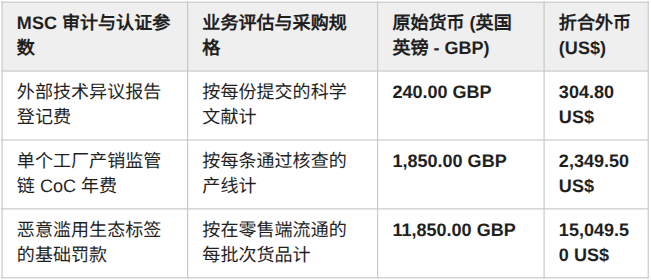
与此同时,MSC 技术委员会提醒称,产销监管链(CoC)的坚韧性是维持资源可追溯性的硬性要求。凡期望保留蓝色标签包装授权的精深加工厂及船冻冷藏船,必须在咨询周期内接受随性的现场实物审计,确保在工业清洗、分餐切配及急冻产线上未发生非认证生物量的混入。凡被检出存在原产地单据篡改或忽略物理隔离红线的违规行为,将面临直接吊销该品牌商业授权的严厉制裁。
现将自今日起由该机构收取的特种技术异议登记费及产销监管链维护费表列如下:
由海洋管理委员会确立的这一咨询程序进一步证实,国际水产市场的可持续准入已不再单方面取决于捕捞运量,而是取决于对共享资源管治的绝对透明度。该机构高管在总结时指出,大西洋沿岸手工捕捞群落的经济韧性,高度取决于其证实自身在硬性生物克制框架下作业的能力。强化监测技术资产并使提取行为契合科学指标,是确保全球大宗分销网络在长期内稳定接收同质化高标海洋蛋白的唯一可行途径。
editorial@seafood.media
www.seafood.media
Information of the company:
|
Address:
|
Marine House, 1 Snow Hill
|
|
City:
|
London
|
|
State/ZIP:
|
England (EC1A 2DH)
|
|
Country:
|
United Kingdom
|
|
Phone:
|
+44 (0)20 7246 8900
|
|
Fax:
|
+44 (0)20 7246 8901
|
|
E-Mail:
|
info@msc.org
|
|
Skype:
|
https://www.instagram.com/mscecolabel/
|
More about: 
|
|
|
|





.png)
.png)
.png)
.png)


 Print
Print