IN BRIEF - Fukushima operator to be forced to dump radioactive waste into ocean - japanese minister
JAPAN
Wednesday, September 11, 2019
MOSCOW, Sept 10 -- The operator of the Fukushima Daiichi power plant, which in 2011 experienced the worst nuclear disaster since Chernobyl, has no choice but to discharge a massive amount of radioactive waste into the sea since it currently has no technology for treating the contaminated water and no adequate space to store it any longer, Sputnik news agency quoted Japanese Environment Minister Yoshiaki Harada as saying on Tuesday.
“We have no way but to release it (into the sea) and dilute it,” Harada said at a press briefing, as quoted by the Jiji Press.
More than a million tonnes of wastewater is currently stored in tanks at the Fukushima site, but the facility is reportedly running out of available space and expects to exhaust its capacity by summer 2022.
A Nordic Council report advocates combining education, availability, price, and consumer information to incorporate more fish and seafood into the diet
Increasing seafood consumption in Nordic countries requires public policies capable of influencing consumer habits, motivation, and real choices. This is the argument put forward in the Nordic Aquatic Food Systems report by the Nordic Council of Ministers, which analyzes the necessary measures to strengthen the presence of fish, seafood, and other aquatic products in a healthy and sustainable diet.
The document starts from a central idea: simply informing the public about the nutritional benefits of fish is not enough.
ASC responds to U.S. Senate Inquiry, highlighting transparent and independent assurance of the ASC Programme. Aquaculture Stewardship Council (ASC) has responded to the U.S. Senate Health, Education, Labour and Pensions (HELP) Committee, outlining the robustness of its certification system, which is built on stringent standards, independent third-party audits, full supply chain traceability, and public transparency to provide credible assurance for certified seafood products. ASC-certified products are available in markets worldwide, including the United States, which is a strongly growing market for ASC, and provide assurance to retailers and consumers that seafood has been produced in accordance with ASC requirements.
Inverlussa Marine Services has signed contracts for three new hybrid vessels in a fleet expansion programme that will increase its fleet to 25 vessels when the ships are delivered in summer 2027.
The Scottish aquaculture support company has ordered a 20-metre by 12-metre heavy service catamaran from Macduff Shipyards, a 25-metre by 10.6-metre heavy service vessel from Nauplius Workboats, and a 27-metre by 11-metre fish feed carrier with a 400-tonne hold capacity from Parkol Marine Engineering.
All three vessels have been designed by Macduff Ship Design and will be equipped with battery-hybrid propulsion systems and IMO Tier III engines aimed at reducing emissions and improving fuel efficiency.
Source: SalmonBusiness | Read the full article here
With the 2026 FIFA World Cup soccer competition kicking off in the U.S., viewers on the West Coast can watch matches from the water in Elliott Bay, Seattle, U.S.A., aboard a floating soccer pitch.
The Seattle Sounders and Reign FC soccer teams launched the floating festival next to Pier 62 on a repurposed commercial fish container barge with an LED screen, a small soccer pitch, live programming, fan events, cultural programming, watch parties, and community soccer activities for the duration of the tournament.
The commercial fish container barge, which until recently was a working maritime vessel that carried containers of fish from Alaska and Hawaii, arrived to Seattle’s waterfront guided by the Ocean Navigator tugboat,
Author: Haley Jones / SeafoodSource | Read the full article here
Chilean fisheries and aquaculture exports reached a value of US$1,870.4 million in February 2026, registering a 12.1% increase compared to the same period of the previous year and placing them 33.9% above the average observed during the five-year period 2021-2025, according to the latest Sector Report prepared and published by the Undersecretariat of Fisheries and Aquaculture (Subpesca).
In terms of volume, shipments totaled 398,900 tons, a figure that represents a 21% increase compared to 2025 and a 49.5% increase compared to the average of the last five years, reflecting the strengthening of the presence of Chilean seafood products in international markets.
Source: MundoAcuicola | Read the full article here
Coastal El Niño Continues to Put Pressure on a Strategic Fishery for Marine Ingredients Used in Animal Feed and Aquaculture
Peru has extended the suspension of anchovy fishing in a large area of ??its north-central coast due to the persistence of conditions associated with the coastal El Niño phenomenon. The measure, which was set to expire on June 10, 2026, will remain in effect indefinitely.
The ban affects the maritime area extending from the northern limit of Peru's maritime domain to 16°00′S.
The cod fishing fleet welcomes the fact that the European Commission is finally "consistent with its words," although the new measures could generate "a supply problem."
As its name indicates, the Melkart-5 is the fifth vessel in the large family of trawlers belonging to the Russian fishing company Murman Sea Food, one of the most important firms in the sector in the country, operating from the port of Murmansk, Russia's largest in the Arctic. The company was sanctioned in May 2015 by the Council of the European Union along with Norebo JSC, another long-established player in the nation's fishing industry. Both allegedly collaborated with the Kremlin by sponsoring various "destabilizing activities" against the EU27. Acting as a kind of undercover agent, they were caught red-handed amid escalating tensions between the two powers, three years after the outbreak of war in Ukraine.
Author: Jorge Garnelo / Faro de Vigo | Read the full article here
The Coalition for Fisheries Transparency (CFT) has called on parliamentarians to place fisheries transparency at the centre of efforts to build a sustainable future for the UK fishing industry.
The call comes amid concerns over declining fish stocks and continued illegal fishing activity. According to the coalition, 35% of global fish stocks are fished unsustainably, while half of the UK’s ten most important fish stocks are either critically low, overexploited or both.
The coalition says implementing the Global Charter would promote transparent, equitable and well-governed fisheries while helping eliminate harmful fishing practices, labour abuses and illegal activity across global seafood supply chains.
Skretting has introduced phytocomplexes into its health feed products for Norwegian salmon, marking the first commercial use of the plant-based ingredient combinations in the country’s salmon farming sector.
The feed manufacturer said the initiative is aimed at helping fish cope with chronic inflammation, an issue that has become an increasing challenge for Norwegian salmon producers in recent years and has been linked to reduced robustness and higher mortality.Unlike feed additives based on isolated compounds, phytocomplexes combine multiple bioactive substances derived from plants.
Source: SalmonBusiness | Read the full article here
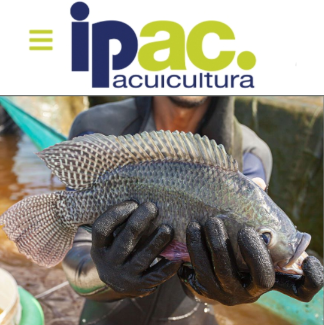
The Brazilian Aquaculture Association (PEIXE BR) has highlighted two important advances achieved in recent days regarding the import of tilapia fillets from Vietnam, the result of mobilization and collaborative work across the entire national aquaculture production chain.
On June 2, the Government of the State of São Paulo announced the publication of a decree establishing an ICMS tax on imported tilapia fillets; a measure that, according to the Association, “represents a significant step in the pursuit of greater fiscal balance and fairer competitive conditions for Brazilian producers.”
Source: iPac.acuicultura | Read the full article here




 JAPAN
JAPAN NORWAY
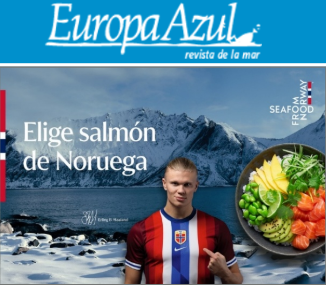 A Nordic Council report advocates combining education, availability, price, and consumer information to incorporate more fish and seafood into the diet
 UNITED STATES
.png) ASC
ASC UNITED KINGDOM
.png) The Scottish aquaculture support company has ordered a 20-metre by 12-metre heavy service catamaran from Macduff Shipyards, a 25-metre by 10.6-metre heavy service vessel from Nauplius Workboats, and a 27-metre by 11-metre fish feed carrier with a 400-tonne hold capacity from Parkol Marine Engineering.
The Scottish aquaculture support company has ordered a 20-metre by 12-metre heavy service catamaran from Macduff Shipyards, a 25-metre by 10.6-metre heavy service vessel from Nauplius Workboats, and a 27-metre by 11-metre fish feed carrier with a 400-tonne hold capacity from Parkol Marine Engineering. With the 2026 FIFA World Cup soccer competition kicking off in the U.S., viewers on the West Coast can watch matches from the water in Elliott Bay, Seattle, U.S.A., aboard a floating soccer pitch.
 CHILE
CHILE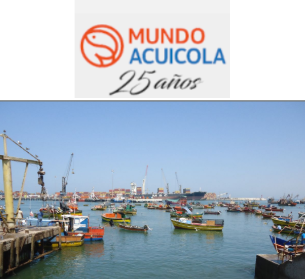 Chilean fisheries and aquaculture exports reached a value of US$1,870.4 million in February 2026, registering a 12.1% increase compared to the same period of the previous year and placing them 33.9% above the average observed during the five-year period 2021-2025, according to the latest Sector Report prepared and published by the Undersecretariat of Fisheries and Aquaculture
  PERU
PERU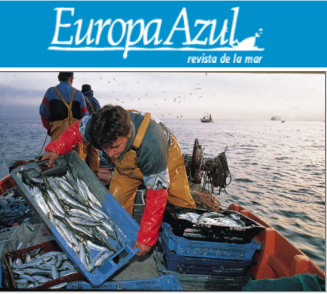 Coastal El Niño Continues to Put Pressure on a Strategic Fishery for Marine Ingredients Used in Animal Feed and Aquaculture
 EUROPEAN UNION
.png) As its name indicates, the Melkart-5 is the fifth vessel in the large family of trawlers belonging to the Russian fishing company Murman Sea Food, one of the most important firms in the sector in the country, operating from the port of Murmansk, Russia's largest in the Arctic. The company was sanctioned in May 2015 by the Council of the European Union along with Norebo JSC, another long-established player in the nation's fishing industry. Both allegedly collaborated with the Kremlin by sponsoring various "destabilizing activities" against the EU27. Acting as a kind of undercover agent, they were caught red-handed amid escalating tensions between the two powers, three years after the outbreak of war in Ukraine.
As its name indicates, the Melkart-5 is the fifth vessel in the large family of trawlers belonging to the Russian fishing company Murman Sea Food, one of the most important firms in the sector in the country, operating from the port of Murmansk, Russia's largest in the Arctic. The company was sanctioned in May 2015 by the Council of the European Union along with Norebo JSC, another long-established player in the nation's fishing industry. Both allegedly collaborated with the Kremlin by sponsoring various "destabilizing activities" against the EU27. Acting as a kind of undercover agent, they were caught red-handed amid escalating tensions between the two powers, three years after the outbreak of war in Ukraine..png) The call comes amid concerns over declining fish stocks and continued illegal fishing activity. According to the coalition, 35% of global fish stocks are fished unsustainably, while half of the UK’s ten most important fish stocks are either critically low, overexploited or both.
The call comes amid concerns over declining fish stocks and continued illegal fishing activity. According to the coalition, 35% of global fish stocks are fished unsustainably, while half of the UK’s ten most important fish stocks are either critically low, overexploited or both..png) Skretting
Skretting BRAZIL
 The
The