Other Media | Capital: Leclerc, Intermarché, Auchan ... which drive chain has the most stock-outs?
FRANCE
Friday, April 03, 2020
Faced with a human tidal wave, drive chains are still struggling to meet customer demand. Some groups like Leclerc are more affected than others.
With the health crisis linked to Covid-19, many French people are shopping more and more via supermarket drives. The customer takes delivery of his articles directly in or near his vehicle, which avoids the maximum contact with outside people. However, the brands did not foresee such a human tidal wave and some drives are found saturated. According to a study by Data Solutions , the Leclerc group's drives are the most affected with out-of-stock rates above 40% in recent days. The price of success no doubt.
Behind Leclerc, Intermarché has a stock-out rate that fluctuated between 37% and 40% of product unavailability between March 20 and 28. Finally we find Auchan in third place on this podium of saturated drive with a failure rate between 35% and 40%. So, to have the best chance of finding everything you need, it would be better to try your luck in the drive of the G20 brand. This one has hardly suffered from the lack of supply since in recent days, it has posted a failure rate between 0 and 7%. Otherwise you will have to drive to the supermarkets of MatchDrive (3 to 10%) of Courses U (12%) of Carrefour (about 20%). Monoprix and Franprix are also options with a break rate of around 25%.
Author: Thomas Romanacce/ Capital | Read the full storyhere (In french)
Valparaíso – With the aim of strengthening scientific cooperation and advancing the challenges of ocean governance, authorities from the Fisheries Development Institute (IFOP) welcomed a delegation from the Flanders Marine Institute (VLIZ) at a high-level meeting held at the institute’s headquarters.
The meeting was led by IFOP Executive Director Gonzalo Pereira Puchy and VLIZ Director Jan Mees, with the participation of the Ambassador of Belgium to Chile, Christian de Lannoy, who highlighted the importance of reinforcing international collaboration in marine research.
During the session, IFOP’s International Affairs and Cooperation Department presented the main guidelines of the 2025–2030 Strategic Plan, where climate change is identified as a key priority. The institution reaffirmed its commitment to management based on the Best Available Science (BAS) and a preventive ecosystem-based approach to ensure ocean sustainability.
As part of the visit, the VLIZ delegation will carry out a technical agenda that includes visits to IFOP facilities in Puerto Montt and nearby areas.
The production of giant squid is showing signs of decline in Peru, raising concerns about global supply as prices for Argentinian squid continue to climb in China.
Recent market data indicates that weekly catches of giant squid (Dosidicus gigas) in Peru have fallen by about 10% compared with the previous week. Despite the drop, overall supply remains relatively high. As one of the world’s largest producers of giant squid, changes in Peru’s catch volumes can quickly influence supply in major importing markets, particularly China.
At the same time, prices for Argentinian squid (Illex argentinus) at Shidao Port, Shandong, China, are steadily increasing. Squid measuring 21–25 cm are currently selling for about 16.5–17 RMB/kg (approximately 2.40–2.47 USD/kg), while larger specimens of 26–30 cm are trading at 20.5–21.5 RMB/kg (around 2.98–3.13 USD/kg).
Market participants attribute the rise largely to renewed purchasing activity after the Lunar New Year holiday, when processing plants resumed operations and supplies for immediate delivery remained limited.
China sources squid from several regions, including Peru, Argentina, and parts of the Indo-Pacific. In the short term, prices are expected to remain volatile, depending on fishing activity, port arrivals, and demand from processing companies.
With the aim of providing transparent information on the state of fisheries in Chile, the National Fisheries Society (Sonapesca F.G.) compiled and analyzed data from scientific committee reports, presenting the State of Biomasses with Respect to Maximum Sustainable Yield (MSY) 2025.
Maximum Sustainable Yield (MSY) represents the equilibrium point that allows for the sustainable harvesting of a fishery resource without affecting reproduction or population size. Ideally, fisheries should remain close to or above 100% of this indicator.According to the report, nine of the 17 fisheries analyzed are above the biological optimum, exceeding 100% of MSY.
Authorities launch a major survey to see how the cephalopod proliferation is affecting shipowners
Devon fishermen lament that their traditional shellfish fisheries have plummeted by up to 80%
The British government has been monitoring the widespread presence of octopus in its waters for more than a year. The unusual bloom, which worries local shellfish fishermen, is the focus of attention for the industry, scientists, and authorities, who still don't quite know what to do about an event that hasn't occurred in 75 years and which they attribute mainly to climate change. Through the Marine Management Organization (MMO), the Administration is closely monitoring the situation and, in its latest update, reveals that the cephalopod plague continues, with more than 400 tons caught between January and February alone, a 450% increase compared to the same period last year.
Author: Adrián Amoedo / Fato de Vigo | Read the full article here
They represent the event’s commitment to, and investment in the future of the commercial fishing and aquaculture industries. The students receive a ISK 300,000 bursary towards their studies. Today the first tranche of the bursary, and a commemorative certificate were presented and the second half of the award will be made in September at the prestigious IceFish Awards Ceremony
The three worthy recipients are all students at the Icelandic College of Fisheries. They are Katarzyna Staszek, Ewa Jaros and Malgorzata Barbara Sworowska. All three are studying quality management at the college and working in the commercial fishing industry. Katarzyna at Brim in Reyjavik; Ewa at Jakob Valgeir in Bolungarvik and Malgorzata at Nýfisk Sandgerdi, Sudurnesjaber.
Both Katarzyna and Malgorzata attended the presentation. The Icelandic weather stepped in to prevent Ewa from attending in person but she will receive her certificate from the Headmaster at the College.
The Bursary applications were assessed by a specialist judging panel from the industry, including Klemenz Sæmundsson, Headmaster of the Icelandic College of Fisheries; Hrefna Karlsdóttir, Senior adviser at Fisheries Iceland; Kjartan Sveinsson, Chairman, National Association of Small Boat Owners; and Bjarni Jonsson, representative of IceFish.
EU packaging rule changes will require seafood industry to rethink packaging.
New EU packaging rules could force seafood producers to redesign packaging systems over the next decade, according to a researcher at the Norwegian food research institute Nofima.
Writing in an opinion piece published by seafood industry publication IntraFish.no, senior researcher Anlaug Ådland Hansen said the EU’s EU Packaging and Packaging Waste Regulation (PPWR) will require a comprehensive review of packaging solutions used in seafood exports.
Source: SalmonBusiness | Read the full article here
Salmon farming heavyweight SalMar has secured 6,112 tonnes of biomass allowance in Norway by winning permission to convert eight temporary development licences into permanent standard permits.
The permits – seven of 796 tonnes and one of 540 tonnes – are held by SalMar subsidiary Arctic Offshore Farming AS, in connection with the development of Arctic Offshore Farming concept for exposed offshore locations. The facility is designed as a circular, semi-submersible structure with two cages and a feed barge, where the cages can be operated below the surface to reduce contact with sea lice.The concept was developed by Norway Royal Salmon (NRS) and Aker, which were granted development permits for the project in 2018.
Author: Therese Soltveit / fishfarmingexpert | Read the full article here
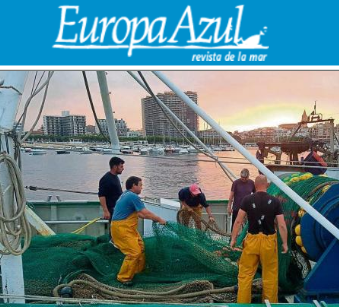
The maritime sector is reinforcing its role as one of the major drivers of employment in the global and European economy, combining the enduring relevance of traditional maritime trades with the emergence of new professions linked to digitalization, the energy transition, and technological innovation. Seafarers, shipbuilding and repair personnel, port technicians, logistics specialists, experts in new fuels, and blue biotechnology professionals are already among the most in-demand profiles in an industry undergoing profound transformation.
The maritime-port system requires highly qualified professionals to guarantee navigational safety, the efficiency of logistics chains, and the operation of strategic infrastructure for international trade.
A new global study suggests the fishing industry could dramatically increase the amount of seafood reaching consumers simply by reducing waste after fish are landed.
Researchers found that only about 54% of the world’s harvested fish is ultimately eaten by people, with the rest lost to spoilage, inefficient processing, poor storage or diverted to non-food uses such as fishmeal. By improving handling, storage and processing, that figure could potentially rise to 74% without catching a single extra fish.The research, conducted by scientists at the UCL Energy Institute and collaborators, suggests that better post-harvest practices could generate what the authors call a ‘hidden harvest’.
Award winning Scottish salmon farm, Loch Duart is set to return to the Seafood Expo in Boston on the back of a successful US focussed marketing campaign. Loch Duart can be found as part of the Seafood from Scotland section of the event (Stand – 2745), which is North America’s largest seafood trade exposition.
Loch Duart’s heritage breed salmon is growing in popularity in North America and has grown significantly following their recent culinary competition in partnership with Chef’s Roll.
Russia’s Fishing Fleet Nears 1 Million Tons in Early 2026 Catch Russia Fed.
Strong Far East harvest leads national totals while several Okhotsk pollock areas lag behind last year’s pace
Russian fishermen are rapidly approaching a major seasonal milestone,...
Rawson: shrimp survey fails and season closure is anticipated Argentina
The first day of the survey south of the 44th parallel showed very low catches and a high presence of hake. After nearly four months of operations and more than 90,000 tons landed, the Chubut Fisherie...
Copyright 1995 - 2026 Seafood Media Group Ltd.| All Rights Reserved. DISCLAIMER





 FRANCE
 Behind
  CHILE
CHILE.png)
 PERU
PERU.png) Recent market data indicates that weekly catches of giant squid (Dosidicus gigas) in Peru have fallen by about 10% compared with the previous week. Despite the drop, overall supply remains relatively high. As one of the world’s largest producers of giant squid, changes in Peru’s catch volumes can quickly influence supply in major importing markets, particularly China.
Recent market data indicates that weekly catches of giant squid (Dosidicus gigas) in Peru have fallen by about 10% compared with the previous week. Despite the drop, overall supply remains relatively high. As one of the world’s largest producers of giant squid, changes in Peru’s catch volumes can quickly influence supply in major importing markets, particularly China. With the aim of providing transparent information on the state of fisheries in Chile, the National Fisheries Society (Sonapesca F.G.) compiled and analyzed data from scientific committee reports, presenting the State of Biomasses with Respect to Maximum Sustainable Yield (MSY) 2025.
 UNITED KINGDOM
.png) The British government has been monitoring the widespread presence of octopus in its waters for more than a year. The unusual bloom, which worries local shellfish fishermen, is the focus of attention for the industry, scientists, and authorities, who still don't quite know what to do about an event that hasn't occurred in 75 years and which they attribute mainly to climate change. Through the Marine Management Organization (MMO), the Administration is closely monitoring the situation and, in its latest update, reveals that the cephalopod plague continues, with more than 400 tons caught between January and February alone, a 450% increase compared to the same period last year.
The British government has been monitoring the widespread presence of octopus in its waters for more than a year. The unusual bloom, which worries local shellfish fishermen, is the focus of attention for the industry, scientists, and authorities, who still don't quite know what to do about an event that hasn't occurred in 75 years and which they attribute mainly to climate change. Through the Marine Management Organization (MMO), the Administration is closely monitoring the situation and, in its latest update, reveals that the cephalopod plague continues, with more than 400 tons caught between January and February alone, a 450% increase compared to the same period last year. ICELAND
.png) The three worthy recipients are all students at the Icelandic College of Fisheries. They are Katarzyna Staszek, Ewa Jaros and Malgorzata Barbara Sworowska. All three are studying quality management at the college and working in the commercial fishing industry. Katarzyna at Brim in Reyjavik; Ewa at Jakob Valgeir in Bolungarvik and Malgorzata at Nýfisk Sandgerdi, Sudurnesjaber.
The three worthy recipients are all students at the Icelandic College of Fisheries. They are Katarzyna Staszek, Ewa Jaros and Malgorzata Barbara Sworowska. All three are studying quality management at the college and working in the commercial fishing industry. Katarzyna at Brim in Reyjavik; Ewa at Jakob Valgeir in Bolungarvik and Malgorzata at Nýfisk Sandgerdi, Sudurnesjaber. EUROPEAN UNION
.png) New EU packaging rules could force seafood producers to redesign packaging systems over the next decade, according to a researcher at the Norwegian food research institute
New EU packaging rules could force seafood producers to redesign packaging systems over the next decade, according to a researcher at the Norwegian food research institute  NORWAY
 Salmon farming heavyweight
  WORLDWIDE
 The maritime sector is reinforcing its role as one of the major drivers of employment in the global and European economy, combining the enduring relevance of traditional maritime trades with the emergence of new professions linked to digitalization, the energy transition, and technological innovation. Seafarers, shipbuilding and repair personnel, port technicians, logistics specialists, experts in new fuels, and blue biotechnology professionals are already among the most in-demand profiles in an industry undergoing profound transformation.
 A new global study suggests the fishing industry could dramatically increase the amount of seafood reaching consumers simply by reducing waste after fish are landed.
 UNITED STATES
 Award winning Scottish salmon farm,