Other Media | EuropaAzul: IMO recognizes the need to keep supply chains active
WORLDWIDE
Tuesday, June 02, 2020
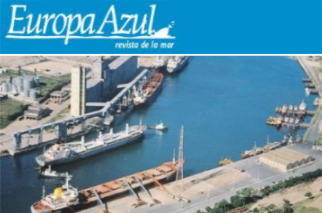
International Maritime Organization (IMO) recognizes the need to keep supply chains in Maritime Commerce operational due to the impact of COVID-19. In this way, the Secretariat of the Inter-American Committee on Ports (S / CIP) has developed best practices for response protocols to the COVID-19 pandemic to ensure the proper functioning of ports. Bearing in mind the difficulties presented by the pandemic but recognizing the area of opportunity for the development of guidelines for the response to health emergencies and risk situations such as this, the S / CIP has dedicated itself to collecting, recognizing and disseminating best practices and decisions made by our members.
BEIJING — China’s aquatic product output grew steadily in the first two months of the year, with total production reaching 9.6022 million tons in January–February 2026, marking a 3.65% year-on-year increase, according to data reported by Food World.
The growth was driven largely by aquaculture. Marine aquaculture output totaled 2.5078 million tons, up 5.02%, while freshwater aquaculture reached 5.6331 million tons, rising 3.61%. In contrast, capture fisheries saw more modest gains: marine fishing increased 1.55% to 1.3401 million tons, and freshwater fishing rose 1.07% to 121,300 tons.
The data covers 20 provinces, autonomous regions, and municipalities, including Beijing, Shanghai, Guangdong, Zhejiang, Shandong, Sichuan, and Hubei, highlighting broad-based growth across the country’s fisheries sector.
The continued expansion reflects China’s strong focus on aquaculture development to meet rising domestic demand and stabilize food supply.
The Board of Directors of the Spanish Aquaculture Society (SEA) has announced the incorporation of the Spanish Aquaculture Business Association (APROMAR) as an institutional member.
This incorporation, SEA is pleased to say, “will not only strengthen our representation and establish an essential link with the production sector, but will also contribute very positively to the development of our activities and mark the beginning of a period of fruitful collaborations and joint projects.”
For APROMAR, this agreement “reinforces our commitment to continue promoting aquaculture as a pillar of the Blue Economy.”
Source: iPac.acuicultura | Read the full article here
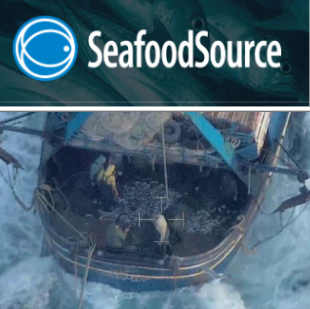
The European Union’s border patrol agency spotted an illegal fishing operation in Italian waters and was able to work with the country’s coast guard to obtain one of the vessels.
The European Border and Coast Guard Agency, Frontex, said it spotted two fishing vessels illegally operating within Italian waters near the island of Lampedusa on 21 March during a regular surveillance flight. The Frontex Surveillance Aircraft immediately notified the European Fisheries Control Agency and the Italian Coast Guard.
Frontex surveillance aircraft carry out regular patrols over the central Mediterranean in support of Italian authorities and as part of the Agency’s broader maritime surveillance mandate
Author: Nathan Strout / SeafoodSource | Read thr full article here
Fish species that undertake mammoth migrations through rivers, lakes and ponds are facing a combined threat from dams, pollution and overfishing preventing them from reaching their breeding grounds.
The golden mahseer and goonch catfish are some of the thirty flagship fish species which have now been prioritised for global conservation by the UN in a new report.
A team of international scientists assessed more than 15,000 species of freshwater migratory fish - which make up half of all fish species - and found their numbers had dropped by an estimated 81% in the last half century.
Author: Esme Stallard / BBC | Read thr full article here
Hand-dived and low-impact scallops are fast emerging as a compelling alternative to traditional dredged scallops—offering the same exceptional flavour while significantly reducing environmental impact. Across the UK, chefs and restaurateurs are increasingly championing these sustainably sourced shellfish, from diver-harvested scallops in the cold waters of Scotland to innovative LED pot-caught “disco scallops” off the South West coast.
This growing movement reflects a broader shift in the UK seafood industry: a move towards transparency, seasonality and low-impact harvesting methods that protect marine habitats without compromising on quality.
Registration is now open for the IFFO China Summit 2026, organized by IFFO – The Marine Ingredients Organisation. The event will take place in Shanghai on 10–11 June 2026, bringing together key stakeholders from the global marine ingredients value chain to discuss market trends, regulatory updates, and future opportunities.
The annual summit continues to highlight China’s pivotal role in the aquaculture industry. As both the world’s largest producer and a major consumer of marine ingredients, the country remains central to sector growth.
Maggie Xu, IFFO’s China Director, stated: "We are delighted to welcome the industry back to China for another edition of what has now become an annual event. China continues to play a central role in the global aquaculture sector, both as the world’s largest producer and as a leading user of marine ingredients to support its rapidly developing feed and farming industries. According to OECD-FAO estimates, China is expected to account for 42% of global fishmeal consumption by 2034.”
Athens – Cooke Inc. has signed a memorandum of understanding to acquire the existing debt of Avramar Aquaculture S.A., Andromeda S.A., Perseus S.A., and Avramar Commercial and Logistics S.A. (collectively, Avramar Greece), a major producer of sea bass and seabream in Greece.
Combined with its prior agreement to purchase equity, Cooke is set to gain operational control of Avramar Greece upon closing.
Founded in 1981, the group has grown into a leading Mediterranean aquaculture company, operating a fully integrated model that includes hatcheries, marine farms, processing and packaging facilities, and feed production. Its sustainability standards are recognized by the Global Sustainable Seafood Initiative (GSSI) and the Global Food Safety Initiative (GFSI).
The transaction remains subject to final agreements and customary conditions, with completion expected as soon as possible.
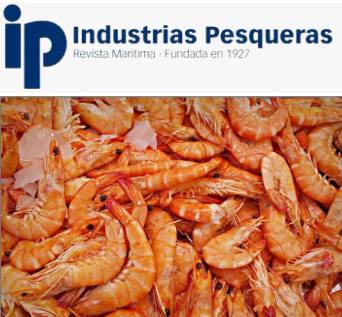
As the geopolitical crisis in the Middle East begins to disrupt European supply chains, the Commission is committed to implementing its strategic alliance with Argentina, Brazil, Paraguay, and Uruguay as soon as possible. Brussels has announced the provisional application of the EU-Mercosur Trade Agreement, which will enter into force on May 1, after sending a "note verbale" to Paraguay. This was the final procedural step necessary for the provisional application of the agreement with all Mercosur countries that have completed their ratification processes. Argentina, Brazil, and Uruguay have already done so, and Paraguay's notification is expected shortly.
Source: Industrias Pesqueras | Read the full article here
The organisers of Seawork, Europe’s leading commercial marine and workboat exhibition, have revealed that this year’s event is expected to inject between £10 million and £13 million into the economies of Southampton, wider Hampshire and the Isle of Wight.
Taking place in the week commencing 8 June, the programme combines the high-speed vessel and innovation showcase Speed@Seawork in Cowes on 8 June with the flagship three-day Seawork exhibition in Southampton from 9–11 June.
Author: Robert Outram / Fish Farmer | Read the full article here
Chilean salmon farmer Ventisqueros has become the sixth member of the Salmon Council, a trade body that represents companies producing about 60% of the sector’s output.
Ventisqueros, part of German holding company Schörghuber Gruppe, is a vertically integrated company that produces approximately 45,000 tonnes of salmon annually and has more than 1,300 employees. Its harvest volume is split more or less evenly between coho and Atlantic salmon, although it aims for 60% coho by 2030.
Salmon Council executive president Loreto Seguel said: “For Chile, salmon farming is an industry deeply rooted in the southern region and, at the same time, with a strong national identity and a global reach.
Source: fishfarmingexpert | Read the full article here
The giant squid: hostage of the powers Peru
The recent meeting of the South Pacific Regional Fisheries Management Organisation (SPRFMO) once again highlighted the weaknesses of international governance over one of the most important resources i...




 WORLDWIDE
 International Maritime Organization (IMO) recognizes the need to keep supply chains in Maritime Commerce operational due to the impact of COVID-19. In this way, the Secretariat of the Inter-American Committee on Ports (S / CIP) has developed best practices for response protocols to the COVID-19 pandemic to ensure the proper functioning of ports. Bearing in mind the difficulties presented by the pandemic but recognizing the area of opportunity for the development of guidelines for the response to health emergencies and risk situations such as this, the S / CIP has dedicated itself to collecting, recognizing and disseminating best practices and decisions made by our members.
 CHINA
CHINA.jpeg) The growth was driven largely by aquaculture. Marine aquaculture output totaled 2.5078 million tons, up 5.02%, while freshwater aquaculture reached 5.6331 million tons, rising 3.61%. In contrast, capture fisheries saw more modest gains: marine fishing increased 1.55% to 1.3401 million tons, and freshwater fishing rose 1.07% to 121,300 tons.
The growth was driven largely by aquaculture. Marine aquaculture output totaled 2.5078 million tons, up 5.02%, while freshwater aquaculture reached 5.6331 million tons, rising 3.61%. In contrast, capture fisheries saw more modest gains: marine fishing increased 1.55% to 1.3401 million tons, and freshwater fishing rose 1.07% to 121,300 tons. SPAIN
SPAIN The Board of Directors of the Spanish Aquaculture Society (SEA) has announced the incorporation of the Spanish Aquaculture Business Association
  EUROPEAN UNION
 The European Union’s border patrol agency spotted an illegal fishing operation in Italian waters and was able to work with the country’s coast guard to obtain one of the vessels.
 Fish species that undertake mammoth migrations through rivers, lakes and ponds are facing a combined threat from dams, pollution and overfishing preventing them from reaching their breeding grounds.
 UNITED KINGDOM
.png) This growing movement reflects a broader shift in the UK seafood industry: a move towards transparency, seasonality and low-impact harvesting methods that protect marine habitats without compromising on quality.
This growing movement reflects a broader shift in the UK seafood industry: a move towards transparency, seasonality and low-impact harvesting methods that protect marine habitats without compromising on quality.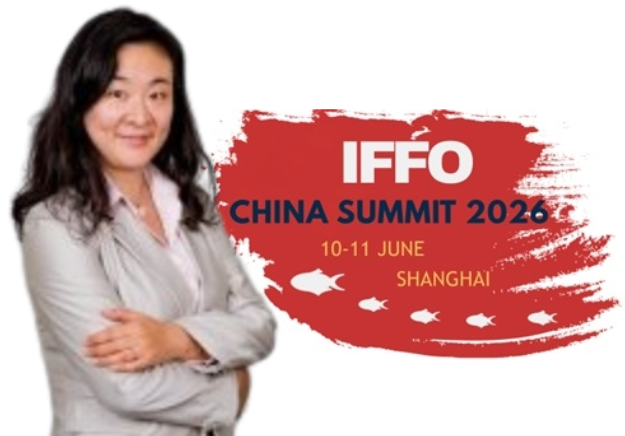
 GREECE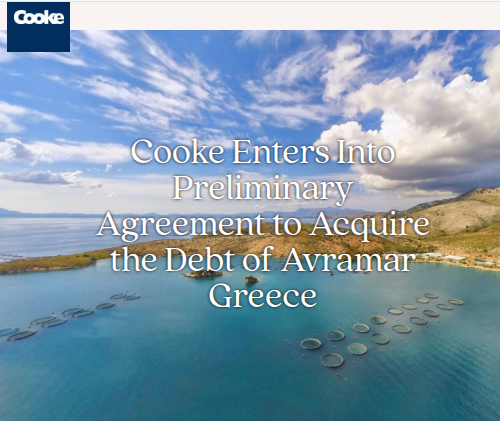
 As the geopolitical crisis in the Middle East begins to disrupt European supply chains, the Commission is committed to implementing its strategic alliance with Argentina, Brazil, Paraguay, and Uruguay as soon as possible. Brussels has announced the provisional application of the EU-Mercosur Trade Agreement, which will enter into force on May 1, after sending a "note verbale" to Paraguay. This was the final procedural step necessary for the provisional application of the agreement with all Mercosur countries that have completed their ratification processes. Argentina, Brazil, and Uruguay have already done so, and Paraguay's notification is expected shortly.
.png) The organisers of
The organisers of CHILE
CHILE.png) Ventisqueros, part of German holding company Schörghuber Gruppe, is a vertically integrated company that produces approximately 45,000 tonnes of salmon annually and has more than 1,300 employees. Its harvest volume is split more or less evenly between coho and Atlantic salmon, although it aims for 60% coho by 2030.
Ventisqueros, part of German holding company Schörghuber Gruppe, is a vertically integrated company that produces approximately 45,000 tonnes of salmon annually and has more than 1,300 employees. Its harvest volume is split more or less evenly between coho and Atlantic salmon, although it aims for 60% coho by 2030.