Other Media | The Fishing Daily: Additional Love Seafood marketing thanks to UK Government support
UNITED KINGDOM
Tuesday, February 23, 2021
Seafish, the public body that supports the UK seafood industry, has announced it will deliver additional Love Seafood campaign activity this spring, featuring UK fish and shellfish. Love Seafood is a 20-year initiative to shift seafood consumption levels in the UK, and over time will feature many different species and product types as it seeks to change attitudes.
The past year has been challenging for many seafood businesses as they faced the impacts of the global Covid-19 pandemic. Despite significant setbacks in 2020, caused by the pandemic, retail continues to perform well.
Source: The Fishing Daily | Read the full articlehere
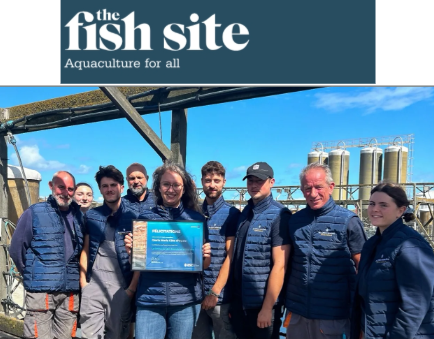
French aquaculture producer Gloria Maris Côte d’Opale has become the country’s first seabream and seabass farm to achieve Aquaculture Stewardship Council (ASC) certification.
Located along the beaches of the Hauts-de-France region, the facility earned the designation after demonstrating compliance with the ASC seabass and seabream standard, which covers environmental responsibility, animal welfare, responsible feed and resource use, and social accountability. This certification marks a major milestone for French aquaculture, expanding the local availability of certified farmed seafood.
Source: The Fish Site | Read the full article here
China’s rapidly expanding salmon market is increasingly being shaped by one clear trend: sashimi.
New research from the Norwegian Seafood Council (NSC) suggests raw salmon has moved beyond restaurants and into the mainstream, supported by home consumption, rapid delivery and a growing network of facilities producing sashimi-grade fish.
The development could have significant implications for salmon imports, with Chinese demand continuing to accelerate. Imported salmon grew 50% in 2025, while Chinese salmon imports rose a further 43% in the first half of 2026, according to the NSC.
Salmon farmer hit by biological problems and depressed prices
Salmon farmer Grieg Seafood has reported a pre-tax financial loss of NOK 409 million (£32.1m) for the first half of 2026, and an operating loss of NOK 424m.
These figures compare with a pre-tax loss of NOK 446m and an operating profit of NOK 9m in H1 2025.The first half of 2026 tested Grieg Seafood. Weaker market conditions than anticipated, combined with biological challenges and a company in transition, resulted in financial performance that is not satisfactory
Author: Gareth Moore / fishfarmingexpert | Read the full article here
Production of farmed marine salmon in Hokkaido reached approximately 520 tons between April and July 2026—a 22% increase compared to the same period the previous year—according to figures released on August 27 by the Japanese industry publication Suikei.
Photo: Hokkaido Shiriuchi Salmon
This growth extends a trend that began in 2019 with the launch of initial experimental farming projects in southern Hokkaido and along the Sea of ??Japan coast. While the expansion remains in a regional development phase, it points to a growing presence of locally produced salmon within the Japanese market supply.
The program, funded by RVO and EMFAF, will remain open until September 3, 2026, to mitigate the impact of rising fuel prices on Dutch vessel owners.
The Rijksdienst voor Ondernemend Nederland (RVO) is keeping open until September 3, 2026, a dedicated support line designed for fishing vessel owners affected by escalating fuel costs. The scheme has a total budget of €13.5 million, co-funded at 70% by the European Maritime, Fisheries and Aquaculture Fund (EMFAF), with the remaining 30% provided by the Dutch Government.
The call for applications is aimed exclusively at vessels registered as fishing units in the Netherlands and provides differentiated aid based on license type, engine power, fishing gear, and targeted activity. Eligible categories include North Sea shrimp (Crangon crangon) fishing, mussel (Mytilus edulis) and oyster (Ostrea edulis) farming, as well as various coastal and trawl fishing operations.
The first application window opened on August 20 and will close on September 3, 2026, at 17:00 hours. Compensation is calculated based on liters of diesel supplied between March and June 2026, with reference rates ranging from €0.21 to €0.45 per liter, depending on the month of supply. The maximum grant per vessel ranges from €5,000 to €189,000.
BIM brings Wild Atlantic Way producers together to boost collaboration, innovation and business diversification
The event provided a valuable platform for seafood producers to exchange ideas, build connections and explore future collaborations that can strengthen coastal communities and showcase Ireland’s world-class seafood offering.
Seafood producers gathered on 25 August at Highbank Orchards for a BIM Taste the Atlantic event. Businesses explored tourism models, funding opportunities and international experiences from Canada, aiming to diversify revenues and strengthen Ireland’s coastal communities.
The countries target joint projects in technology, tuna, marine farming and the blue economy
Seychelles wants to fast-track a fisheries and aquaculture MoU with India. Cooperation would cover marine aquaculture, modern hatcheries, tuna fisheries, stock assessment, post-harvest technology, conservation, AI and MCS systems, plus joint research, laboratory access, training and pilot projects. India produces 19.7 million tonnes of fish and exports US$8.46 billion in seafood.
Coast Guard special forces and cooperation with Beijing to be strengthened
South Korea will intensify enforcement against Chinese fishing vessels near the Northern Limit Line (NLL), deploying more Coast Guard special forces, removing illegal gear and installing underwater deterrents. New rules will also target unauthorized anchoring, drifting and supply operations.
“What happens in the Arctic doesn’t stay in the Arctic.” Marzio Mian—a co-founder of The Arctic Times Project, an initiative dedicated to documenting the consequences of climate change in the region—is unequivocal. This statement reflects the interconnected nature of the climate; according to the World Meteorological Organization’s report on the State of the Global Climate in 2025, the eleven-year period from 2015 to 2025 saw the warmest years on record. Notably, 2025 ranked as the second or third warmest year ever recorded, with temperatures approximately 1.43°C above the 1850–1900 average.
The ocean continues to warm and absorb carbon dioxide, while the annual extent of Arctic sea ice has reached its lowest level on record.
Source: Industrias Pesqueras | Read the full article here
Last week, 43% more product was seized, and the number of fishing gear items confiscated was double that of the previous week.
Over the last two weeks, the Coast Guard issued an average of five violation or seizure reports daily for shellfish and fish at various points along the Galician coast. From the 10th through Sunday the 23rd, they prevented 447 kilos of illegally sourced octopus from reaching the market and confiscated 1,718 traps—most intended for catching that cephalopod—as well as 190 *cacharros* (opaque plastic traps prohibited in Galicia).Compared to the August 10–16 period, the amount of fishing gear removed from the sea doubled between the 17th and 23rd (1,300 versus 660), and the quantity of seized shellfish and fish increased by 43% (372 versus 260).
Source: La Voz de Galicia | Read the full article here
Norway Pelagic Fisheries Report, Week 34 Norway
Mackerel Fishing Underway in the Norwegian Sea
First Large-Sized Landings Mark the Start of the Main Offshore Season, While Coastal Fleet Reports Modest Captures and Progress Continues Across North S...




 UNITED KINGDOM
 Seafish
 FRANCE
 French aquaculture producer Gloria Maris Côte d’Opale has become the country’s first seabream and seabass farm to achieve Aquaculture Stewardship Council (ASC) certification.
 CHINA
CHINA.png) China’s rapidly expanding salmon market is increasingly being shaped by one clear trend: sashimi.
China’s rapidly expanding salmon market is increasingly being shaped by one clear trend: sashimi. NORWAY
.png) Salmon farmer
Salmon farmer  JAPAN
JAPAN.png)
 NETHERLANDS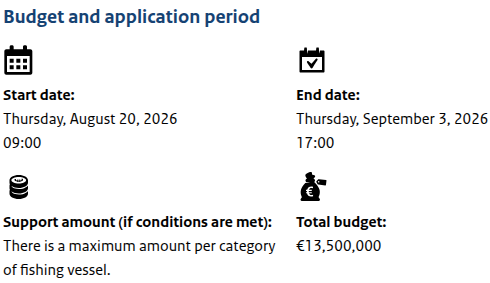
 REPUBLIC OF IRELAND
.png)
 SEYCHELLES
 Seychelles wants to fast-track a fisheries and aquaculture MoU with India. Cooperation would cover marine aquaculture, modern hatcheries, tuna fisheries, stock assessment, post-harvest technology, conservation, AI and MCS systems, plus joint research, laboratory access, training and pilot projects. India produces 19.7 million tonnes of fish and exports US$8.46 billion in seafood.
 SOUTH KOREA
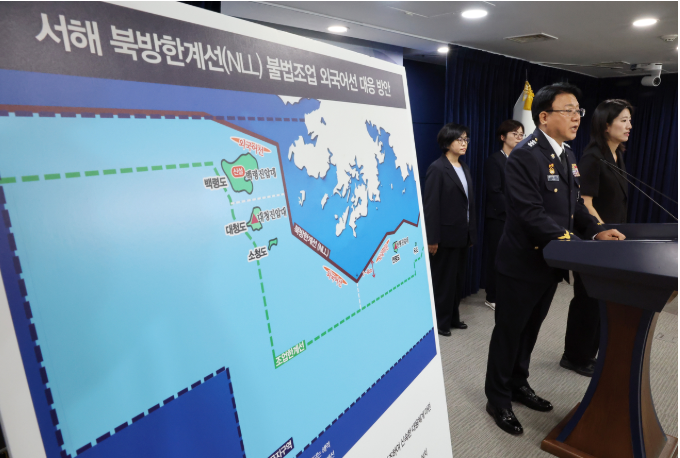 Coast Guard special forces and cooperation with Beijing to be strengthened
 WORLDWIDE
.png) “What happens in the Arctic doesn’t stay in the Arctic.” Marzio Mian—a co-founder of The Arctic Times Project, an initiative dedicated to documenting the consequences of climate change in the region—is unequivocal. This statement reflects the interconnected nature of the climate; according to the World Meteorological Organization’s report on the State of the Global Climate in 2025, the eleven-year period from 2015 to 2025 saw the warmest years on record. Notably, 2025 ranked as the second or third warmest year ever recorded, with temperatures approximately 1.43°C above the 1850–1900 average.
“What happens in the Arctic doesn’t stay in the Arctic.” Marzio Mian—a co-founder of The Arctic Times Project, an initiative dedicated to documenting the consequences of climate change in the region—is unequivocal. This statement reflects the interconnected nature of the climate; according to the World Meteorological Organization’s report on the State of the Global Climate in 2025, the eleven-year period from 2015 to 2025 saw the warmest years on record. Notably, 2025 ranked as the second or third warmest year ever recorded, with temperatures approximately 1.43°C above the 1850–1900 average. SPAIN
SPAIN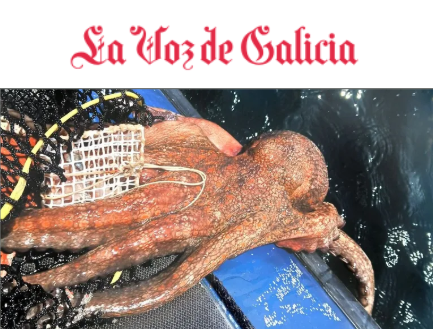 Over the last two weeks, the Coast Guard issued an average of five violation or seizure reports daily for shellfish and fish at various points along the Galician coast. From the 10th through Sunday the 23rd, they prevented 447 kilos of illegally sourced octopus from reaching the market and confiscated 1,718 traps—most intended for catching that cephalopod—as well as 190 *cacharros* (opaque plastic traps prohibited in Galicia).Compared to the August 10–16 period, the amount of fishing gear removed from the sea doubled between the 17th and 23rd (1,300 versus 660), and the quantity of seized shellfish and fish increased by 43% (372 versus 260).