Other Media | Fish Farmer: Shutdown ‘puts more than 1,500 jobs at risk’
CANADA
Wednesday, February 24, 2021
The Canadian federal government’s decision to close salmon farms in the Discovery Islands region of British Columbia will put 1,535 jobs at risk and the state’s economy will take a hit of CAN $139.1m. Those are among the findings of a report from economics consultancy RIAS, commissioned by the BC Salmon Farmers Association (BCSFA).
In December last year, Fisheries, Oceans and the Canadian Coast Guard Minister Bernadette Jordan ordered all salmon farms in the region removed by June 30, 2022.
The farms have also been blocked from restocking, starting immediately.The BC Salmon Farmers strongly oppose the decision, which the federal government says was taken in response to calls from local First Nations and environmental groups.
Author: Robert Outram / Fish Farmer | Read the full articlehere
“Opening the EU market to Indonesia, home to the largest tuna fleet in the Indian Ocean: at what price?” This is the question posed by the European fishing industry association Europêche in response to the draft EU-Indonesia agreement, recently published by the European Commission, which grants preferential access to the tuna market.
Under the proposed agreement, fresh and frozen tuna fillets would be fully liberalized, with a 0% tariff from the date of entry into force and no quotas, while processed tuna products would be subject to tariff quotas: 5,000 tons per year for tuna loins and 800 tons per year for canned tuna, both duty-free only within the quota.
Source:Industrias Pesqueras | Read the full article here
Line Ellingsen has been re-elected as chair of Sjømat Norge following the organisation’s annual general meeting in Trondheim.
Ellingsen is chief executive of Ellingsen Seafood in Skrova in the Lofoten archipelago and also serves as vice president of NHO, the Confederation of Norwegian Enterprise.
“It is a recognition of the work the board has done during the current period, and I look forward to starting a new term together with the rest of the board,” Ellingsen said in a statement.
Source: SalmonBusiness | Read the full article here
Lower, more stable prices in the salmon market helped Iceland Seafood International, the big Nordic salmon and whitefish exporter, which has told investors than 2025 was a year of “solid progress” for the business.
Presenting the company’s annual report, group CEO Ægir Páll Friðbertsson said lower, more stable prices in the salmon market had helped through last year. He said that all divisions within the Group had delivered strong results during in 2025, despite various external challenges, highlighting the business’s resilience and competitiveness.
In 2025, prices for cod, related species, and mackerel increased, while demand remained stable in our key markets.
Author:Vince McDonagh / Fish Farmer | Read the full article here
The main shareholder in the Norwegian salmon farmer is reviewing its ownership in the company, while chief executive Helge Kvalvik is stepping down.
The news was stated in two stock exchange announcements yesterday afternoon.
Heimstø AS, which controls around 70% of the shares in Måsøval, has decided to initiate a strategic assessment of its ownership. The company emphasises that no decision has been made regarding a transaction, but that various alternatives will now be considered.
DNB Carnegie is engaged as financial advisor in the process.
Source: fishfarmingexpert | Read the full article here
BEIJING — China’s aquatic product output grew steadily in the first two months of the year, with total production reaching 9.6022 million tons in January–February 2026, marking a 3.65% year-on-year increase, according to data reported by Food World.
The growth was driven largely by aquaculture. Marine aquaculture output totaled 2.5078 million tons, up 5.02%, while freshwater aquaculture reached 5.6331 million tons, rising 3.61%. In contrast, capture fisheries saw more modest gains: marine fishing increased 1.55% to 1.3401 million tons, and freshwater fishing rose 1.07% to 121,300 tons.
The data covers 20 provinces, autonomous regions, and municipalities, including Beijing, Shanghai, Guangdong, Zhejiang, Shandong, Sichuan, and Hubei, highlighting broad-based growth across the country’s fisheries sector.
The continued expansion reflects China’s strong focus on aquaculture development to meet rising domestic demand and stabilize food supply.
The Board of Directors of the Spanish Aquaculture Society (SEA) has announced the incorporation of the Spanish Aquaculture Business Association (APROMAR) as an institutional member.
This incorporation, SEA is pleased to say, “will not only strengthen our representation and establish an essential link with the production sector, but will also contribute very positively to the development of our activities and mark the beginning of a period of fruitful collaborations and joint projects.”
For APROMAR, this agreement “reinforces our commitment to continue promoting aquaculture as a pillar of the Blue Economy.”
Source: iPac.acuicultura | Read the full article here
The European Union’s border patrol agency spotted an illegal fishing operation in Italian waters and was able to work with the country’s coast guard to obtain one of the vessels.
The European Border and Coast Guard Agency, Frontex, said it spotted two fishing vessels illegally operating within Italian waters near the island of Lampedusa on 21 March during a regular surveillance flight. The Frontex Surveillance Aircraft immediately notified the European Fisheries Control Agency and the Italian Coast Guard.
Frontex surveillance aircraft carry out regular patrols over the central Mediterranean in support of Italian authorities and as part of the Agency’s broader maritime surveillance mandate
Author: Nathan Strout / SeafoodSource | Read thr full article here
Fish species that undertake mammoth migrations through rivers, lakes and ponds are facing a combined threat from dams, pollution and overfishing preventing them from reaching their breeding grounds.
The golden mahseer and goonch catfish are some of the thirty flagship fish species which have now been prioritised for global conservation by the UN in a new report.
A team of international scientists assessed more than 15,000 species of freshwater migratory fish - which make up half of all fish species - and found their numbers had dropped by an estimated 81% in the last half century.
Author: Esme Stallard / BBC | Read thr full article here
Hand-dived and low-impact scallops are fast emerging as a compelling alternative to traditional dredged scallops—offering the same exceptional flavour while significantly reducing environmental impact. Across the UK, chefs and restaurateurs are increasingly championing these sustainably sourced shellfish, from diver-harvested scallops in the cold waters of Scotland to innovative LED pot-caught “disco scallops” off the South West coast.
This growing movement reflects a broader shift in the UK seafood industry: a move towards transparency, seasonality and low-impact harvesting methods that protect marine habitats without compromising on quality.
Registration is now open for the IFFO China Summit 2026, organized by IFFO – The Marine Ingredients Organisation. The event will take place in Shanghai on 10–11 June 2026, bringing together key stakeholders from the global marine ingredients value chain to discuss market trends, regulatory updates, and future opportunities.
The annual summit continues to highlight China’s pivotal role in the aquaculture industry. As both the world’s largest producer and a major consumer of marine ingredients, the country remains central to sector growth.
Maggie Xu, IFFO’s China Director, stated: "We are delighted to welcome the industry back to China for another edition of what has now become an annual event. China continues to play a central role in the global aquaculture sector, both as the world’s largest producer and as a leading user of marine ingredients to support its rapidly developing feed and farming industries. According to OECD-FAO estimates, China is expected to account for 42% of global fishmeal consumption by 2034.”





 CANADA
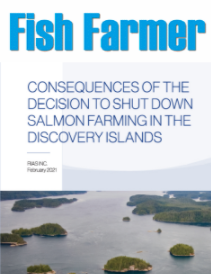 The Canadian federal government’s decision to close salmon farms in the Discovery Islands region of British Columbia will put 1,535 jobs at risk and the state’s economy will take a hit of CAN $139.1m. Those are among the findings of a report from economics consultancy RIAS, commissioned by the BC Salmon Farmers Association (BCSFA).
 EUROPEAN UNION
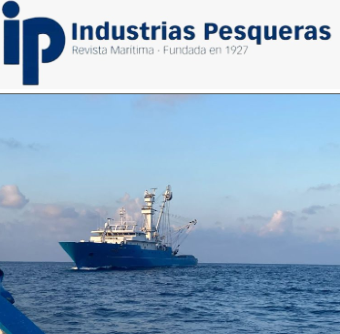 “Opening the EU market to Indonesia, home to the largest tuna fleet in the Indian Ocean: at what price?” This is the question posed by the European fishing industry association
  NORWAY
.png) Line Ellingsen has been re-elected as chair of
Line Ellingsen has been re-elected as chair of ICELAND
.png) Presenting the company’s annual report, group CEO Ægir Páll Friðbertsson said lower, more stable prices in the salmon market had helped through last year. He said that all divisions within the Group had delivered strong results during in 2025, despite various external challenges, highlighting the business’s resilience and competitiveness.
Presenting the company’s annual report, group CEO Ægir Páll Friðbertsson said lower, more stable prices in the salmon market had helped through last year. He said that all divisions within the Group had delivered strong results during in 2025, despite various external challenges, highlighting the business’s resilience and competitiveness..png) The news was stated in two stock exchange announcements yesterday afternoon.
The news was stated in two stock exchange announcements yesterday afternoon. CHINA
CHINA.jpeg) The growth was driven largely by aquaculture. Marine aquaculture output totaled 2.5078 million tons, up 5.02%, while freshwater aquaculture reached 5.6331 million tons, rising 3.61%. In contrast, capture fisheries saw more modest gains: marine fishing increased 1.55% to 1.3401 million tons, and freshwater fishing rose 1.07% to 121,300 tons.
The growth was driven largely by aquaculture. Marine aquaculture output totaled 2.5078 million tons, up 5.02%, while freshwater aquaculture reached 5.6331 million tons, rising 3.61%. In contrast, capture fisheries saw more modest gains: marine fishing increased 1.55% to 1.3401 million tons, and freshwater fishing rose 1.07% to 121,300 tons. SPAIN
SPAIN The Board of Directors of the Spanish Aquaculture Society (SEA) has announced the incorporation of the Spanish Aquaculture Business Association
 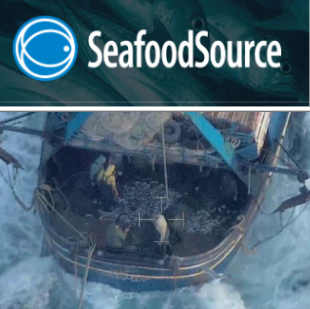 The European Union’s border patrol agency spotted an illegal fishing operation in Italian waters and was able to work with the country’s coast guard to obtain one of the vessels.
 WORLDWIDE
 Fish species that undertake mammoth migrations through rivers, lakes and ponds are facing a combined threat from dams, pollution and overfishing preventing them from reaching their breeding grounds.
 UNITED KINGDOM
.png) This growing movement reflects a broader shift in the UK seafood industry: a move towards transparency, seasonality and low-impact harvesting methods that protect marine habitats without compromising on quality.
This growing movement reflects a broader shift in the UK seafood industry: a move towards transparency, seasonality and low-impact harvesting methods that protect marine habitats without compromising on quality.