IN BRIEF - Sea of Okhotsk: pollock and herring catch increased by 4% compared to last year
RUSSIAN FEDERATION
Thursday, February 02, 2023
According to the industry monitoring system, by January 31, 2023, the total pollock catch in the Far Eastern Basin reached 222 thousand tons, which is 24.5 thousand tons or 12.4% more than in 2022.
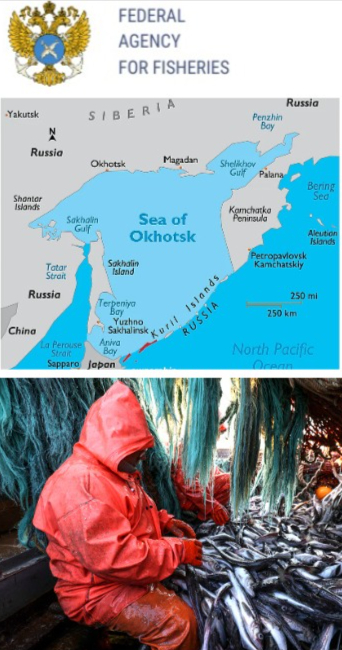
The main catch falls on the Sea of ??Okhotsk, where pollock and herring are actively fished. By January 31, almost 182,000 tons of pollock were harvest, which is 4% higher than last year.
Since the beginning of the year, 49 thousand tons of Pacific herring have been harvested in the Far Eastern Basin, which is 4.3% more than in 2022.
Currently, 93 vessels are operating in the Sea of ??Okhotsk for pollock and herring. Periodically, up to 6 vessels leave Severo-Kurilsk to fish for bottom-food items with pollock by-catch in the Kamchatka-Kuril subzone and in the Northern Kuriles area.
Two receiving and processing vessels and four snurrevods are working on bottom-food facilities off the coast of Western Kamchatka. Pollock catches are still as by-catch. 20 fishing vessels and two floating bases are engaged in the extraction of herring in the North Sea of ??Okhotsk subzone. Specialized pollock trawling in the Sea of ??Okhotsk is carried out by 69 vessels. 14 observers from VNIRO work in the region.
According to the data of the Primorsky Territorial Administration of the Federal Agency for Fishery, the region's refrigerators in sea fishing ports are loaded on average by 42%. There are 27 vessels with fresh catches on board - more than 38.3 thousand tons, including 12 vessels - with 23 thousand tons of pollock and 22 vessels - with 9 thousand tons of herring. Fresh fish products are regularly sent to the domestic market.
Source: United Press Service of the Federal Agency for Fishery
Registration is now open for the IFFO China Summit 2026, organized by IFFO – The Marine Ingredients Organisation. The event will take place in Shanghai on 10–11 June 2026, bringing together key stakeholders from the global marine ingredients value chain to discuss market trends, regulatory updates, and future opportunities.
The annual summit continues to highlight China’s pivotal role in the aquaculture industry. As both the world’s largest producer and a major consumer of marine ingredients, the country remains central to sector growth.
Maggie Xu, IFFO’s China Director, stated: "We are delighted to welcome the industry back to China for another edition of what has now become an annual event. China continues to play a central role in the global aquaculture sector, both as the world’s largest producer and as a leading user of marine ingredients to support its rapidly developing feed and farming industries. According to OECD-FAO estimates, China is expected to account for 42% of global fishmeal consumption by 2034.”
Athens – Cooke Inc. has signed a memorandum of understanding to acquire the existing debt of Avramar Aquaculture S.A., Andromeda S.A., Perseus S.A., and Avramar Commercial and Logistics S.A. (collectively, Avramar Greece), a major producer of sea bass and seabream in Greece.
Combined with its prior agreement to purchase equity, Cooke is set to gain operational control of Avramar Greece upon closing.
Founded in 1981, the group has grown into a leading Mediterranean aquaculture company, operating a fully integrated model that includes hatcheries, marine farms, processing and packaging facilities, and feed production. Its sustainability standards are recognized by the Global Sustainable Seafood Initiative (GSSI) and the Global Food Safety Initiative (GFSI).
The transaction remains subject to final agreements and customary conditions, with completion expected as soon as possible.
As the geopolitical crisis in the Middle East begins to disrupt European supply chains, the Commission is committed to implementing its strategic alliance with Argentina, Brazil, Paraguay, and Uruguay as soon as possible. Brussels has announced the provisional application of the EU-Mercosur Trade Agreement, which will enter into force on May 1, after sending a "note verbale" to Paraguay. This was the final procedural step necessary for the provisional application of the agreement with all Mercosur countries that have completed their ratification processes. Argentina, Brazil, and Uruguay have already done so, and Paraguay's notification is expected shortly.
Source: Industrias Pesqueras | Read the full article here
The organisers of Seawork, Europe’s leading commercial marine and workboat exhibition, have revealed that this year’s event is expected to inject between £10 million and £13 million into the economies of Southampton, wider Hampshire and the Isle of Wight.
Taking place in the week commencing 8 June, the programme combines the high-speed vessel and innovation showcase Speed@Seawork in Cowes on 8 June with the flagship three-day Seawork exhibition in Southampton from 9–11 June.
Author: Robert Outram / Fish Farmer | Read the full article here
Chilean salmon farmer Ventisqueros has become the sixth member of the Salmon Council, a trade body that represents companies producing about 60% of the sector’s output.
Ventisqueros, part of German holding company Schörghuber Gruppe, is a vertically integrated company that produces approximately 45,000 tonnes of salmon annually and has more than 1,300 employees. Its harvest volume is split more or less evenly between coho and Atlantic salmon, although it aims for 60% coho by 2030.
Salmon Council executive president Loreto Seguel said: “For Chile, salmon farming is an industry deeply rooted in the southern region and, at the same time, with a strong national identity and a global reach.
Source: fishfarmingexpert | Read the full article here
Lawmakers call for transparency after NGO funding report.
A television investigation aired by Televisión Nacional de Chile (TVN) has triggered political reaction in Chile after reporting that Norwegian NGO Norwegian People’s Aid provided funding to Indigenous coastal communities involved in legal processes affecting salmon farming projects.
Those communities have submitted applications under Chile’s ECMPO system, a legal framework created by the so-called Lafkenche Law that allows Indigenous groups to request coastal marine areas for customary use.
Source: SalmonBusiness | Read the full article here
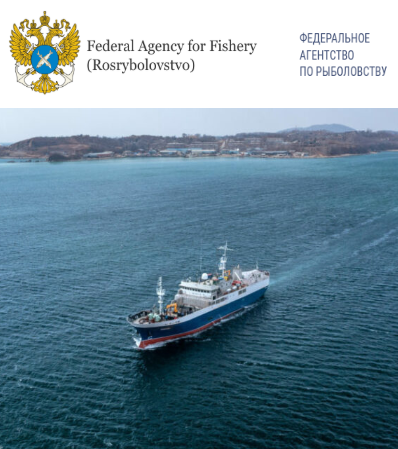
The amendments allow vessels equipped with RSW tanks (refrigerated seawater systems) to operate in multiple fishing areas during a single voyage. Previously, ships were limited to one area per trip, reducing efficiency and increasing costs.
Key changes:
Fishing in two or more zones per voyage is now permitted.
Vessels can operate under permits from different companies within a single trip.
Officials say the new rules provide greater operational flexibility while maintaining strict catch monitoring and control systems, minimizing risks of misuse.
The updated regulations take effect on March 31, 2026.
Authorities state the decision is intended to support fishing businesses and streamline the delivery of chilled fish to onshore processing facilities.
“The industry is growing, and meeting places are evolving accordingly. We see a need to be present where we can best meet customers, partners and decision-makers,” said Ståle Økland, CCO of AKVA group.
The event’s location near Oslo offers improved access for international employees and customers, while also strengthening ties with media and political stakeholders. According to the company, Global Aqua provides a more strategic platform due to its accessibility and lower overall costs.
As the industry expands, AKVA group plans to showcase key innovations, including deep farming technologies, post-smolt solutions, and digital systems, alongside its focus on sustainability in the future of aquaculture.
According to Japan’s Fisheries Agency, Japanese fishermen will be allowed to catch 2,050 tons of salmon within Japan’s 200-mile exclusive economic zone. In return, Japan will pay between 180 million and 313 million yen (approximately $1.13–1.97 million). The quota remains unchanged from 2025 levels.
Lawmakers in Japan’s upper house of parliament ??????????? ???????? ??????????, noting its role in maintaining stable ties between the two nations.
The agreement reflects long-standing cooperation: joint fishing arrangements between Japan and Russia have been in place since 1984–1985, with annual negotiations determining catch limits. The waters of the Pacific Ocean near Japanese islands are key fishing grounds, as they host salmon migrating from Russian rivers.
The renewed deal ensures continued access for Japanese fisheries while supporting regulated, sustainable use of shared marine resources.
SANTIAGO — A report by La Tercera, citing data from the Central Bank of Chile, reveals that the country’s salmon and trout exports are expected to reach $6.55 billion by 2025, marking a 3% year-on-year increase and the third consecutive year of growth.
This performance positions salmon and trout as Chile’s third largest export sector, behind copper and cherries. The industry now represents 6% of total exports, 15% of non-mineral exports, and 48% of processed food exports.
Exports of salmon alone are projected at $6.212 billion, while trout is expected to contribute $338 million.
The United States remains the leading market, accounting for 40% of export revenue—around $2.399 billion. It is followed by Japan with $1.044 billion and Brazil with $796 million, highlighting strong demand across key international markets.
The giant squid: hostage of the powers Peru
The recent meeting of the South Pacific Regional Fisheries Management Organisation (SPRFMO) once again highlighted the weaknesses of international governance over one of the most important resources i...




 RUSSIAN FEDERATION
 The main catch falls on the Sea of ??Okhotsk, where pollock and herring are actively fished. By January 31, almost 182,000 tons of pollock were harvest, which is 4% higher than last year.
 CHINA
CHINA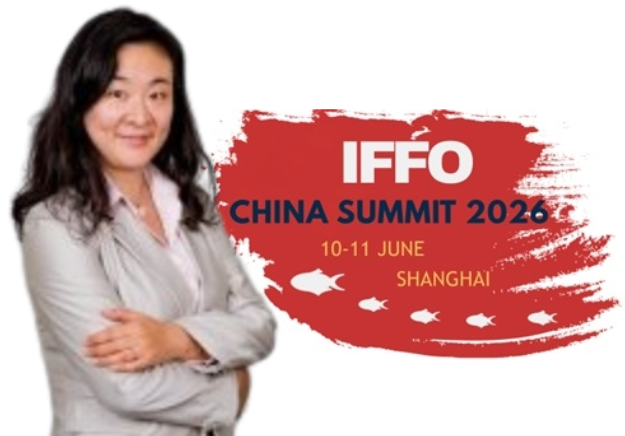
 GREECE
 WORLDWIDE
 As the geopolitical crisis in the Middle East begins to disrupt European supply chains, the Commission is committed to implementing its strategic alliance with Argentina, Brazil, Paraguay, and Uruguay as soon as possible. Brussels has announced the provisional application of the EU-Mercosur Trade Agreement, which will enter into force on May 1, after sending a "note verbale" to Paraguay. This was the final procedural step necessary for the provisional application of the agreement with all Mercosur countries that have completed their ratification processes. Argentina, Brazil, and Uruguay have already done so, and Paraguay's notification is expected shortly.
 UNITED KINGDOM
.png) The organisers of
The organisers of CHILE
CHILE.png) Ventisqueros, part of German holding company Schörghuber Gruppe, is a vertically integrated company that produces approximately 45,000 tonnes of salmon annually and has more than 1,300 employees. Its harvest volume is split more or less evenly between coho and Atlantic salmon, although it aims for 60% coho by 2030.
Ventisqueros, part of German holding company Schörghuber Gruppe, is a vertically integrated company that produces approximately 45,000 tonnes of salmon annually and has more than 1,300 employees. Its harvest volume is split more or less evenly between coho and Atlantic salmon, although it aims for 60% coho by 2030. A television investigation aired by Televisión Nacional de Chile (TVN) has triggered political reaction in Chile after reporting that Norwegian NGO Norwegian People’s Aid provided funding to Indigenous coastal communities involved in legal processes affecting salmon farming projects.
 Key changes:
 NORWAY
.png) “The industry is growing, and meeting places are evolving accordingly. We see a need to be present where we can best meet customers, partners and decision-makers,”
“The industry is growing, and meeting places are evolving accordingly. We see a need to be present where we can best meet customers, partners and decision-makers,” JAPAN
JAPAN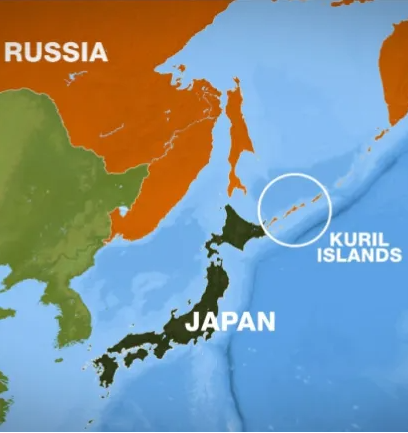 Lawmakers in Japan’s upper house of parliament ??????????? ???????? ??????????, noting its role in maintaining stable ties between the two nations.