IN BRIEF - Trial begins for top Moon officials regarding death of fisheries employee
SOUTH KOREA
Friday, March 24, 2023
The first trial of the top intelligence and security officials from the Moon Jae-in government began Friday over the death of a South Korean public employee who drifted into North Korean waters.
The trial took place on West Sea Defense Day, which was first designated in 2016 to commemorate the soldiers who lost their lives to defend against military provocations by North Korea, in the Second Battle of Yeonpyeong in 2002, the sinking of the Cheonan warship in 2010 and the shelling of Yeongpyeong Island in 2010.
Former Blue House national security adviser Suh Hoon, National Intelligence Service (NIS) Chief Park Jie-won and Defense Minister Suh Wook appeared at the Seoul Central District Court where they defended themselves against allegations that they had tampered with and manipulated documents in order to make it look like a South Korean fisheries official was attempting to defect to North Korea.
The two-day conference will highlight technologies, investment and business models that turn seafood side streams into high-value products.
100% Fish for Profit, on 23–24 September in Iceland, will unite industry, researchers and investors to explore full fish utilisation, from AI and advanced processing to nutraceuticals, pharmaceuticals, cosmetics and biomaterials.
The panel will explore how collaboration across industry, research, policy and investment can accelerate innovation and scale full-utilisation solutions internationally.
Free tools eSPeKS and AquaTrack aim to simplify government support and improve production efficiency
Malaysia’s Department of Fisheries (DOF) introduced eSPeKS and AquaTrack, free digital platforms for aquaculture farmers. The tools streamline government aid applications and record stocking, feed use, harvests, FCR, production costs and break-even points, providing data to improve farm planning, productivity and financial management.
More than 300 leaders will meet in Cebu to advance digital tools for responsible fisheriesThe SAFET 2026 Conference, set for September 8–10 in Cebu, will showcase DA-BFAR technologies for governance, traceability and fighting IUU fishing, including GIS systems and satellite tools to detect dark vessels.
Growing European demand drives freshwater fish shipments
In H1 2026, Kazakhstan's fish exports jumped 35.7%. Freshwater fillet shipments rose 36.8% to 4,200 tonnes, worth US$30.5 million, with Denmark, Lithuania, the Netherlands and Poland among the key markets.
Regarding specific export categories, frozen freshwater fish and freshwater fish fillets are the main aquatic products exported by Kazakhstan.
New products feature premium seafood from Aomori and Nagasaki
Umios will launch two fish sausages on September 1, 2026, made with Aomori kinmedai (splendid alfonsino) and Nagasaki ago (flying fish), highlighting distinctive regional Japanese seafood flavors in convenient processed products.
Season runs from September 1 through November, with sustainability rules and expanding aquaculture investment.
Oman produced 6,321 tonnes of shrimp worth RO 14.15 million in 2025, including 5,368 tonnes from aquaculture. A new RO 23.5 million Shinas project targets 7,500 tonnes annually, boosting exports and food security.
Canadian insect producer Entosystem has secured independent verification of greenhouse gas emission reductions generated by its ENVOL project, making it eligible to generate and commercialise certified carbon credits through the CSA Group’s EcoProjects Registry.
The company’s Drummondville facility can process up to 90,000 tonnes of food residues annually, converting them into ingredients including proteins and oils. At full capacity, the project is expected to avoid more than 23,000 tonnes of CO2 equivalent emissions each year, according to Entosystem.
Source: The Fish Site | Read the full article here
Singapore-headquartered Barramundi Group, which farms barramundi (Lates calcarifer) on land and at sea in Brunei, has reported encouraging improvements in biological performance and operating discipline in the first half of 2026.
But it remains cautious on the outlook for marine grow-out, where endemic biological challenges — in particular Lates calcarifer herpes virus (LCHV) — continue to constrain optimal survival and production performance. LCHV affects vital organs, including the liver, kidney, gills, pancreas, and eyes and can result in 60% to 80% mortality within days of clinical onset.
Author: Gareth Moore / fishfarmingexpert | Read the full article here
Initiative supports Zimbabwe’s goal of building a US$1 billion fisheries and aquaculture industry by 2030
Midlands State University (MSU) will develop a large-scale aquaculture project at Pitscottie Dam, Kwekwe, to boost fish production and food security. Zimbabwe consumes 85,000–95,000 tonnes of fish annually but produces only 25,000–40,000 tonnes, leaving a major supply gap.
Webinar highlights finance, markets and enterprise development for small-scale producers
NCDC, FAO and partners will promote Fish Farmer Producer Organisations (FFPOs) as tools to strengthen climate-resilient fisheries and aquaculture, expanding collective action, access to finance and markets, training and sustainable livelihoods.




 SOUTH KOREA
 10_46_59.png)
 ICELAND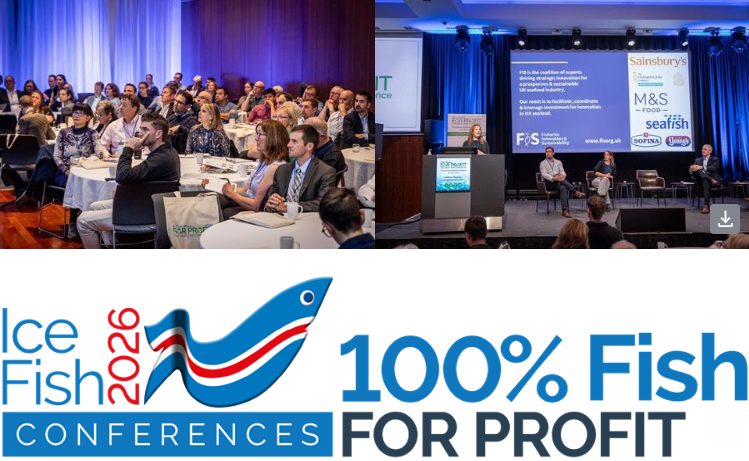
 MALAYSIA
.png)
 PHILIPPINES
 More than 300 leaders will meet in Cebu to advance digital tools for responsible fisheries
 KAZAKHSTAN
.jpeg) Growing European demand drives freshwater fish shipments
Growing European demand drives freshwater fish shipments JAPAN
JAPAN
 OMAN
OMAN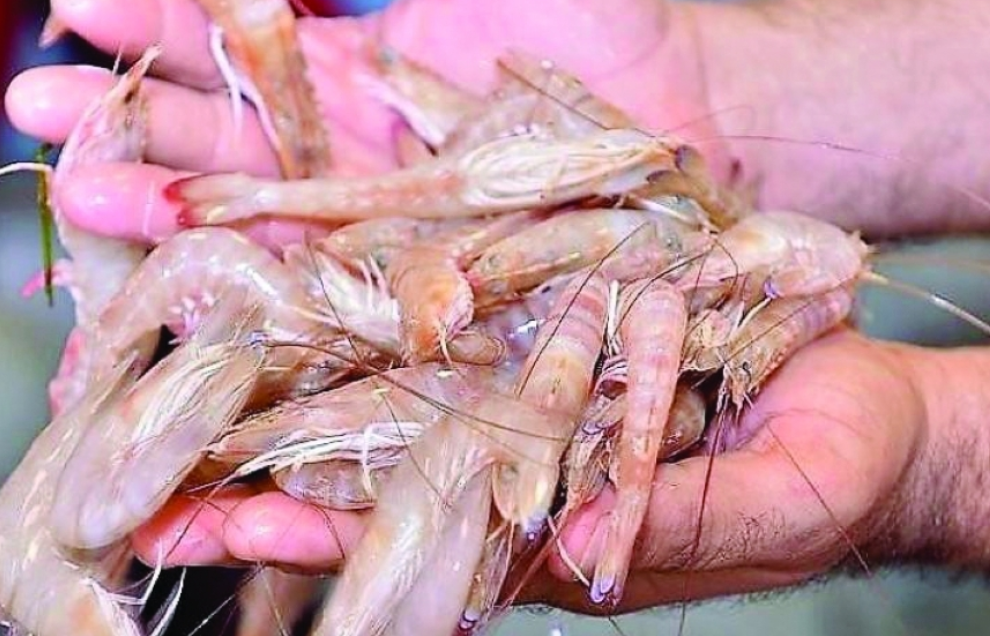 Season runs from September 1 through November, with sustainability rules and expanding aquaculture investment.
 CANADA
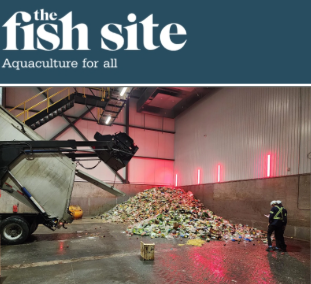 Canadian insect producer Entosystem has secured independent verification of greenhouse gas emission reductions generated by its ENVOL project, making it eligible to generate and commercialise certified carbon credits through the CSA Group’s EcoProjects Registry.
 SINGAPORE
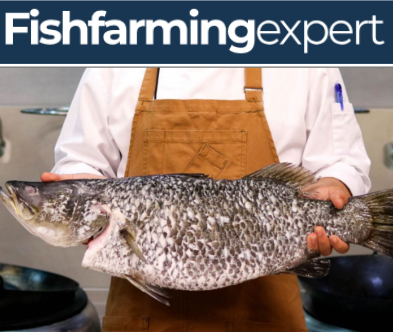 Singapore-headquartered
  ZIMBABWE
 Initiative supports Zimbabwe’s goal of building a US$1 billion fisheries and aquaculture industry by 2030
 INDIA
INDIA.png)