IN BRIEF - Shrimp and Oysters in the Same Tank – Benefits of Multitrophic Aquaculture
UNITED STATES
Friday, August 02, 2024
Scientists are developing technologies that would make it possible to grow two valuable commodity items even in an ordinary basement.
A scientist from the College of Life Sciences and Agriculture (COLSA) at the University of New Hampshire (UNH) is studying the benefits of integrated multi-trophic aquaculture (IMTA).
IMTA is a system in which two or more organisms are grown together. This process could make shrimp farming more sustainable and support the growth of the industry in the United States.
University of New Hampshire graduate student Elizabeth Martin tests water samples during a shrimp farming study at the University of New Hampshire Coastal Marine Laboratory in 2023. Photo: University of New Hampshire.
Elizabeth Martin, a graduate student in the marine biology program at COLSA, is studying IMTA systems that pair farmed shrimp with filter-feeding species such as oysters to determine whether the pairing will reduce the amount of ammonia and phosphorus that remains in the water during the shrimp farming process.
"Most of the shrimp we consume comes from overseas, and oysters are also one of the most valuable imported seafood products, so developing a local industry will help reduce dependence on these overseas markets," says Martin.
Although shrimp produce ammonia naturally, there are other sources of ammonia, including shrimp feed, which often contains high levels of nitrogen, natural breakdown of feed in the water, dead organisms, feces, and other materials that complicate shrimp aquaculture production. However, in the natural environment of shrimp, there are filter feeders, such as clams, that remove excess nutrients from the water.
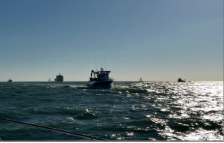
Yesterday morning maritime authorities in the Aysén region of Chile received a report that the wellboat Vali had run aground after hitting rocks
At the time, the vessel - operated by Naviera Detroit Chile - was carrying out work for the Serrano fish farm at Isla Verdugo, about 18 nautical miles southeast of Melinka in the Aysén region.
According to the Chilean Navy, the 63-metre-long vessel began taking on water after the grounding.
Source: fishfarmingexpert | Read the full article here
The European Parliament's Fisheries Committee backed Carmen Crespo's proposal by 21 votes to 4.
It calls for at least 180 fishing days annually, greater flexibility for mixed fisheries, socioeconomic criteria and revised red shrimp management to protect fleet viability.
New limits and restrictions take effect October 15.
The rules cap bycatch at 10% per haul (5% for shrimp). Exceeding these limits triggers a 60-hour fishing ban within 5 nautical miles.The regulation also protects corals, sponges and crabs, bans shark finning, and strengthens sampling, reporting and landing requirements.
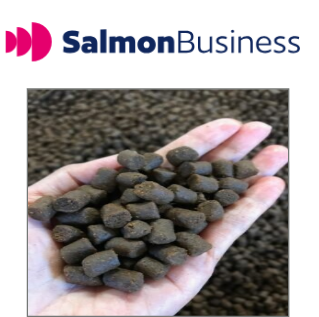
Lerøy Seafood Group has introduced poultry byproducts into feed at all its offshore salmon farms, while Mowi is preparing to adopt similar ingredients at its operations in Norway and Scotland.
The developments were reported by the Financial Times on Thursday, which said Europe's largest salmon producers are turning to processed chicken byproducts as rising fishmeal prices increase pressure on feed costs.
Grieg Seafood introduced chicken meal and oil in July, while SalMar began testing poultry-based feed in March, according to the newspaper.
Fishmeal prices have almost doubled over the past two years
Source: SalmonBusiness | Read the full article here
Record ocean warming, declining anchoveta stocks and fishing restrictions threaten jobs, exports and global aquaculture supplies.
The 2026 Super El Niño has severely disrupted Peru's anchoveta fishery.
The Central Bank forecasts a 30.7% contraction and 78,000 job losses, while fishmeal prices have reached US$3,500/tonne, increasing costs for global aquaculture.The vast majority of the anchoveta industry is concentrated off the coast of north-central Peru, and it is hard to overstate how economically significant this fish is
Nearly 200 Vietnamese aquaculture stakeholders have met in Can Tho to discuss certification changes and prepare for ASC’s new Farm Standard
The Aquaculture Stewardship Council (ASC) is stepping up support for Vietnam’s aquaculture industry as producers prepare to transition to its new Farm Standard.
Almost 200 producers, processors, exporters and other industry stakeholders gathered at an event in Can Tho to discuss implementation challenges, understand the new requirements and seek practical guidance from ASC experts.
Simeulue Consolidates a Direct Fresh Seafood Route to Japan Indonesia
The Indonesian island completes its second commercial shipment in two months, mobilizing octopus and fresh fish under strict sanitary standards and reinforcing its public cold chain as a key driver of...
Copyright 1995 - 2026 Seafood Media Group Ltd.| All Rights Reserved. DISCLAIMER



 UNITED STATES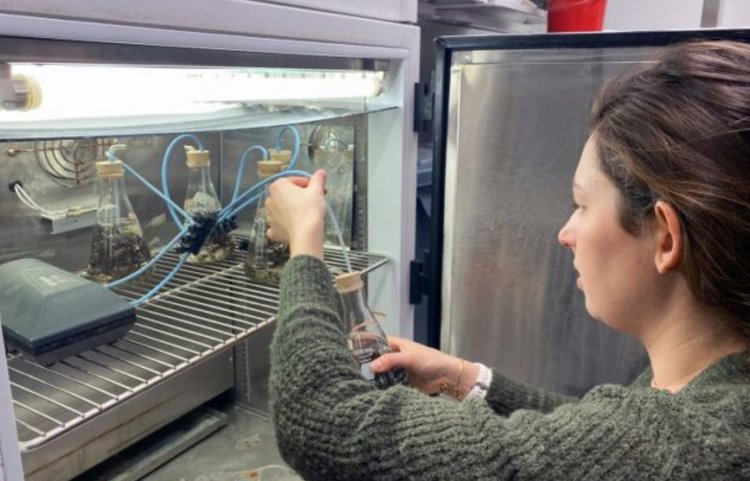
 CHILE
CHILE.png) Yesterday morning maritime authorities in the Aysén region of Chile received a report that the wellboat Vali had run aground after hitting rocks
Yesterday morning maritime authorities in the Aysén region of Chile received a report that the wellboat Vali had run aground after hitting rocks EUROPEAN UNION
 FAAPE hopes for approval in November.
 GREENLAND
.png) The rules cap bycatch at 10% per haul (5% for shrimp). Exceeding these limits triggers a 60-hour fishing ban within 5 nautical miles.The regulation also protects corals, sponges and crabs, bans shark finning, and strengthens sampling, reporting and landing requirements.
The rules cap bycatch at 10% per haul (5% for shrimp). Exceeding these limits triggers a 60-hour fishing ban within 5 nautical miles.The regulation also protects corals, sponges and crabs, bans shark finning, and strengthens sampling, reporting and landing requirements. NORWAY
 Lerøy Seafood Group has introduced poultry byproducts into feed at all its offshore salmon farms, while Mowi is preparing to adopt similar ingredients at its operations in Norway and Scotland.
 OMAN
OMAN
 PERU
PERU Record ocean warming, declining anchoveta stocks and fishing restrictions threaten jobs, exports and global aquaculture supplies.
 UNITED KINGDOM
 Review will examine the sustainability of the model in place since 1996.
 VIET NAM
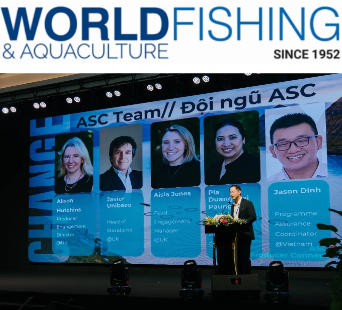 Nearly 200 Vietnamese aquaculture stakeholders have met in Can Tho to discuss certification changes and prepare for ASC’s new Farm Standard
 ARGENTINA