IN BRIEF - Two Kodiak trawlers caught 2,000 king salmon and now a whole fishery is closed
UNITED STATES
Thursday, October 03, 2024
In late September 2024, federal regulators shut down a significant Alaska fishery after two trawlers from Kodiak accidentally caught around 2,000 king salmon (Chinook Salmon - Oncorhynchus tshawytscha)while targeting pollock, a whitefish commonly used in processed products like fish sticks and surimi. This bycatch incident—where non-target species are unintentionally caught—triggered the closure, as the fleet approached its annual limit of 18,000 king salmon.
This closure affects about 20 boats and potentially hundreds of shore-based processing jobs, as the season was initially set to continue until November. The event has intensified ongoing debates about bycatch, with conservationists and Tribal advocates pushing for stricter regulations on trawl fleets, which often unintentionally harvest vulnerable species like salmon while targeting lower-value fish.
While bycatch in the Bering Sea has been a primary concern, this incident occurred in the Gulf of Alaska, an area whose bycatch includes salmon originating from British Columbia, the U.S. West Coast, and some from Alaska’s Copper and Kenai rivers.
This closure highlights the ongoing tension between sustaining Alaska’s commercial fishing industry and the urgent need to protect threatened salmon populations.
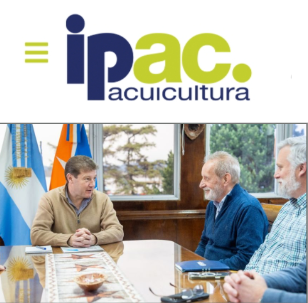
The Governor of Tierra del Fuego, Gustavo Melella, and the Argentine-Canadian firm Wanchese Cooke—a subsidiary of Cooke Canada—have signed a letter of intent. The agreement aims to establish an initial framework for dialogue, technical and institutional exchange, and the assessment of aquaculture development opportunities within the Argentine province.
This initiative aligns with Tierra del Fuego’s public policy of promoting sustainable, innovative aquaculture that generates added value, in accordance with the provincial Aquaculture Development Plan and current regulations.
Through this agreement, both parties express their commitment to advancing a preliminary work agenda.
Source: iPac.acuicultura | Read the full article here
The International Maritime Organization (IMO) has announced that it will launch an evacuation plan for the 11,000 seafarers currently stranded in the waters of the Strait of Hormuz. This initiative will be carried out in coordination with the governments of the United States, Iran, and Oman, as well as other coastal nations in the region and maritime industry companies, within the framework of the memorandum of understanding recently signed by US and Iranian authorities.
The United Nations body stated that it has all the necessary security guarantees to begin the operation and has verified that conditions for safe navigation are assured.
Source: La Voz de Galicia | Read the full article here
AKVA group said a contract to design and deliver a smolt facility for Icelandic land-based salmon farmer Laxey has come into effect following the completion of financing for the project.
The contract was originally announced on 21 April but was conditional on Laxey securing the funding required for the development.
That condition was lifted on Tuesday after Laxey announced it had completed a €47 million equity raise and secured syndicated financing to support the next phase of its expansion in Vestmannaeyjar, Iceland.
The project relates to the design and delivery of a new smolt facility that forms part of Laxey’s wider land-based salmon farming development in the Westman Islands.
Source: SalmonBusiness | Read the full article here
Philippines-based regenerative seaweed supply chain platform Coast 4C recently secured a EUR 2.1 million (USD 2.5 million) seed round investment to scale its digital platform for smallholder seaweed farmers, enabling them to increase productivity and give global processors access to consistent supply.
The investment came from U.K.-based global aquaculture investment firm Hatch Blue’s Blue Revolution Fund (BRF), which is a EUR 92 million (USD 104.6 million) fund intended for investments in sustainable aquaculture.
Author: Haley Jones / SeafoodSource | Read the full article here
The company begins a new business phase after one of the most significant insolvency proceedings in the Spanish tuna industry.
The company emerging from the restructuring of the tuna group Atunlo will keep its headquarters in Vigo, ensuring the continuity of business operations that, in recent years, have weathered one of the most complex insolvency processes seen in Spain's seafood processing industry.
This news represents a major boost for the economic ecosystem linked to the Galician tuna sector, as it guarantees the continued presence in Vigo of an operator historically tied to the international marketing of tuna.
The Global Squid Supply Chain Roundtable (SR) has issued a public statement expressing concern regarding the bill that would allow industrial trawling in Chile.
Twenty-seven of the world's leading squid-buying companies, gathered in the Buyers' Sectoral Roundtable, issued an alert regarding Bill No. 18.173-21. This bill, currently under discussion in the Chilean Congress, proposes reintroducing industrial trawling in specific areas of the country, thereby reversing the provisions of the "Jibia Law" (Jumbo Squid Law).
Companies endorsing the statement include Wofco, Santa Monica Seafood, Quirch Foods, Grupo Profand, Panapesca USA, and Congalsa, among others.
Kenya, Seychelles, Gabon, Tanzania and South Africa advance country-led actions to strengthen fisheries transparency with tuna leading broader momentum toward full electronic monitoring.
At the Our Ocean Conference hosted in Kenya, the governments of Kenya, Seychelles, Gabon, Tanzania and South Africa unveiled a set of country-led commitments to advance electronic monitoring—the use of onboard video cameras, GPS and sensors to monitor and verify fishing activities—to strengthen transparency across their fisheries. These announcements reflect growing African leadership in modernizing fisheries management and improving accountability at sea.
The move of Aquaculture UK from Aviemore to Glasgow attracted a record attendance, organiser Diversified UK has announced.
The biennial trade show, which ran from June 16-17 at the Scottish Event Campus (SEC) on the Clyde, saw a 22% increase in visitors since the last Aquaculture UK in Aviemore, with the number of international attendees surging by 33%.
Also making his debut was Scotland’s new agriculture, marine, and the islands minister Jim Fairlie, who cut the ribbon at the SEC and reaffirmed the Scottish government’s commitment to working with the sector.
Source: fishfarmingexpert | Read the full article here
Nekkar has exercised an option to acquire the 40.43 percent stake in FiiZK held by Bevest, increasing its ownership in the aquaculture technology company to approximately 86 percent.
The transaction also gives Nekkar control of around 90 percent of FiiZK’s outstanding voting shares.
The exercise price for the stake was NOK 55.1 million (€5 million), based on NOK 0.10 per FiiZK share. Settlement took place on 22 June through the transfer of 3,649,079 treasury shares in Nekkar, valued at the company’s 30-day volume-weighted average share price of NOK 15.09.
Source: SalmonBusiness | Read the full article here



 UNITED STATES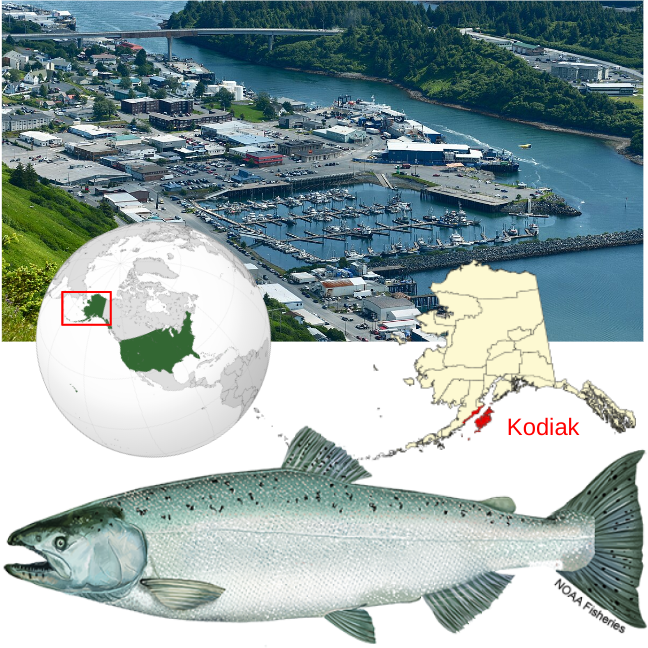
 ARGENTINA
 The Governor of Tierra del Fuego, Gustavo Melella, and the Argentine-Canadian firm Wanchese Cooke—a subsidiary of
 WORLDWIDE
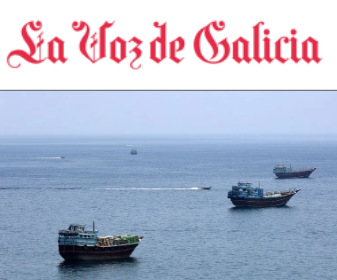 The International Maritime Organization (IMO) has announced that it will launch an evacuation plan for the 11,000 seafarers currently stranded in the waters of the Strait of Hormuz. This initiative will be carried out in coordination with the governments of the United States, Iran, and Oman, as well as other coastal nations in the region and maritime industry companies, within the framework of the memorandum of understanding recently signed by US and Iranian authorities.
 NORWAY
 AKVA group
 PHILIPPINES
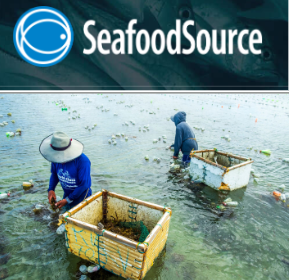 Philippines-based regenerative seaweed supply chain platform Coast 4C recently secured a EUR 2.1 million (USD 2.5 million) seed round investment to scale its digital platform for smallholder seaweed farmers, enabling them to increase productivity and give global processors access to consistent supply.
 ICELAND
.png) Announcing its 2025 results, the company saw its EBITDA rise by €12.5m (£10.7m) to €73.9m (£63m).
Announcing its 2025 results, the company saw its EBITDA rise by €12.5m (£10.7m) to €73.9m (£63m). SPAIN
SPAIN.png) The company begins a new business phase after one of the most significant insolvency proceedings in the Spanish tuna industry.
The company begins a new business phase after one of the most significant insolvency proceedings in the Spanish tuna industry. CHILE
CHILE.png) Twenty-seven of the world's leading squid-buying companies, gathered in the Buyers' Sectoral Roundtable, issued an alert regarding Bill No. 18.173-21. This bill, currently under discussion in the Chilean Congress, proposes reintroducing industrial trawling in specific areas of the country, thereby reversing the provisions of the "Jibia Law" (Jumbo Squid Law).
Twenty-seven of the world's leading squid-buying companies, gathered in the Buyers' Sectoral Roundtable, issued an alert regarding Bill No. 18.173-21. This bill, currently under discussion in the Chilean Congress, proposes reintroducing industrial trawling in specific areas of the country, thereby reversing the provisions of the "Jibia Law" (Jumbo Squid Law). KENYA
KENYA.png) At the Our Ocean Conference hosted in Kenya, the governments of Kenya, Seychelles, Gabon, Tanzania and South Africa unveiled a set of country-led commitments to advance electronic monitoring—the use of onboard video cameras, GPS and sensors to monitor and verify fishing activities—to strengthen transparency across their fisheries. These announcements reflect growing African leadership in modernizing fisheries management and improving accountability at sea.
At the Our Ocean Conference hosted in Kenya, the governments of Kenya, Seychelles, Gabon, Tanzania and South Africa unveiled a set of country-led commitments to advance electronic monitoring—the use of onboard video cameras, GPS and sensors to monitor and verify fishing activities—to strengthen transparency across their fisheries. These announcements reflect growing African leadership in modernizing fisheries management and improving accountability at sea. UNITED KINGDOM
 The move of
  Nekkar