IN BRIEF - Catfish Import Trends in China in 2024 So Far
CHINA
Tuesday, November 05, 2024
The total volume decreased in the first seven months, but showed a strong recovery in July
According to data from the Food and Agriculture Organization of the United Nations (FAO), farmed catfish has become the second most important fish in the world, which has aroused increasing interest in the trade situation of this product. Accordingly, our association will publish monthly reports on catfish trade to provide relevant information to industry professionals and players.
Click on the image to enlarge
According to statistics from Chinese customs, between January and July 2024, China imported 84,600 tons of catfish, worth 156 million US dollars, representing a decrease of 12.48% and 22.75% respectively compared to the same period of the previous year. The average import price was 1.85 USD per kilogram, down 11.73% year-on-year. In particular, July imports reached 12,200 tons and 24 million USD, up 21.55% and 8.21% respectively year-on-year. The average import price in July was 1.78 USD per kilogram, down 11.73% year-on-year and 2.24% year-on-year.
Clean Hardangerfjord has removed 80 tonnes of plastic since 2022
Norway’s seafood sector joins Clean Hardangerfjord on September 17, mobilising thousands of volunteers along 180 km of fjord. The campaign has removed 80 tonnes of plastic in four years, while nationwide cleanups cleared 164,253 kg of marine litter in 2025.
Two Argentine lawyers, José Lucas Magioncalda and Juan Martín Fazio, have filed a criminal complaint with the Economic Penal Court against seven Galician fishing companies that operate in the archipelago's waters under Falklands licenses. This smuggling complaint is driven by the renewed sovereignty push of Argentine President Javier Milei, who announced tougher penalties for companies exploiting natural resources from the British-held islands.
The Argentine government is working on reforming Law 26.659 to introduce sanctions for fishing in the Falklands—territory under UK administration—with the bill set to be presented to the Chamber of Deputies in the coming days.
Author: C. Valdez / La Voz de Galicia | Read the full article here
The European aquaculture sector is calling for greater clarity regarding the country of production, while Brussels faces pressure to extend mandatory labeling requirements to processed goods, canned products, and the foodservice sector.
Caviar from non-EU countries has become a key example cited by the European aquaculture industry in its call for Brussels to ensure greater transparency regarding product origins. The Federation of European Aquaculture Producers (FEAP) warns that processing or repackaging within the European Union can make it difficult for consumers to immediately identify where the food was actually produced—an issue that extends beyond caviar to the entire market for processed fishery and aquaculture products.
The highly anticipated delivery of premium mackerel from Norway coincides with Norway Seafood Festival in Tokyo. This year, Norwegian herring also made an appearance for the first time.
September 2026, marked the arrival in Japan of the ‘Saba Nouveau’ mackerel, flown in fresh from Norway to celebrate the first catch of the season.
Now in its sixth year, the arrival has become a highly anticipated autumn tradition and tells a lesser-known story of how a seasonal fish from Norway’s cold waters has travelled to the other side of the world and earned a distinctive place within Japanese food culture.
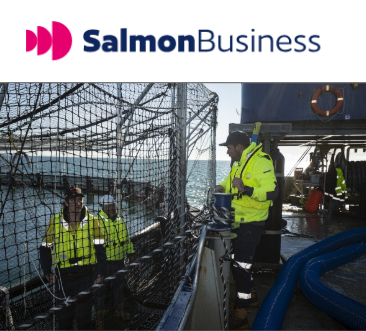
Australia's first offshore Atlantic salmon trial could be expanded to 55,000 fish in a single pen after its initial crop grew faster than expected in the exposed waters of Bass Strait.
The Blue Economy Cooperative Research Centre has applied for federal approval for a second salmon stocking at its research site 12.5 kilometres off Burnie, Tasmania, increasing numbers from the 15,000 fish used during the first year to a near-commercial stocking density of 55,000.
The proposed new stocking would begin in November and run until 2028
Source: SalmonBusiness | Read the full article here
The cod farmer Ode is introducing its fish across more than 200 stores in Norway this week as part of a new commercial drive.
The move is intended to establish the Ode brand firmly in the minds of the consumer and means that shoppers can buy fresh cod all the year round.
Ode is now not only Norway’s leading cod farmer, but now the world leader in this fast growing branch of aquaculture.It also marks the beginning of a new commercial phase for farmed cod in Norway and includes the introduction of Ode as a brand targeted direct to the consumer.
With this launch, Ode says it is bringing its ultra-fresh supply chain it built for export customers into the Norwegian domestic market
Author: Vince McDonagh / Fish Farmer | Read the full article here
New transparency standard will open fisheries data to public scrutiny
Fiji became the first Pacific Island nation to commit to the FiTI Standard. Minister Alitia Bainivalu signed an MoU with FiTI to improve access to verified data on vessels, permits, catches and revenues, strengthening fisheries management and the fight against IUU fishing.
Peltola and Sullivan pledge tougher action to protect salmon
At a Kodiak fisheries debate, Mary Peltola targeted factory trawlers, while Sen. Dan Sullivan highlighted his Bycatch Reduction Act, due for a committee vote. Both backed changes to federal fisheries management amid concern over declining Western Alaska salmon runs.
Minister Ribanataake Tiwau visits Rarotonga to examine regulatory, scientific and environmental frameworks for ocean resources.
Kiribati Fisheries Minister Ribanataake Tiwau led a delegation to the Cook Islands to study its seabed minerals governance. Talks covered regulation, institutions, scientific research and environmental protection, while exploring future knowledge sharing, capacity-building and Pacific cooperation on ocean-resource management
U.S. demand and rapid growth in Southeast Asia boost Japan’s processed fish-paste trade
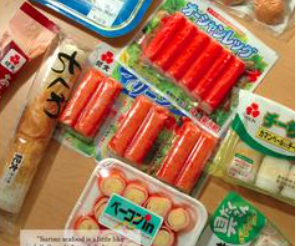
Japan exported 6,186 tonnes of processed fish-paste products in January–July 2026, up 9% year-on-year, according to Japan’s Ministry of Finance data reported by Minato Shimbun. The U.S., the largest market, increased purchases by about 10%, while exports to Thailand quadrupled and shipments to Vietnam rose 2.2-fold. Sales also increased to Taiwan, Singapore and Norway. The figures cover processed products such as kamaboko, not frozen surimi blocks used as raw material.
Norway Pelagic Fisheries Report, Week 37 Norway
Slower Mackerel Fishing in the Norwegian Sea, Fine North Sea Herring Caught in EEZ, and Large NVG Herring on the Trøndelag Coast
Weekly Report on Norwegian Pelagic Catch Volumes, Economic Zone...




 CHINA
CHINA(2).png)
 NORWAY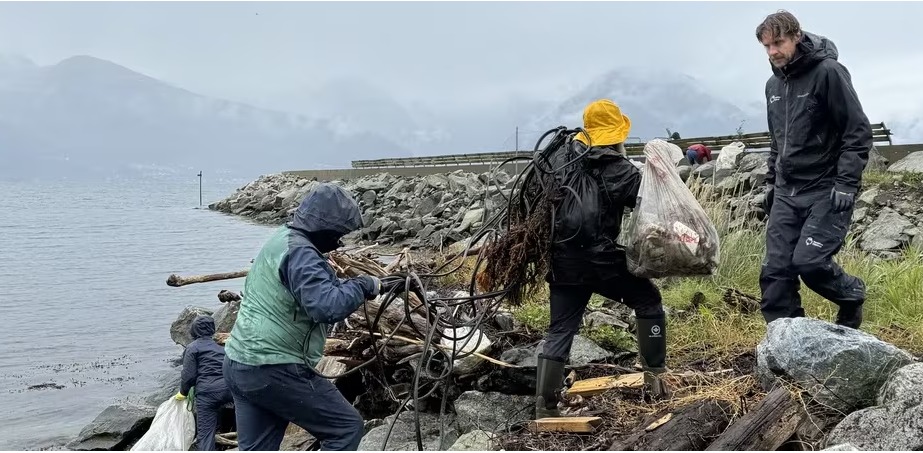
 FALKLAND ISLANDS
 Two Argentine lawyers, José Lucas Magioncalda and Juan Martín Fazio, have filed a criminal complaint with the Economic Penal Court against seven Galician fishing companies that operate in the archipelago's waters under Falklands licenses. This smuggling complaint is driven by the renewed sovereignty push of Argentine President Javier Milei, who announced tougher penalties for companies exploiting natural resources from the British-held islands.
 EUROPEAN UNION
.png) The European aquaculture sector is calling for greater clarity regarding the country of production, while Brussels faces pressure to extend mandatory labeling requirements to processed goods, canned products, and the foodservice sector.
The European aquaculture sector is calling for greater clarity regarding the country of production, while Brussels faces pressure to extend mandatory labeling requirements to processed goods, canned products, and the foodservice sector. JAPAN
JAPAN September 2026, marked the arrival in Japan of the ‘Saba Nouveau’ mackerel, flown in fresh from Norway to celebrate the first catch of the season.
 AUSTRALIA
 Australia's first offshore Atlantic salmon trial could be expanded to 55,000 fish in a single pen after its initial crop grew faster than expected in the exposed waters of Bass Strait.
.png) The move is intended to establish the
The move is intended to establish the FIJI
FIJI.png)
 UNITED STATES
 COOK ISLANDS
.png)