IN BRIEF - Chile and South Africa sign a cooperation agreement in fishing and aquaculture
CHILE
Tuesday, November 05, 2024
Santiago de Chile - This Monday, Chile and South Africa signed a cooperation agreement in the field of fishing and aquaculture, with the aim of exchanging information and establishing a Technical Committee in this sector, according to the Chilean Foreign Ministry.
"The signing of this agreement is aligned with our policy of marine conservation and sustainability, both nationally and internationally. Currently, we are implementing specific measures to protect marine biodiversity,", said the Undersecretary of Foreign Affairs of Chile, Gloria de la Fuente, in a statement.
The agreement, which was signed together with the Vice Minister of Forestry, Fisheries and Environment of South Africa, Narend Sing,"will allow both countries to collaborate and share information, experiences and knowledge in areas of research, conservation, management and sustainable use of marine resources," thus contributing to the advancement of Sustainable Development Goal (SDG) 14, which focuses on the conservation and sustainable use of the oceans.
In addition, both nations discussed various opportunities for collaboration in the areas of fishing, sustainability and the environment, as well as Chile's possible application to host the Secretariat of the Agreement on Conservation and Sustainable Use of Marine Biodiversity beyond National Jurisdictions (BBNJ).
The managers of Profand and Lanzal explain how Galician companies are consolidating their presence in Patagonia and learning to cope with economic and labor fluctuations
With wild shrimp as their flagship product, Galician companies located in Argentine Patagonia are consolidating their presence in the region and learning to deal with the ups and downs of the economy. Bureaucracy, inflation, currency exchange rates, taxes, and a highly conflictive labor environment are some of the issues mentioned by the managers of two of the most important Galician fishing companies: Profand and Lanzal.
Despite the risks and challenges, wild shrimp is a premium product that can only be found in Argentine waters. "The main problem we have is competition from vannamei shrimp."
Author: Cecilia Valdez / La Voz de Galicia | Read the full article here
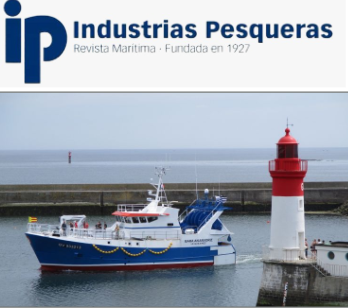
At the initiative of the Ministries of Energy and of the Sea and Fisheries, the French government convened an emergency meeting with the fishing sector to assess the impact of rising fuel prices on fishing activity following the Iran-Contra conflict and the mitigation measures to be adopted. During the meeting, several commitments were made to establish an initial aid package. It was agreed that, like price increases, reductions in fuel prices would be reflected at the pump, that retailers would review potential price support measures using existing tax instruments, and that banks would immediately assess, on a case-by-case basis, the situation of fleets facing liquidity difficulties.
Source: Industrias Pesqueras | Read the full article here
ULMA Packaging UK has appointed Paul Morican as managing director, strengthening its senior management team as the business continues to expand its offering of automation and packaging solutions across the UK and Ireland.
Having joined the business at the end of January 2026, Morican brings more than two decades of leadership experience across the packaging technology, processing equipment and industrial manufacturing sectors.
He began his career as a Royal Naval officer before moving into the packaging equipment sector in 1996. During spells since in industrial coding and marking, industrial and food processing sectors, he has built a strong commercial track record, delivering growth and developing performing teams as key account manager, sales team manager, head of sales and sales director.
The UK arm of supermarket chain Lidl has confirmed it has eliminated eyestalk ablation from its core own-brand farmed prawn range — effective since January 2026 — and said it will implement electrical stunning by the end of 2026.
Animal welfare organisations have hailed the announcement as a success following a campaign that has now seen 10 out of 11 UK supermarket chains setting time-bound welfare standfards for shrimp in their supply chains.
Until recently, welfare issues for crustaceans were seen as a low priority by retailers and the public.
Author: Robert Outram / Fish Farmer | Read the full article here
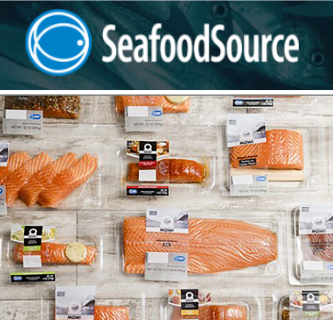
Mowi CP of Americas, a subsidiary of Bergen, Norway-based salmon-farming firm Mowi, is unveiling new packaging across several brands at the 2026 Seafood Expo North America (SENA).
At this year’s SENA, the subsidiary is highlighting both its core product lines along with new products across fresh, smoked, and frozen salmon categories. Additionally, it is rolling out a new packaging identity, designed to rejuvenate its Mowi, Ducktrap, and Marine Harvest by Mowi brands.
Ducktrap’s new packaging in particular, developed over many months, will begin rolling out in 2026 and transition fully through 2027, according to the firm.
Author: Christine Blank / SeafoodSource | Read the full article here
Valparaíso – With the aim of strengthening scientific cooperation and advancing the challenges of ocean governance, authorities from the Fisheries Development Institute (IFOP) welcomed a delegation from the Flanders Marine Institute (VLIZ) at a high-level meeting held at the institute’s headquarters.
The meeting was led by IFOP Executive Director Gonzalo Pereira Puchy and VLIZ Director Jan Mees, with the participation of the Ambassador of Belgium to Chile, Christian de Lannoy, who highlighted the importance of reinforcing international collaboration in marine research.
During the session, IFOP’s International Affairs and Cooperation Department presented the main guidelines of the 2025–2030 Strategic Plan, where climate change is identified as a key priority. The institution reaffirmed its commitment to management based on the Best Available Science (BAS) and a preventive ecosystem-based approach to ensure ocean sustainability.
As part of the visit, the VLIZ delegation will carry out a technical agenda that includes visits to IFOP facilities in Puerto Montt and nearby areas.
The production of giant squid is showing signs of decline in Peru, raising concerns about global supply as prices for Argentinian squid continue to climb in China.
Recent market data indicates that weekly catches of giant squid (Dosidicus gigas) in Peru have fallen by about 10% compared with the previous week. Despite the drop, overall supply remains relatively high. As one of the world’s largest producers of giant squid, changes in Peru’s catch volumes can quickly influence supply in major importing markets, particularly China.
At the same time, prices for Argentinian squid (Illex argentinus) at Shidao Port, Shandong, China, are steadily increasing. Squid measuring 21–25 cm are currently selling for about 16.5–17 RMB/kg (approximately 2.40–2.47 USD/kg), while larger specimens of 26–30 cm are trading at 20.5–21.5 RMB/kg (around 2.98–3.13 USD/kg).
Market participants attribute the rise largely to renewed purchasing activity after the Lunar New Year holiday, when processing plants resumed operations and supplies for immediate delivery remained limited.
China sources squid from several regions, including Peru, Argentina, and parts of the Indo-Pacific. In the short term, prices are expected to remain volatile, depending on fishing activity, port arrivals, and demand from processing companies.
With the aim of providing transparent information on the state of fisheries in Chile, the National Fisheries Society (Sonapesca F.G.) compiled and analyzed data from scientific committee reports, presenting the State of Biomasses with Respect to Maximum Sustainable Yield (MSY) 2025.
Maximum Sustainable Yield (MSY) represents the equilibrium point that allows for the sustainable harvesting of a fishery resource without affecting reproduction or population size. Ideally, fisheries should remain close to or above 100% of this indicator.According to the report, nine of the 17 fisheries analyzed are above the biological optimum, exceeding 100% of MSY.
Authorities launch a major survey to see how the cephalopod proliferation is affecting shipowners
Devon fishermen lament that their traditional shellfish fisheries have plummeted by up to 80%
The British government has been monitoring the widespread presence of octopus in its waters for more than a year. The unusual bloom, which worries local shellfish fishermen, is the focus of attention for the industry, scientists, and authorities, who still don't quite know what to do about an event that hasn't occurred in 75 years and which they attribute mainly to climate change. Through the Marine Management Organization (MMO), the Administration is closely monitoring the situation and, in its latest update, reveals that the cephalopod plague continues, with more than 400 tons caught between January and February alone, a 450% increase compared to the same period last year.
Author: Adrián Amoedo / Fato de Vigo | Read the full article here
They represent the event’s commitment to, and investment in the future of the commercial fishing and aquaculture industries. The students receive a ISK 300,000 bursary towards their studies. Today the first tranche of the bursary, and a commemorative certificate were presented and the second half of the award will be made in September at the prestigious IceFish Awards Ceremony
The three worthy recipients are all students at the Icelandic College of Fisheries. They are Katarzyna Staszek, Ewa Jaros and Malgorzata Barbara Sworowska. All three are studying quality management at the college and working in the commercial fishing industry. Katarzyna at Brim in Reyjavik; Ewa at Jakob Valgeir in Bolungarvik and Malgorzata at Nýfisk Sandgerdi, Sudurnesjaber.
Both Katarzyna and Malgorzata attended the presentation. The Icelandic weather stepped in to prevent Ewa from attending in person but she will receive her certificate from the Headmaster at the College.
The Bursary applications were assessed by a specialist judging panel from the industry, including Klemenz Sæmundsson, Headmaster of the Icelandic College of Fisheries; Hrefna Karlsdóttir, Senior adviser at Fisheries Iceland; Kjartan Sveinsson, Chairman, National Association of Small Boat Owners; and Bjarni Jonsson, representative of IceFish.
Global Scallop Trade Shifts as U.S. Faces Shortage of Premium Sizes Worldwide
Chinese small scallops fill U.S. supply gap while French exports reshape China’s seafood imports
As the U.S. Atlantic scallop fishing season approaches its close, the market is experiencing a p...
Copyright 1995 - 2026 Seafood Media Group Ltd.| All Rights Reserved. DISCLAIMER




 CHILE
CHILE
 ARGENTINA
.png) With wild shrimp as their flagship product, Galician companies located in Argentine Patagonia are consolidating their presence in the region and learning to deal with the ups and downs of the economy. Bureaucracy, inflation, currency exchange rates, taxes, and a highly conflictive labor environment are some of the issues mentioned by the managers of two of the most important Galician fishing companies: Profand and Lanzal.
With wild shrimp as their flagship product, Galician companies located in Argentine Patagonia are consolidating their presence in the region and learning to deal with the ups and downs of the economy. Bureaucracy, inflation, currency exchange rates, taxes, and a highly conflictive labor environment are some of the issues mentioned by the managers of two of the most important Galician fishing companies: Profand and Lanzal. FRANCE
 At the initiative of the Ministries of Energy and of the Sea and Fisheries, the French government convened an emergency meeting with the fishing sector to assess the impact of rising fuel prices on fishing activity following the Iran-Contra conflict and the mitigation measures to be adopted. During the meeting, several commitments were made to establish an initial aid package. It was agreed that, like price increases, reductions in fuel prices would be reflected at the pump, that retailers would review potential price support measures using existing tax instruments, and that banks would immediately assess, on a case-by-case basis, the situation of fleets facing liquidity difficulties.
 UNITED KINGDOM
.png) Having joined the business at the end of January 2026, Morican brings more than two decades of leadership experience across the packaging technology, processing equipment and industrial manufacturing sectors.
Having joined the business at the end of January 2026, Morican brings more than two decades of leadership experience across the packaging technology, processing equipment and industrial manufacturing sectors..png) The UK arm of supermarket chain
The UK arm of supermarket chain  UNITED STATES
 Mowi CP of Americas, a subsidiary of Bergen, Norway-based salmon-farming firm
 .png)
 PERU
PERU.png) Recent market data indicates that weekly catches of giant squid (Dosidicus gigas) in Peru have fallen by about 10% compared with the previous week. Despite the drop, overall supply remains relatively high. As one of the world’s largest producers of giant squid, changes in Peru’s catch volumes can quickly influence supply in major importing markets, particularly China.
Recent market data indicates that weekly catches of giant squid (Dosidicus gigas) in Peru have fallen by about 10% compared with the previous week. Despite the drop, overall supply remains relatively high. As one of the world’s largest producers of giant squid, changes in Peru’s catch volumes can quickly influence supply in major importing markets, particularly China.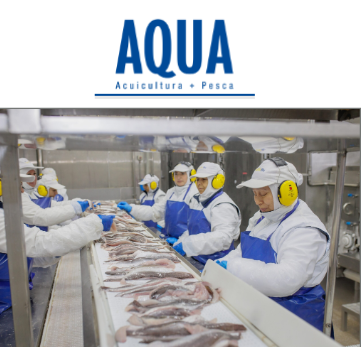 With the aim of providing transparent information on the state of fisheries in Chile, the National Fisheries Society (Sonapesca F.G.) compiled and analyzed data from scientific committee reports, presenting the State of Biomasses with Respect to Maximum Sustainable Yield (MSY) 2025.
.png) The British government has been monitoring the widespread presence of octopus in its waters for more than a year. The unusual bloom, which worries local shellfish fishermen, is the focus of attention for the industry, scientists, and authorities, who still don't quite know what to do about an event that hasn't occurred in 75 years and which they attribute mainly to climate change. Through the Marine Management Organization (MMO), the Administration is closely monitoring the situation and, in its latest update, reveals that the cephalopod plague continues, with more than 400 tons caught between January and February alone, a 450% increase compared to the same period last year.
The British government has been monitoring the widespread presence of octopus in its waters for more than a year. The unusual bloom, which worries local shellfish fishermen, is the focus of attention for the industry, scientists, and authorities, who still don't quite know what to do about an event that hasn't occurred in 75 years and which they attribute mainly to climate change. Through the Marine Management Organization (MMO), the Administration is closely monitoring the situation and, in its latest update, reveals that the cephalopod plague continues, with more than 400 tons caught between January and February alone, a 450% increase compared to the same period last year. ICELAND
.png) The three worthy recipients are all students at the Icelandic College of Fisheries. They are Katarzyna Staszek, Ewa Jaros and Malgorzata Barbara Sworowska. All three are studying quality management at the college and working in the commercial fishing industry. Katarzyna at Brim in Reyjavik; Ewa at Jakob Valgeir in Bolungarvik and Malgorzata at Nýfisk Sandgerdi, Sudurnesjaber.
The three worthy recipients are all students at the Icelandic College of Fisheries. They are Katarzyna Staszek, Ewa Jaros and Malgorzata Barbara Sworowska. All three are studying quality management at the college and working in the commercial fishing industry. Katarzyna at Brim in Reyjavik; Ewa at Jakob Valgeir in Bolungarvik and Malgorzata at Nýfisk Sandgerdi, Sudurnesjaber.