IN BRIEF- China Condemns New US Tariffs, Files WTO Complaint
CHINA
Tuesday, February 11, 2025
China is challenging the US's newly imposed 10% tariffs on Chinese goods, effective February 4th, with a World Trade Organization (WTO) complaint and unspecified retaliatory measures.
This action follows a 25% tariff on Canadian and Mexican products, and an additional 10% on China, citing concerns about fentanyl flow to the US. China argues the tariffs violate international trade rules and rejects the fentanyl connection, highlighting bilateral anti-drug cooperation.
These new tariffs exacerbate existing trade tensions, adding to the nearly $350 million in annual tariffs imposed on Chinese seafood since 2018, which remain in place. While China's response is more measured than Canada's and Mexico's, the potential impact on seafood exports is significant. A 35% tariff on the US's $1.55 billion in Chinese seafood imports (2023 figures) could result in a $540 million loss. Frozen tilapia, a major export, is expected to be particularly affected, having already incurred $77.5 million in tariffs on $320 million worth of imports in 2023. The impact on previously duty-free seafood remains unclear.
Japan is assessing the tariff's impact before determining its response and has established a consultation desk for affected businesses. The tariffs coincide with China's Lunar New Year holiday, adding pressure on businesses. Exporters have prepared for the tariffs, but uncertainty remains regarding future price adjustments. The Chinese aquaculture industry is currently focused on inventory levels, with expectations that frozen inventory is not excessively high. Raw material prices have fluctuated, and while stability is hoped for post-holiday, exporter actions will be key.
Spain extends fleet compensation until September 30 and increases funding to €35 million
Spanish fishing vessel owners have already received—or are about to receive—the first round of aid to offset the fuel price hikes caused by the war in the Middle East. On June 18, the Ministry of Agriculture, Fisheries and Food published the list of 4,308 vessel owners and 4,650 vessels set to receive an initial payout of €6.8 million. This is part of the €25 million package authorized by the European Commission to help Spain mitigate the additional costs resulting from the conflict. As of today, June 30, the subsidy covers 20 cents per liter—calculated as a flat rate based on average rather than actual consumption—subject to a cap of €200,000 per vessel and €400,000 per owning company.
Source: La Voz de Galicia | Read the full article here
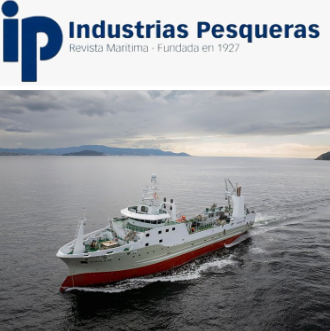
Ibercisa Deck Machinery plays an active role as an equipment supplier in the renewal of the fishing fleet operating in the South Atlantic. The Vigo-based company designs, manufactures, and supplies solutions that integrate marine machinery with onboard energy recovery systems. The integrated design of the entire equipment suite enables greater catch efficiency and superior equipment control.
When designing equipment for fishing vessels in this fishing ground, the harsh conditions and the intense operational demands of the fisheries are taken into account. Furthermore, having a precise control system for the main and auxiliary winches is crucial to maximizing product quality—both during trawling and throughout deck handling, from the stern ramp to the hold.
Source: Industrias Pesqueras | Read the full article here
Belize partners with Satlink to strengthen global fisheries traceability through electronic monitoring
The Belize High Seas Fisheries Unit (BHSFU) has taken a strategic step toward strengthening fisheries oversight and marine conservation by selecting technology company Satlink as the official Electronic Monitoring (EM) provider for its high-seas fleet. This partnership is part of Belize’s broader plan to deploy an Electronic Monitoring Program (EMP) across its distant-water industrial fishing fleet by 2027, enhancing the country’s monitoring, control, and surveillance (MCS) capabilities while improving traceability and alignment with international fisheries standards.
Chinese state-run newspaper Global Times has highlighted Erling Haaland’s role in promoting Norwegian salmon, reporting that the footballer’s advertising campaign has become a social media talking point among Chinese consumers.
The article said Haaland’s endorsement for the Norwegian Seafood Council has generated photos, memes and online discussion across Chinese social media platforms, with users sharing images of promotional displays in supermarkets and asking where the products are available.The campaign, launched in Shanghai on 3 June, features Haaland as an ambassador for Norwegian salmon. Promotional material has been placed in more than 750 retail stores across China through the end of July.
Source: SalmonBusiness | Read the full article here
Salmon farming giant writes off £74m in deal to focus on 'core farming geographies'
Mowi is to sell its salmon farming operations in Atlantic Canada to New Brunswick-headquartered Cooke Inc. for CAD 225 million (£119.4m / NOK 1.573 billion), the companies have announced.
Mowi has operations in New Brunswick, Prince Edward Island, and Newfoundland and Labrador, including freshwater hatchery facilities, sea farming sites and two processing plants. Standing salmon biomass was 9,000 tonnes as of this week.
Source: fishfarmingexpert | Read the full article here
Ahead of the event scheduled for November 30 to December 2, 2026, the XI Congreso Nacional de Acuicultura continues to garner support from companies and institutions linked to the sector's development, cementing its status as a key meeting point for science, innovation, and the national aquaculture industry.
The event, which will take place at the Diego Rivera Theater in Puerto Montt, already has the backing of major players across the aquaculture value chain who have signed on as sponsors in various categories.
SalmoFood is participating in the Diamond category, while the Platinum category includes Veterquímica, STIM, QLF Labs, Sudvet, Benchmark Genetics, Cermaq, Salmones Antártica, Yadran, and Imenco.
Source: MundoAcuicola | Read the full article here
The South Korean government has announced new supply expansion measures to stabilise prices of key seafood items, including mackerel, hairtail and squid, as part of its broader plan to ease the burden of living costs in the second half of the year.
As part of the latest inflation control measures, the government plans to inject a total of KRW 1 trillion in fiscal support to stabilise consumer prices. For seafood, the government said it will directly import 2,000 tons of Norwegian mackerel and redirect part of domestic export-bound mackerel supply to the local market, offering it at around half price.
Hofseth International has increased its holding in Hofseth BioCare above 20% following the company’s NOK 144.5 million (€12.7 million) private placement.
The investment vehicle received 30.4 million new shares at NOK 1.30 each. Subject to shareholder approval of the second tranche, it will own 106.0 million ordinary shares and 16 million non-voting Class B preference shares, representing 20.30% of the company’s share capital and 17.78% of the voting rights.
Source: SalmonBusiness | Read the full article here
Norway’s fish farming industry is set to be one of the beneficiaries of a major ship tunnel project, for which a key contract has now been awarded.
The Oslo-based civil engineering giant AF Gruppen has been awarded a billion kroner (£80m) contract to build the Stad Ship Tunnel, one of Norway’s biggest transport projects.
The Stad Ship Tunnel is a planned 1.7-kilometre (just over one mile) underground passage in Norway designed to allow ships to bypass the highly unpredictable and dangerous Stadhavet Sea, an area in the west of the country which marks the dividing point between the North Sea and the Norwegian Sea.
Author: Vince McDonagh / Fish Farmer | Read the full article here
Alaska Groundfish Harvest Summary, June 2026 United States
Alaska groundfish harvest volume reaches 929,500 metric tons through May 2026
Year-over-year stability in the state's fishing industry is maintained thanks to the rebound of Pacific cod and rockfish,...





 CHINA
CHINA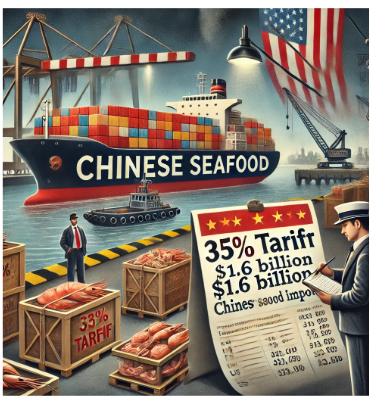 This action follows a 25% tariff on Canadian and Mexican products, and an additional 10% on China, citing concerns about fentanyl flow to the US. China argues the tariffs violate international trade rules and rejects the fentanyl connection, highlighting bilateral anti-drug cooperation.
 SPAIN
SPAIN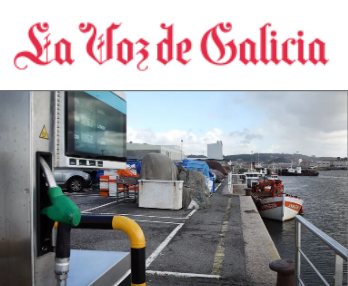 Spanish fishing vessel owners have already received—or are about to receive—the first round of aid to offset the fuel price hikes caused by the war in the Middle East. On June 18, the Ministry of Agriculture, Fisheries and Food published the list of 4,308 vessel owners and 4,650 vessels set to receive an initial payout of €6.8 million. This is part of the €25 million package authorized by the European Commission to help Spain mitigate the additional costs resulting from the conflict. As of today, June 30, the subsidy covers 20 cents per liter—calculated as a flat rate based on average rather than actual consumption—subject to a cap of €200,000 per vessel and €400,000 per owning company.
 Ibercisa Deck Machinery
 BELIZE
.png) The Belize High Seas Fisheries Unit (BHSFU) has taken a strategic step toward strengthening fisheries oversight and marine conservation by selecting technology company Satlink as the official Electronic Monitoring (EM) provider for its high-seas fleet. This partnership is part of Belize’s broader plan to deploy an Electronic Monitoring Program (EMP) across its distant-water industrial fishing fleet by 2027, enhancing the country’s monitoring, control, and surveillance (MCS) capabilities while improving traceability and alignment with international fisheries standards.
The Belize High Seas Fisheries Unit (BHSFU) has taken a strategic step toward strengthening fisheries oversight and marine conservation by selecting technology company Satlink as the official Electronic Monitoring (EM) provider for its high-seas fleet. This partnership is part of Belize’s broader plan to deploy an Electronic Monitoring Program (EMP) across its distant-water industrial fishing fleet by 2027, enhancing the country’s monitoring, control, and surveillance (MCS) capabilities while improving traceability and alignment with international fisheries standards. Chinese state-run newspaper Global Times has highlighted Erling Haaland’s role in promoting Norwegian salmon, reporting that the footballer’s advertising campaign has become a social media talking point among Chinese consumers.
 CANADA
 Salmon farming giant writes off £74m in deal to focus on 'core farming geographies'
  CHILE
CHILE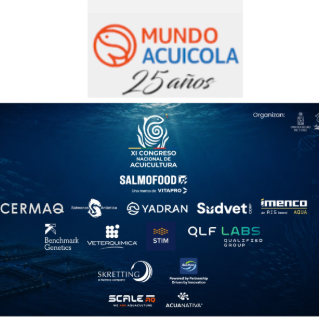 Ahead of the event scheduled for November 30 to December 2, 2026, the
  SOUTH KOREA
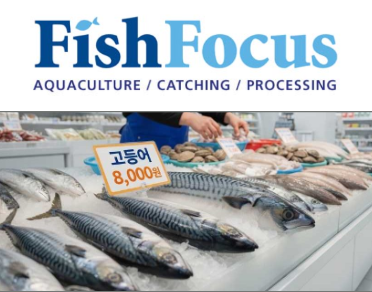 The South Korean government has announced new supply expansion measures to stabilise prices of key seafood items, including mackerel, hairtail and squid, as part of its broader plan to ease the burden of living costs in the second half of the year.
 NORWAY
 Hofseth International
 Norway’s fish farming industry is set to be one of the beneficiaries of a major ship tunnel project, for which a key contract has now been awarded.
 JAPAN
JAPAN.png)