Other Media | Fish Focus: Strengthening knowledge on sustainable aquaculture in Mozambique
MOZAMBIQUE
Friday, December 05, 2025
Researchers travelled to Mozambique to collaborate on seafood safety and sustainable aquaculture.
On Inhaca Island, east of the capital Maputo, several experimental facilities for cultivating seaweed and green mussels are located.
Green mussel (Perna perna) is a mussel species commonly found in tropical regions.
These low-trophic species are of particular interest because they have the potential to contribute to more sustainable production of food and feed resources.
Author: Pauline Paolantonacci / Fish Focus | Read the full article here
The Rosselkhoznadzor (Russia's Federal Service for Veterinary and Phytosanitary Surveillance) announced on December 2, 2025, that it has granted market access to 10 additional Indian enterprises for the supply of fish and seafood to Russia.
This decision was reached following collaborative efforts between the competent services of both nations and assurances from the Indian side that the products adhere to the veterinary and sanitary requirements of the Eurasian Economic Union (EAEU) and Russia.
The imports are strictly permitted only into Russia and must be accompanied by export certificates, along with copies of safety protocols. These protocols specifically confirm the products are tested for compliance regarding parameters like toxic elements, HCG, S. Aureus, chloramphenicol, sulfonamides, tetracyclines, quinolones, and certain antibacterial drugs (dyes).
With this new inclusion, the total number of Indian fish and seafood production facilities registered by Rosselkhoznadzor in the Register of Third-country Enterprises now stands at 128.
Inverlussa Marine Services has taken delivery of its latest major investment, a new 25-metre hybrid aquaculture support vessel designed and built in Scotland by Macduff Shipyards.
Named Naomi Jennifer, the vessel has been designed to meet high environmental and operational standards, incorporating modern hybrid technology and increased lifting capability. Inverlussa said accommodation is built to a very high standard, in common with its other vessels.Naomi Jennifer is fitted with IMO Tier 3 compliant engines supported by a hybrid system that can store electrical energy for use during operations.
Source: fishfarmingexpert | Read the full article here
With the squid fishing season set to begin in Argentine waters in a month, and awaiting news on the recovery of the loligo squid population in the Falkland Islands, nearly one hundred Chinese and Korean fishing vessels are already operating continuously in the Southern Cone. They will not return to their home ports for at least two years.
The Xinrun 779 is a newly built trawler—delivered last October—measuring 68 meters in length and 12 meters in beam. Although it flies the Vanuatu flag and its formal owner is Xinrun Ocean Vanuatu, its classification society is the state-owned China Classification Society (CCS), and it is a subsidiary of a Hong Kong-based group.
Author: Lara Graña / Faro de Vigo | Read the full article here
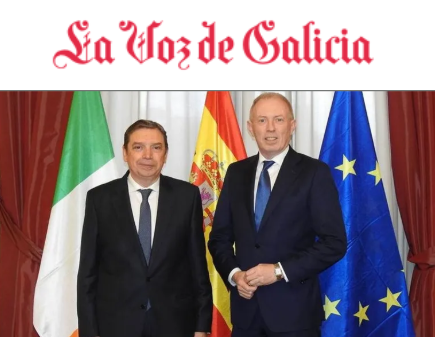
Both will demand that the socioeconomic impact of the quota reductions be measured
In one week, on December 11 and 12, EU agriculture and fisheries ministers will meet in Brussels to set the total allowable catches (TACs) and fishing quotas for 2026. And the outlook is not good for a large part of the Galician fleet. Those that depend on mackerel, blue whiting, and pollock, for which significant cuts are being sought (70%, 41%, and 26%, respectively). This diverse fleet fishes with trawls, longlines, purse seines, and even small-scale vessels.
Source: La Voz de Galicia | Read the full article here
The Patagonian company dedicated to responsible rainbow trout aquaculture took home the highest honor in the competition organized by Banco Galicia and Clarín.
The firm Salmon Trout, which operates in the Limay River basin in Patagonia (Río Negro and Neuquén provinces), was crowned the winner of the PYME Gold Award in the eighth edition of the prestigious awards.
The company had previously won in the "Industrial SME" category. It was subsequently chosen from among the winners of the other categories to receive the main recognition, which highlights its sustainable and scalable business model.
Salmon Trout is dedicated to the responsible cultivation of rainbow trout, focusing on animal welfare, environmental care, and local job creation. Its mission is to position Argentine aquaculture in demanding national and international markets.
Upon receiving the distinction, Gabriel Morales, founder, president, and general director of Salmon Trout, highlighted the company's trajectory:
"I come from the academic world: [...] step by step we managed to turn an idea into an industrial model that is now flourishing and scaling up," he stated.
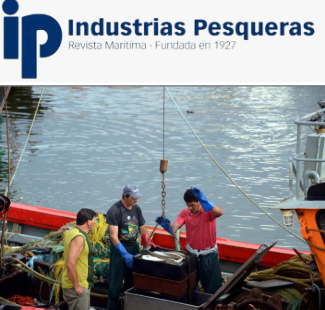
The Secretariat of Agriculture, Livestock and Fisheries of the Ministry of Economy has presented the balance of fishing activity for September 2025, showing a 58.2% increase compared to the same month in 2024, positioning fishing as the main sector with the highest growth in economic activity, according to INDEC (National Institute of Statistics and Censuses).
This dynamic in the sector is confirmed by recent data from the Undersecretariat of Fisheries, which indicates that by the end of November, total landings had already surpassed those recorded on the same date of the previous year (758,074 tons compared to 755,688 tons in 2024), and exceeded the total landings of 2023 by more than 50,000 tons.
Source: Industrias Pesqueras | Read the full article here
The Biological Study Program of the Jumbo Squid (Dosidicus gigas) in non-fishery sectors, financed by the UNDP and executed by IFOP, has successfully concluded. Its results, disseminated in Valparaíso, are crucial for the Chilean artisanal fishery.
The two-year project collected information from Arica to Biobío, focusing on growth and migration.
Project Milestones
The project leader, Karen Belmar, highlighted two achievements:
Age Estimation: The understanding of the squid's age was significantly improved.
Unprecedented Tagging:18 transmitters were attached, revealing patterns of horizontal and vertical movements and characterizing the species' environment.
Strategic Value
Juan Santibáñez (Subpesca/GEF Humboldt II) described the study as "highly relevant" since the squid fishery is 100% artisanal with great projection, contributing significantly to exports and social benefits.
Alejandro Gertosio (Humboldt II) emphasized that the use of innovative technology and the data obtained on growth and migration are a "major finding" that will optimize the fishery management of Dosidicus gigas in Chile.
Ningbo – Ningbo-Zhoushan Port officially achieved a historic milestone on December 2nd, with its annual container throughput surpassing 40 million TEUs for the first time. This achievement elevates it to the status of a global "super port," making it only the third port in the world, and the second in China (after Shanghai and Singapore), to reach this significant volume.
The record-breaking container was handled at the Meishan Port Area, where an autonomous truck smoothly transferred the cargo onto the "COSCO Shipping Centaur" vessel.
Key Highlights:
Global Rank: Third globally, after Shanghai and Singapore.
Economic Impact: The milestone underscores the port's "hardcore" strength in connecting global supply chains and highlights the robust resilience of the Chinese economy and its foreign trade sector.
Decade of Growth: This landmark caps a decade of rapid expansion. The port's container throughput first exceeded 20 million TEUs in 2015, following its substantial integration.
Technological Edge: The port leverages advanced technology, with Ningbo Customs collaborating closely on smart customs and port operations to ensure efficiency and world-class supervision.
This development is hailed as a "legend" of rapid growth, cementing Ningbo-Zhoushan Port's role as a vital hub for international commerce.
Proximar Seafood, the Norwegian owned salmon farmer which has built a large land facility at the foot of Mount Fuji, Japan, last night issued an “extraordinary production update” to say that fish growth was picking up.
The company said the biomass at the end of last month was 1,800 tonnes.
The company is pleased to report that the biomass uptick has continued, reaching 1,804 tonnes at the end of November. Hence, Proximar reiterates the goal of reaching 2,000 tonnes in biomass by the end of 2025.”
Author: Vince McDonagh / Fish Farmer | Read the full article here
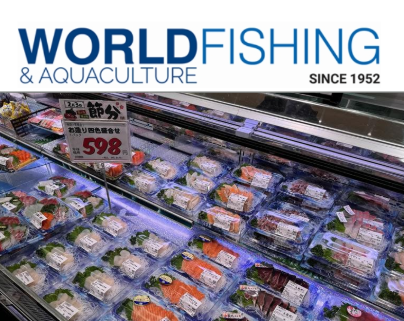
Norway’s seafood exports dropped for the second month in a row in November, with overall overseas sales value falling 4% year-on-year to NOK 16.6 billion, according to new figures from the Norwegian Seafood Council (NSC).
The decline comes despite historically high prices for several key species. Lower export volumes – particularly of wild-caught fish – and a strengthening Norwegian krone combined to push overall export value down.
Norway Pelagic Fishing Update Week 48 Norway
Kvænangen Herring Quota Reached as Norwegian Fisheries Conclude Weekly Catch Report
The fishing activities in Kvænangen have officially concluded for the season, marking the fulfillment o...





 MOZAMBIQUE
.png) On Inhaca Island, east of the capital Maputo, several experimental facilities for cultivating seaweed and green mussels are located.
On Inhaca Island, east of the capital Maputo, several experimental facilities for cultivating seaweed and green mussels are located. RUSSIAN FEDERATION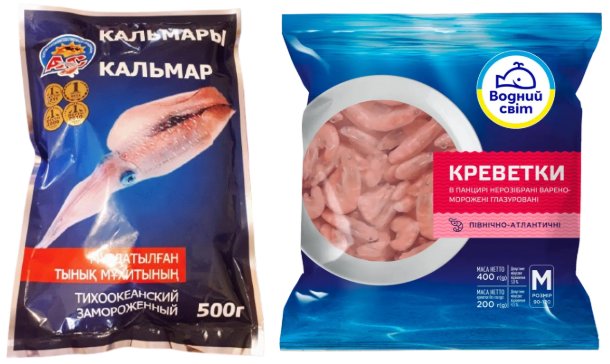
 UNITED KINGDOM
.png) Inverlussa Marine Services
Inverlussa Marine Services ARGENTINA
 With the squid fishing season set to begin in Argentine waters in a month, and awaiting news on the recovery of the loligo squid population in the Falkland Islands, nearly one hundred Chinese and Korean fishing vessels are already operating continuously in the Southern Cone. They will not return to their home ports for at least two years.
 EUROPEAN UNION
 Both will demand that the socioeconomic impact of the quota reductions be measured
.png)
 The Secretariat of Agriculture, Livestock and Fisheries of the Ministry of Economy has presented the balance of fishing activity for September 2025, showing a 58.2% increase compared to the same month in 2024, positioning fishing as the main sector with the highest growth in economic activity, according to INDEC (National Institute of Statistics and Censuses).
 CHILE
CHILE.png)
 CHINA
CHINA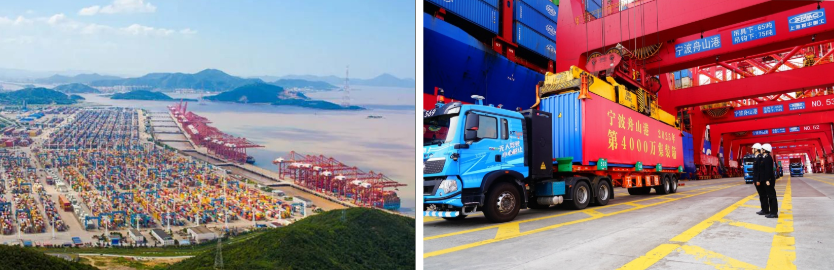
 JAPAN
JAPAN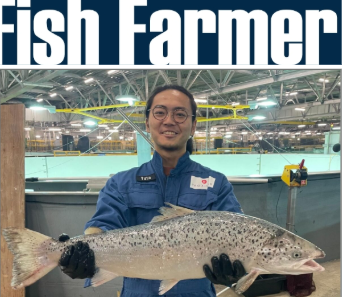
 NORWAY
 Norway’s seafood exports dropped for the second month in a row in November, with overall overseas sales value falling 4% year-on-year to NOK 16.6 billion, according to new figures from the Norwegian Seafood Council (NSC).