Other Media | Industrias Pesqueras: Kofradia Basque Seafood: Integrating the Entire Fish Value Chain
SPAIN
Monday, June 08, 2026
The Basque fishing sector and government have decided to make a firm commitment to their seafood products with the creation of Kofradia Basque Seafood S.A., a pioneering initiative offering a 360-degree solution for fish by encompassing its entire value chain, from capture to the end consumer. “This project, which originated within the sector itself, is beginning to think more deeply about the end consumer,” explains Javier Bilbao, its commercial director.
Giving a boost to the fishing sector by covering all stages of the fish process and focusing, above all, on the end consumer. In the Basque Country, they are clear that this is the formula for adding value to local products and, ultimately, to an activity that is key in economic, social, and cultural terms for the autonomous community.
Source: Industrias Pesqueras | Read the full article here
MIYAGI – According to data compiled by the Miyagi Prefectural Fisheries Co-operative, the cumulative harvest of farmed Coho salmon (Oncorhynchus kisutch) reached 2,201 metric tons as of May 31, 2026. This volume represents a 13% decrease compared to the 2,544 metric tons landed during the same period last year.
click on the image to enlarge it
Although the harvest volume rose to 900 metric tons in late May—up from 686 metric tons in mid-May—current landings are still lagging behind the 987 metric tons recorded in late May of the previous year. Historically, the peak harvest period for products marinos in this region intensifies from June onward.
In terms of pricing, the market is showing a strong price floor. The average unit price rebounded from its mid-May low of 758 yen/kg to 794 yen/kg in late May. The cumulative average price currently stands at 805 yen/kg, marking an 8% decline against the previous year's cumulative average of 878 yen/kg.
Stores in the Netherlands join the British chain that removed the species from its product catalog due to overfishing of the stock
Last April, the British supermarket chain Waitrose implemented its decision to remove mackerel from the product catalog of its more than 300 stores. It can no longer be found fresh, chilled, or frozen. This was the distribution company's reaction to years of overfishing by certain coastal states that have jeopardized the stock, so that this product, even with a 48% reduction in the quota, no longer meets "Waitrose's responsible sourcing requirements."
Source: La Voz de Galicia | Read the full article here
Conveyor belt specialist Marvis ehf has confirmed its return to IceFish 2026, where the company will showcase its range of conveyor belt solutions and components for the fisheries and food processing sectors.
Marvis specialises in the import, sale and assembly of high-quality conveyor systems and equipment, including plastic conveyor belts from Intralox, as well as electric motors, geared motors, spare parts and related components. The company has built a strong reputation in Iceland for supplying reliable, premium-quality products tailored to the needs of the seafood and food processing industries.
Norwegian salmon farmer Grieg Seafood is contemplating the issue of a green hybrid bond to raise NOK 750 million (£60m), it said in a market announcement today.
At the same time, it plans to buy back its previously issued green bonds from holders. The bonds are due in 2029 and are worth approximately NOK 1.904 billion (£151.7m).The company is offering a price of 105.75% of the nominal amount, plus accrued and unpaid interest. Following the expiry of the buy-back offer, the company intends an early redemption of the remainder of the existing bond under the rules of the bond.
Source: fishfarmingexpert | Read the full article here
The production value of all types of Icelandic farmed fish last year totalled ISK 53.4 billion (£320 million). The value figure is down by just 1% on the previous year, probably due to lower salmon prices which were a feature of aquaculture in the Nordic countries and Scotland last year.
The volume of exported products was 12% higher on 2024.The total production of aquaculture related ungutted fish in 2025 was 64,417 tons, a 17% increase from 2024.
Salmon products accounted for ISK 48.7 billion (£295m) out of the total. Salmon was also the most produced fish by volume, at 58,717 tons and a 19% increase on 2024.
Author: Vince McDonagh / Fish Farmer | Read the full article here
Last days to buy this unparalleled seafood, which will soon be out of season and won't return until November.
Scientists have concluded that Atlantic spider crabs are different from those in the Mediterranean and now distinguish them by calling the former Maja brachydactyla and the latter Maja squinado. From February to July, during their peak spawning season, Galicia registers the highest numbers of egg-bearing females, explains the Galician Ministry of the Sea, which last year closed the season for this crustacean from June 21 to November 9 on the Atlantic coast and from July 1 to November 30 on the Galician Cantabrian coast.
Source: La Voz de Galicia | Read the full article here
The latest statistics for Norway’s seafood exports in May are revealing a deepening of existing 2026 export trends regarding both growth in Poland and China and stagnation in the U.S. market.
Poland, China, and Sweden were May's biggest growth markets for Norwegian seafood exports overall, with Poland, China, and Spain the biggest growth markets for salmon. The main factors driving this growth were demand for whole salmon in Poland, while the Chinese market was characterized by "strong demand for seafood for raw consumption," said Chramer, who noted that salmon and prawns were fast growing categories there.The war in the Middle East had also affected global salmon exports, reduced tourism to the region and logistics challenges amounted to a drop in export volume to Norway's major Middle Eastern salmon markets by more than 20 percent.
Author: Erin Spampinato / SeafoodSource | Read the full article here
Norway exported seafood worth NOK 13.4 billion (€1.24 billion) in May, a decline of 1%, compared with the same month last year, reflecting continued pressure from geopolitical uncertainty, trade barriers and reduced raw material availability.
The latest figures mark the fourth month of declining seafood export values in 2026, with March remaining the only month this year to record growth compared with the same period in 2025.
The ongoing conflict in the Middle East also continued to disrupt seafood trade flows.
French insect protein producer Innovafeed has secured €51 million in new financing as it shifts from industrial scale-up to commercial expansion, with a particular focus on aquaculture and pet food markets.
The funding round was supported primarily by existing investors, including Creadev, QIA, Temasek, FFC, ABC Impact and ADM, alongside the company’s banking partners.Innovafeed said its production facility in Nesle, northern France, has now reached full industrial operation. The company reported producing more than 15,000 tonnes of insect protein and oil over the past three years
Source: SalmonBusiness | Read the full article here
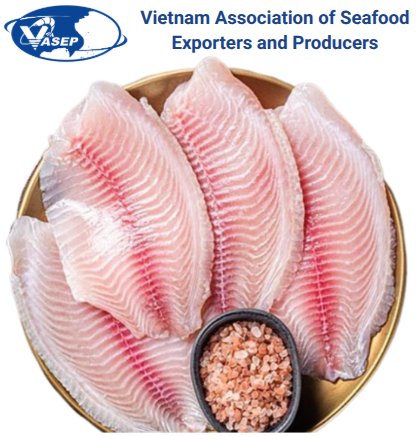
In the first four months of 2026, Vietnam's tilapia exports reached US$49 million, a 151% increase compared to the same period in 2025. This impressive growth reflects positive signs for the industry, with Brazil emerging as a major contributor to this boom, and frozen fillets continuing to play a key role.
Frozen Fillets Dominate Export Structure
In terms of product lines, frozen tilapia fillets (HS code 0304) accounted for over 80% of the total export value of the entire industry during this four-month period. Frozen whole fish (HS code 0303) ranked second with a significantly lower share, while value-added products (HS code 16) made almost no significant contribution. This high concentration on frozen fillets is partly driven by the breakthrough in Brazil, causing figures to deviate from the more diverse demands of other markets.
The data indicates that Vietnam's tilapia exports are entering a strong growth phase, led by Brazil and the frozen fillet group. While this concentration reflects the current advantage of Vietnamese businesses in quickly fulfilling large orders, it also highlights an opportunity to diversify into more value-added product lines moving forward.





 SPAIN
SPAIN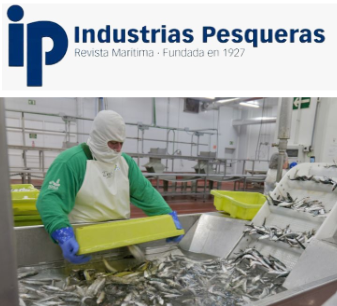 The Basque fishing sector and government have decided to make a firm commitment to their seafood products with the creation of Kofradia Basque Seafood S.A., a pioneering initiative offering a 360-degree solution for fish by encompassing its entire value chain, from capture to the end consumer. “This project, which originated within the sector itself, is beginning to think more deeply about the end consumer,” explains Javier Bilbao, its commercial director.
 JAPAN
JAPAN.png)
 EUROPEAN UNION
 Stores in the Netherlands join the British chain that removed the species from its product catalog due to overfishing of the stock
 ICELAND
.png) Conveyor belt specialist Marvis ehf has confirmed its return to
Conveyor belt specialist Marvis ehf has confirmed its return to  NORWAY
 Norwegian salmon farmer
 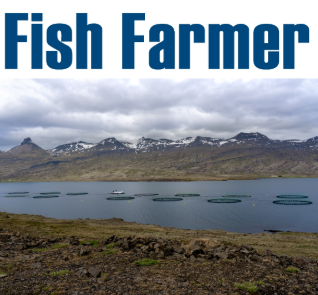 The production value of all types of Icelandic farmed fish last year totalled ISK 53.4 billion (£320 million). The value figure is down by just 1% on the previous year, probably due to lower salmon prices which were a feature of aquaculture in the Nordic countries and Scotland last year.
.png) Last days to buy this unparalleled seafood, which will soon be out of season and won't return until November.
Last days to buy this unparalleled seafood, which will soon be out of season and won't return until November.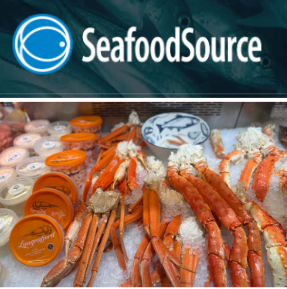 The latest statistics for Norway’s seafood exports in May are revealing a deepening of existing 2026 export trends regarding both growth in Poland and China and stagnation in the U.S. market.
.png) Norway exported seafood worth NOK 13.4 billion (€1.24 billion) in May, a decline of 1%, compared with the same month last year, reflecting continued pressure from geopolitical uncertainty, trade barriers and reduced raw material availability.
Norway exported seafood worth NOK 13.4 billion (€1.24 billion) in May, a decline of 1%, compared with the same month last year, reflecting continued pressure from geopolitical uncertainty, trade barriers and reduced raw material availability. FRANCE
.png) French insect protein producer
French insect protein producer  VIET NAM
 Frozen Fillets Dominate Export Structure