Other Media | The Fish Site:Pioneering mussel producer scoops top aquaculture award
UNITED KINGDOM
Thursday, September 17, 2020
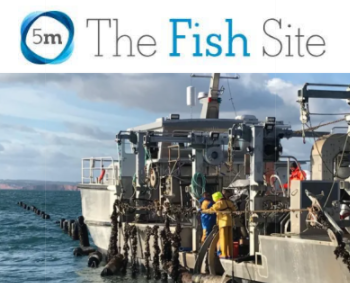
Offshore Shellfish, creators of the UK’s first fully offshore mussel farm, have won Best Aquaculture Company at the 2020 Aquaculture Awards.
The winners were announced at entertaining awards ceremony, which is now available to watch online.
Amy Novogratz, co-founder and head of aquaculture-focused investment fund Aqua-Spark, receiving the ‘Outstanding contribution to the industry’ award; and Scottish Sea Farms’ Noelia Rodriguez and Offshore Shellfish’s George Holmyard being awarded Finfish farmer of the year and Shellfish farmer of the year respectively
Source: The Fish Site | Read the full article here
The Minister of the Sea, Marta Villaverde, visited the facilities of Opmega, Galicia's leading mussel sector organization, in Boiro.
Accompanied by President Ricardo Herbón, she learned about advancements in sustainability and innovation, such as the CSIC study presented at Seafood Expo Global Barcelona. This report certifies that the carbon footprint of Galician mussels is minimal and highlights their ecological value to the estuaries.
The entity is moving toward MSC international certification to bolster competitiveness against imports. Commercially, the success of their fresh, microwave-ready mussel trays stands out for optimizing shelf life. Despite challenges like biotoxin closures in late 2025, Opmega remains a European benchmark with 579 platforms (bateas) and 312 members across the estuaries of Muros and Noia, Arousa, Pontevedra, Vigo, and Portugal.
Opmega has been recognized by the Ministry of Agriculture, Fisheries and Food since 1986 as Spain's first transnational mussel producers' organization.
The Princess Royal has officially opened Bakkafrost Scotland’s multi-million pound Applecross facility in Wester Ross, the UK’s largest freshwater recirculating aquaculture system (RAS).
During the visit on Wednesday, Princess Anne toured the freshwater site, met employees and local guests, and learned how advanced technology is being used to improve fish welfare, reduce environmental impact and support high value, skilled rural employment.The facility plays a pivotal role in Bakkafrost Scotland’s ‘one summer at sea’ production strategy, which allows salmon to spend longer growing in controlled freshwater conditions before transferring to sea as larger, stronger smolt.
Source: fishfarmingexpert | Read the full article here
Ongole: Tensions flared on Tuesday as local prawn farmers staged a spirited protest outside the District Fisheries Office, demanding an immediate rollback of unauthorized price hikes on aquatic feed.
Led by the Prawn Farmers Association Prakasam district committee, demonstrators accused feed companies of bypassing mandatory APSADA (Andhra Pradesh State Aquaculture Development Authority) approval. The companies reportedly increased Tiger feed prices by Rs 10.70 per kg and Vannamei feed prices by Rs 8.40 per kg.
Association District President Duggineni Gopinath dismissed industry claims that rising raw material costs necessitated the hike. He highlighted a sharp decline in soya meal prices—dropping from Rs 100 to Rs 35 per kg—noting that companies typically stockpile materials at lower rates.
The price surge is expected to drive up production costs by Rs 35 to Rs 40 per kg for Tiger shrimp and Rs 15 to Rs 20 per kg for Vannamei. Following the protest, the farmers submitted formal petitions to District Collector P. Raja Babu and Fisheries Joint Director (JD) Srinivas, warning of a statewide agitation if the government fails to intervene.
The Russian government has officially expanded the functionality of the “Inspector” mobile application, marking a significant step in the digitalization of the nation’s fisheries and aquatic bioresource conservation sectors.
This update transitions traditional regulatory interactions into a streamlined, remote format with full official recording of all actions.
Key Enhancements
The “Inspector” app, integrated into the Standard cloud solution for automation of control (supervisory) activities, now serves as the primary tool for federal oversight. Its expanded capabilities include:
Remote Inspections: Conducting real-time video conferences during official checks and preventative measures.
Digital Evidence: Documenting violations through photography and video directly within the app.
Information Exchange: Seamless presentation of documents and data during inspections.
Compliance Tracking: Official confirmation that previously identified violations of fishing regulations or fishing ground use conditions have been rectified.
By leveraging these remote tools, authorities aim to reduce the administrative burden on bona fide industry participants while maintaining rigorous compliance with fisheries legislation.
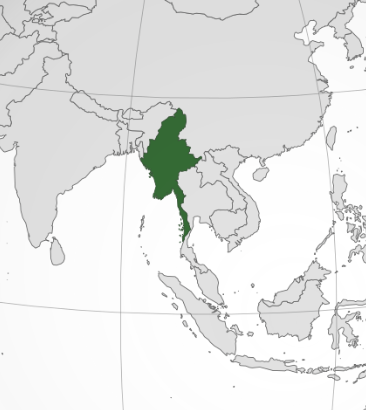
Myanmar is currently exporting aquatic products to 42 countries, with seafood making up 70% of shipments and freshwater products accounting for the remaining 30%.
According to the Myanmar Fisheries Union, the industry is pivoting toward modern aquaculture to offset rising production costs and a decline in marine fishery resources.
A key development is underway in Bandanau, located in the Ayeyarwady Region, where a 3,000-acre deep-water zone is utilizing modern technology to farm tilapia. New export contracts have already been signed with the United States and China, with shipments scheduled to begin this year.
Officials emphasize that transitioning from traditional catches to controlled environments is vital. Establishing modern aquaculture zones could generate nearly $200 million in annual revenue. By expanding these industries, Myanmar aims to secure its domestic food supply while significantly boosting foreign exchange earnings through a more sustainable and consistent export model.
Tilapia prices are showing signs of stabilization across Brazil, though significant regional gaps persist. According to the Center for Advanced Studies in Applied Economics (Cepea), price differences reached up to US$ 0.25 per kilo between monitored regions during the week of May 4-8, 2026.
Market Highlights:
Northern Paraná: Recorded the highest price at US$ 1.73/kg (R$ 10.47).
Triângulo Mineiro / Alto Paranaíba: Followed closely at US$ 1.69/kg (R$ 10.24), a 0.13% increase.
Grandes Lagos (SP/MS): Averaged US$ 1.67/kg (R$ 10.09), up 0.28%.
Morada Nova de Minas (MG): Noted a slight dip to US$ 1.61/kg (R$ 9.75).
Western Paraná: Maintained the lowest national rate at US$ 1.48/kg (R$ 8.96).
While Western Paraná remains the most affordable hub, the state of Paraná continues to lead the nation in processing and exports. This stability marks a shift away from the high volatility seen in recent fish farming cycles.
The blue whiting season for Síldarvinnslan vessels has officially come to a close following a period of highly productive fishing.
The season’s end was marked this morning as Beitir NK (pictured) arrived in the port of Neskaupstaður carrying 2,720 tons of catch from Faroese jurisdiction. This follows successful landings earlier this week by Barði NK, which brought in 2,100 tons on Tuesday, and Börkur NK, which landed 3,200 tons on Wednesday.
Captain Þorkell Pétursson of Barði NK noted that fishing in the Ræsin separation area near Færeyjabanki was excellent, with hauls taken in six to eleven hours. Similarly, Captain Hjörvar Hjálmarsson of Börkur NK reported a swift trip, filling the ship in less than three days with hauls ranging from 360 to 580 tons.
While Captain Ólafur Gunnar Guðnason of Beitir NK observed that the fish began to disperse and move north toward the Rósagarður area in Icelandic jurisdiction at the end of the run, the overall sentiment remains high. Despite a slight dip in density during the final days, crews remain very satisfied with the robust volumes achieved throughout the season.
Satlink is attending Navalia once again to showcase its wide range of solutions for maritime-fishing digitalization and reaffirm its commitment to innovation, knowledge, and ocean sustainability through tools focused on resource management, activity optimization, and improved communications in the marine environment.
As a global technology provider in the field of satellite connectivity, Satlink designs and implements multi-operator architectures that integrate different networks and technologies to guarantee availability, service continuity, security, and data integrity, with 24/7 support.
Source: Industrias Pesqueras | Read the full article here
On May 27 and 28, Expo Foodtech 2026 will serve as a hub for logistics and technological innovation in the food industry
The Food 4 Future World Summit will focus on reducing emissions, traceability, food safety, and AI and robotics as drivers of competitiveness
Madrid, May 12, 2026 – Expo Foodtech 2026 will bring together food industry professionals on May 27 and 28 in Bilbao, Spain, to explore the solutions shaping the future of packaging, logistics, automation, and technology in the sector. The trade show will be held simultaneously with Pick&Pack for Food Industry, which will reinforce Bilbao’s position as a hub for food innovation and the promotion of new, more efficient, sustainable, and connected production models.
Expo Foodtech will once again host the Food 4 Future World Summit, the leading conference on food innovation. This year’s agenda will feature the Operations & Logistics Summit and the CTO’s & Purchasing Summit—two specialized forums that will address the main challenges across the entire food value chain, from food production to distribution.
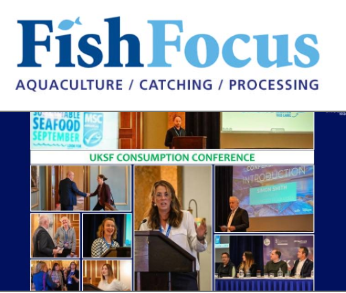
How the UK Seafood Federation Is Shaping the Future of Seafood.
The UK Seafood Federation (UKSF) is the unified voice of the UK’s seafood processing and trading sector, bringing together businesses from across the supply chain with a shared ambition: to make seafood a bigger part of the British diet for the benefit of both public health and the planet.
At a time when the role of food systems in sustainability, nutrition and economic resilience is under increasing scrutiny, UKSF positions the seafood industry as a vital contributor to a healthier, more sustainable future.





 UNITED KINGDOM
 Offshore Shellfish
 SPAIN
SPAIN.png) Accompanied by President Ricardo Herbón, she learned about advancements in sustainability and innovation, such as the CSIC study presented at Seafood Expo Global Barcelona. This report certifies that the carbon footprint of Galician mussels is minimal and highlights their ecological value to the estuaries.
Accompanied by President Ricardo Herbón, she learned about advancements in sustainability and innovation, such as the CSIC study presented at Seafood Expo Global Barcelona. This report certifies that the carbon footprint of Galician mussels is minimal and highlights their ecological value to the estuaries..png) The Princess Royal has officially opened
The Princess Royal has officially opened  INDIA
INDIA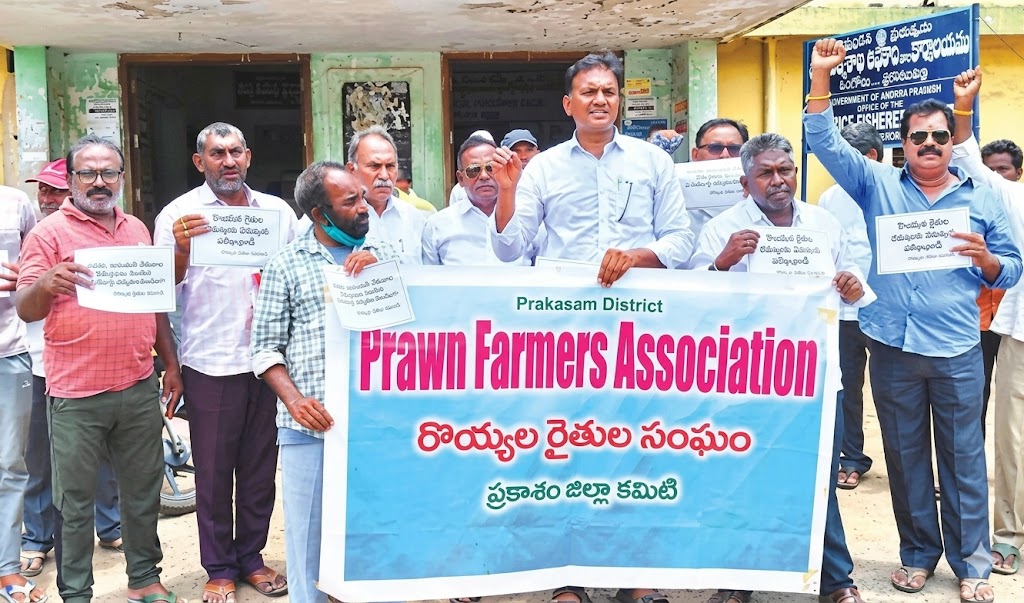
 RUSSIAN FEDERATION
.png) Remote Inspections: Conducting real-time video conferences during official checks and preventative measures.
Remote Inspections: Conducting real-time video conferences during official checks and preventative measures. MYANMAR
 According to the Myanmar Fisheries Union, the industry is pivoting toward modern aquaculture to offset rising production costs and a decline in marine fishery resources.
 BRAZIL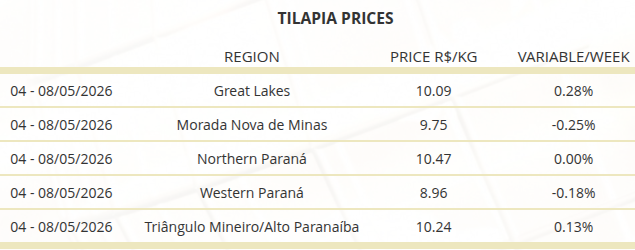
 ICELAND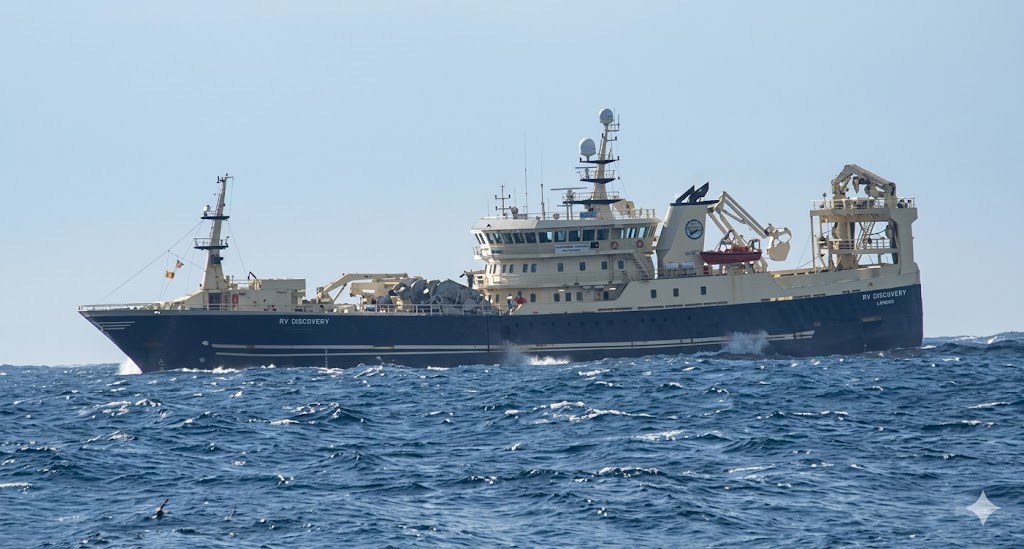
 Satlink
 On May 27 and 28,
  Expo Foodtech will once again host the Food 4 Future World Summit, the leading conference on food innovation. This year’s agenda will feature the Operations & Logistics Summit and the CTO’s & Purchasing Summit—two specialized forums that will address the main challenges across the entire food value chain, from food production to distribution.
  How the UK Seafood Federation Is Shaping the Future of Seafood.