Peru’s first 2025 anchovy-fishing season in its North-Central region is “well on track,” according to IFFO – the Marine Ingredients Organization, which has predicted solid fishmeal and fish oil production for this year as a result.
In April, Peruvian authorities established a total allowable catch (TAC) of 3 million metric tons (MT) for the season, based on technical and biological reports submitted by the Peruvian Sea Institute (Imarpe). This TAC marks the second-highest seasonal quota in the last decade, Peru’s Production Ministry (PRODUCE) announced at the time
Author: Christian Molinari / SeafoodSource l Read the full article here
Bakkafrost takes delivery of world’s largest feed barge.
The world’s largest feed barge, Krosssteinur, arrived in Funningsfjørður, Faroe Islands, on Thursday 26 June and is expected to begin operations within days following final testing and regulatory approvals. The 50-metre barge, built in Poland by GroAqua, has a total capacity of around 1,100 tonnes of fish feed and is equipped with 24 feed lines.
Commissioned by Bakkafrost, the barge will serve one of the company’s largest sites and is designed to feed all 24 cages simultaneously. The automated feed and control systems, developed by GroAqua in the Faroe Islands, allow for remote operation from land and are powered entirely by shore electricity to minimise environmental impact.
Source: SalmonBusiness l Read the full article here
Norcod has been granted permission to establish a new production location at Snyen in Meløy municipality with a total MAB (maximum allowed biomass) of 3,599 metric tons while KIME Akva has been awarded a new location in Helgeland
Norcod says Snyen is the company’s second location in Meløy and, together with Frosvika, forms a production cluster with a total capacity of 7,198 metric tonnes.
Norcod’s CEO Christian Riber said: “We are pleased to have received this approval and value the good cooperation with Meløy municipality and Nordland County.
Author: Vince McDonagh / Fish Farmer l Read the full article here
Understand how the ocean will respond to two increasingly frequent and worrying phenomena: toxic microalgae blooms that give rise to phenomena known as red tides and heat waves. This is the objective of the Cellbloom project, promoted by the Biological Oceanography group of the Marine Research Center (CIM) at the University of Vigo and the European Molecular Biology Laboratory (EMBL), headquartered in Germany. This initiative, in turn, is part of the Horizon Europe Imagine project, which promotes the development of cutting-edge imaging technologies in microscopy that bridge the gap between molecular biology and functional biology, as well as by the EMBL, within the framework of its cross-cutting theme of Planetary Biology.
Source: iPac.acuicultura | Read the full article here
Baldvin Thorsteinsson takes over as CEO, succeeding his father, Thorsteinn Már Baldvinsson
Renewal at the top of Samherji, one of Iceland's leading fishing conglomerates. Baldvin Thorsteinsson has officially assumed the role of Chief Executive Officer (CEO), replacing his father, Thorsteinn Már Baldvinsson, who is leaving the position after leading the company for 42 years, since its founding in 1983. "I am very grateful for the trust placed in me," Baldvin said upon taking office. "Like many in Akureyri, I started working at Samherji at a young age and have held various positions over the years, which has allowed me to gain a deep understanding of the company, its infrastructure, and its people,"
Source: Industrias Pesqueras | Read the full article here
This year has set a new record for the number of applications to the Aqua Nor Innovation Award. The jury has reviewed all the applications and nominated three candidates for the Innovation Award. The winner will be selected by the board of the Nor-Fishing Foundation, and the award will be presented during Aqua Nor 2025.
After reviewing and assessing the applications for the Aqua Nor Innovation Award, the jury has nominated the following three finalists (in random order):
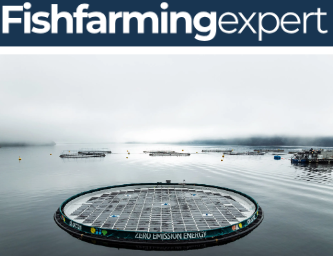
The diesel generator has barely been running, says Emilsen after first installation meets more than 90% of farm's needs
Just weeks after commissioning what is now the world's northernmost floating solar power plant, Norwegian salmon and trout farmer Emilsen Fisk is placing an order for a second system from Ålesund-based Alotta.
The solution - an Alotta Circle Mc120 - has already enabled Emilsen Fisk to cover over 90% of its power needs at its Båfjordstranda site, Trøndelag, by using only solar energy and battery storage.
Source: fishfarmingexpert l Read the full article here
ORGANIZING COMMITTEE ANNOUNCES DETAILS FOR THE ANNUAL MEETING OF THE LATIN AMERICAN AND CARIBBEAN CHAPTER OF THE WORLD AQUACULTURE SOCIETY
Experts, scientists, producers, and companies from Latin America and the Caribbean will gather at LACQUA25, where various countries will share experiences about their aquaculture systems and jointly address the key challenges facing the future of regional aquaculture.
For the first time, the World Aquaculture Society (WAS) – an international organization committed to promoting excellence in science, technology, education, and the exchange of information for the sustainable development of global aquaculture – will host one of its meetings in Chile. This high-level technical-commercial event will focus on strengthening governance and sustainability in aquaculture, particularly in the context ofclimate change.
This important conference is organized by the Latin American and Caribbean Chapter of the World Aquaculture Society (LACC-WAS), in collaboration with the Institute of Aquaculture and Environment at Universidad Austral de Chile (Puerto Montt Campus) and INTESAL (Technological Institute of Salmon). The event will take place October
7–9, 2025, at the Enjoy Hotel Convention Center in Puerto Varas, Chile.
Upward pressure on skipjack tuna prices CFR Bangkok due to supply restrictions, while prices remain stable in Manta
Prices for skipjack tuna imported CFR (cost and freight) in Bangkok, Thailand, have experienced upward pressure due to supply restrictions. This trend reflects the current difficulties in the Asian market to regularly supply this key species for the canning industry.
The situation contrasts with the behavior in Manta, Ecuador, one of the main tuna ports in the eastern Pacific, where ex-vessel prices—those set directly at the vessel's unloading point—remain stable. This balance suggests that, for now, supply conditions in the Ecuadorian region do not face the same logistical or catch challenges as in Southeast Asia.
The French oceanographic vessel L'Atalante arrived at the radioactive drum dumping area it is planning to inspect six days ago. After conducting technical tests to verify the condition of the equipment, especially the operation of the Uly X underwater robot, the French scientific mission, christened Nodssum, began operations this Wednesday to locate and map the barrels dumped in this area of ??the northeast Atlantic, about a thousand kilometers from the Galician coast, mainly during the 1970s by countries such as the United Kingdom, the Netherlands, Belgium, and Switzerland.
Author: Pablo Gonzalez / La Voz de Galicia l Read the full article here
Fisherman's Day: Beyond the Ritual Peru
Every June 29th, as tomorrow, Peru fervently celebrates Saint Peter's Day and —in honor of his profession— Fisherman's Day. This deeply symbolic date combines religious devotion to the apo...
Vietnam's Tuna Exports Rebound in May 2025 Amid Global Trade Shifts Viet Nam
Producers Navigate US Tax Concerns and Middle East Instability by Diversifying Markets.
HANOI – After facing headwinds in early 2025, Vietnam's tuna exports saw a significant recovery in May, r...




 PERU
PERU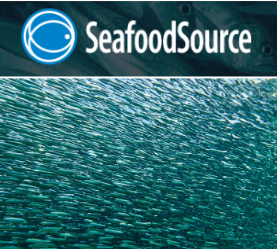 Peru’s first 2025 anchovy-fishing season in its North-Central region is “well on track,” according to IFFO – the Marine Ingredients Organization, which has predicted solid fishmeal and fish oil production for this year as a result.
 FAROE ISLANDS
.png) The world’s largest feed barge, Krosssteinur, arrived in Funningsfjørður, Faroe Islands, on Thursday 26 June and is expected to begin operations within days following final testing and regulatory approvals. The 50-metre barge, built in Poland by GroAqua, has a total capacity of around 1,100 tonnes of fish feed and is equipped with 24 feed lines.
The world’s largest feed barge, Krosssteinur, arrived in Funningsfjørður, Faroe Islands, on Thursday 26 June and is expected to begin operations within days following final testing and regulatory approvals. The 50-metre barge, built in Poland by GroAqua, has a total capacity of around 1,100 tonnes of fish feed and is equipped with 24 feed lines. NORWAY
.png) Norcod says Snyen is the company’s second location in Meløy and, together with Frosvika, forms a production cluster with a total capacity of 7,198 metric tonnes.
Norcod says Snyen is the company’s second location in Meløy and, together with Frosvika, forms a production cluster with a total capacity of 7,198 metric tonnes. SPAIN
SPAIN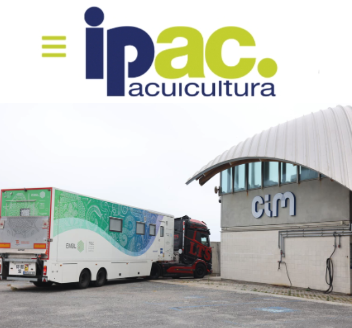 Understand how the ocean will respond to two increasingly frequent and worrying phenomena: toxic microalgae blooms that give rise to phenomena known as red tides and heat waves. This is the objective of the Cellbloom project, promoted by the Biological Oceanography group of the Marine Research Center (CIM) at the University of Vigo and the European Molecular Biology Laboratory (EMBL), headquartered in Germany. This initiative, in turn, is part of the Horizon Europe Imagine project, which promotes the development of cutting-edge imaging technologies in microscopy that bridge the gap between molecular biology and functional biology, as well as by the EMBL, within the framework of its cross-cutting theme of Planetary Biology.
 ICELAND
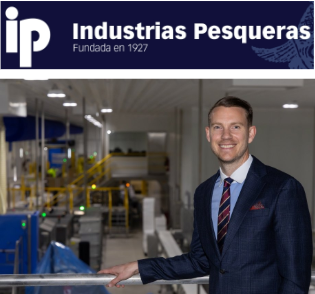 Baldvin Thorsteinsson takes over as CEO, succeeding his father, Thorsteinn Már Baldvinsson
 Aqua Nor 2025.
 The diesel generator has barely been running, says Emilsen after first installation meets more than 90% of farm's needs
 CHILE
CHILE For the first time, the World Aquaculture Society (WAS) – an international organization committed to promoting excellence in science, technology, education, and the exchange of information for the sustainable development of global aquaculture – will host one of its meetings in Chile. This high-level technical-commercial event will focus on strengthening governance and sustainability in aquaculture, particularly in the context ofclimate change.
 THAILAND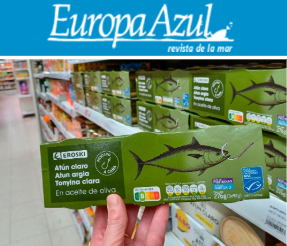
 The French oceanographic vessel L'Atalante arrived at the radioactive drum dumping area it is planning to inspect six days ago. After conducting technical tests to verify the condition of the equipment, especially the operation of the Uly X underwater robot, the French scientific mission, christened Nodssum, began operations this Wednesday to locate and map the barrels dumped in this area of ??the northeast Atlantic, about a thousand kilometers from the Galician coast, mainly during the 1970s by countries such as the United Kingdom, the Netherlands, Belgium, and Switzerland.